Commercial Beer Fridge Temperature Settings for Service
Commercial beer fridge temperature settings matter because they help protect flavour, carbonation and consistent service in a busy bar. The practical approach is to choose a sensible target for what you’re storing, verify what the cabinet is actually doing with an independent thermometer, and then fine-tune for real-world conditions like frequent door openings, warm ambient air behind the bar, and tightly packed stock.
If you store any perishable garnishes or mixers alongside drinks, your monitoring and records should align with Irish food safety expectations. The Food Safety Authority of Ireland highlights that refrigerated food should be maintained at 0–5°C. Always confirm the intended operating range for your specific unit in the manufacturer documentation, as it can vary by model and cabinet type.
Recommended targets: serving cold drinks vs storing chilled food
There isn’t a single “correct” number for every bar, because different cabinets behave differently and different products are served differently. What you can do is separate two common intents:
- Beer/soft drinks service: many operators aim for a consistently cold, refreshing serve, then confirm it by checking actual product temperature (a bottle/can), not only the cabinet display.
- Any chilled food stored in the same cabinet: manage the cabinet so those items stay within the 0–5°C range referenced by the FSAI.
If your back-bar cooler is truly “drinks only”, you can prioritise the serving experience. If it also contains higher-risk items (for example milk/cream for coffee service, or prepared garnishes), it’s safer operationally to manage the whole unit with that chilled-food range in mind, or to keep food in a separate food fridge where possible.
FSAI temperature-control context can be found here: FSAI temperature control guidance.
Don’t rely on the thermostat number: measure the real internal temperature
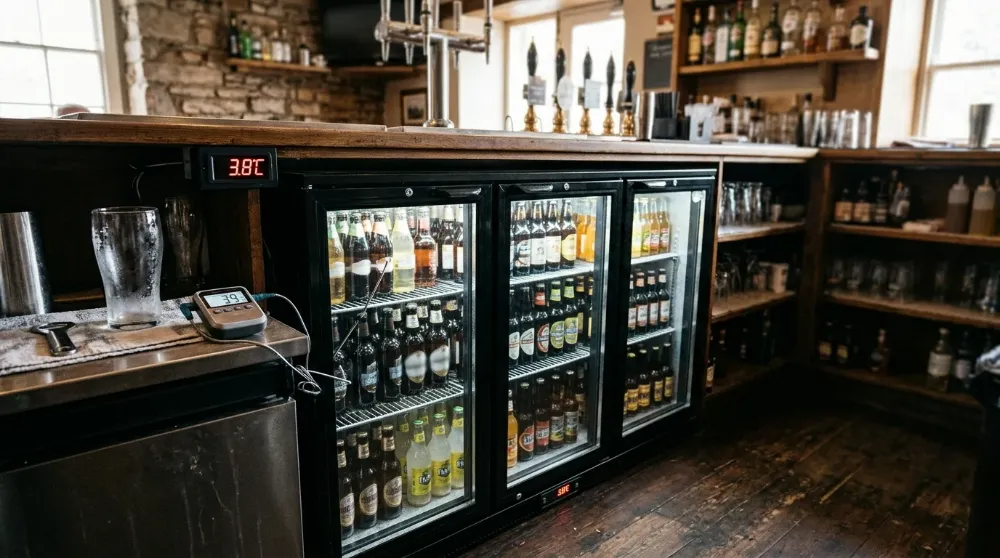
The thermostat dial or digital display is a control reference, not a guarantee of uniform temperature throughout the cabinet. Many controllers read air temperature at a single probe location and the system cycles on and off, so it’s normal for temperatures to vary by shelf position and during busy service.
To understand what you’re actually serving, check:
- Product temperature: measure a bottle or can (or use a probe thermometer for spot checks). This is often more meaningful than a quick air reading.
- Hot and cold zones: the back wall and areas near the evaporator can run colder; the front is usually warmer because of door openings.
- After stabilising: take readings after the cabinet has had time to recover from loading or a rush period. A single reading right after closing the door can be misleading.
If you use a thermometer for checks, keep it consistent (same locations, similar times of day) so your readings are comparable week to week.
Why drinks can feel warmer than the display suggests
If your bottle cooler display says one thing but the stock doesn’t feel as cold, it’s often caused by day-to-day conditions rather than an immediate “fault”. Common causes include:
- Door-opening frequency: every opening dumps cold air and lets warm, humid air in. The cabinet may show a quick recovery while product takes much longer to cool.
- Warm restocks: loading in a batch of warm bottles/cans can take hours to pull down, especially if the unit is already under pressure.
- Blocked airflow: cases or tightly packed shelves can block vents/fans, creating warm pockets and slow pull-down.
- Hot ambient conditions: tight back-bar joinery, nearby heat sources, or high room temperature makes heat rejection harder.
- Dirty condenser / restricted ventilation: dust and grease reduce the fridge’s ability to dump heat, causing longer run times and wider temperature swings.
- Door seal wear: a damaged gasket leaks warm air in continuously and is easy to overlook during service.
If the unit cannot pull down, runs constantly, ices up, or won’t hold temperature even after basic checks, consult a qualified refrigeration technician.
Adjusting settings for busy periods (without chasing the dial)
It’s tempting to turn the controller down ahead of a weekend rush or during warm weather, but it’s better to adjust based on measured results. Turning a cabinet down too far can create cold spots, risk freezing at the back wall, and still fail to deliver colder drinks at the front if airflow and loading are the real issue.
More reliable ways to keep service consistent include:
- Reduce “warm-load shocks”: stagger large restocks where possible instead of filling the cabinet at once.
- Organise fast movers: keep best-sellers in the easiest-to-reach zone so the door is open for less time.
- Leave breathing room: avoid packing shelves so tightly that air can’t circulate.
Basic maintenance that helps temperature stability
Temperature control slips when airflow is restricted or heat exchange is compromised. Routine upkeep helps the cabinet recover faster between door openings and hold a steadier internal temperature.
- Keep condenser areas clear: remove dust build-up where accessible and keep ventilation paths unobstructed.
- Check door gaskets: look for splits, looseness, or doors that don’t close cleanly.
- Watch for ice build-up: excessive icing can indicate airflow or usage issues that reduce performance.
- Clean spills promptly: sticky residues can affect door sealing and hygiene, and encourage staff to prop doors while cleaning.
For hygiene-focused cleaning systems in other equipment areas, see: Commercial Ice Maker Cleaning and Maintenance for HACCP.
Siting and operating conditions that commonly cause temperature drift
Back-bar refrigeration is often installed in the hardest environment: tight spaces, warm air, and constant access. Without getting into cabinet-specific setup (follow your manufacturer guidance), these general factors frequently explain unstable temperatures:
- Heat sources nearby: glasswashers, undercounter dishwashers, coffee machines, hot pipes, or direct sunlight.
- Insufficient ventilation: boxing a unit into joinery without the required clearance can trap hot air and reduce performance.
- Uneven loading: overfilling one section while leaving another empty can create uneven airflow patterns and shelf-to-shelf variation.
One FAQ: What temperature should I set my back-bar/bottle cooler to?
Use measured product temperature as your guide. Many bars aim for a consistently cold serving temperature for bottled and canned beer, cider and soft drinks, then confirm it by checking a bottle/can rather than relying on the display alone. If you store any chilled food (for example milk, cream, or prepared garnishes) in the same cabinet, manage the fridge so those items are maintained within the 0–5°C refrigerated-food range referenced by the FSAI, and use the FSAI temperature control guidance as context for checks and records.
Browse suitable formats
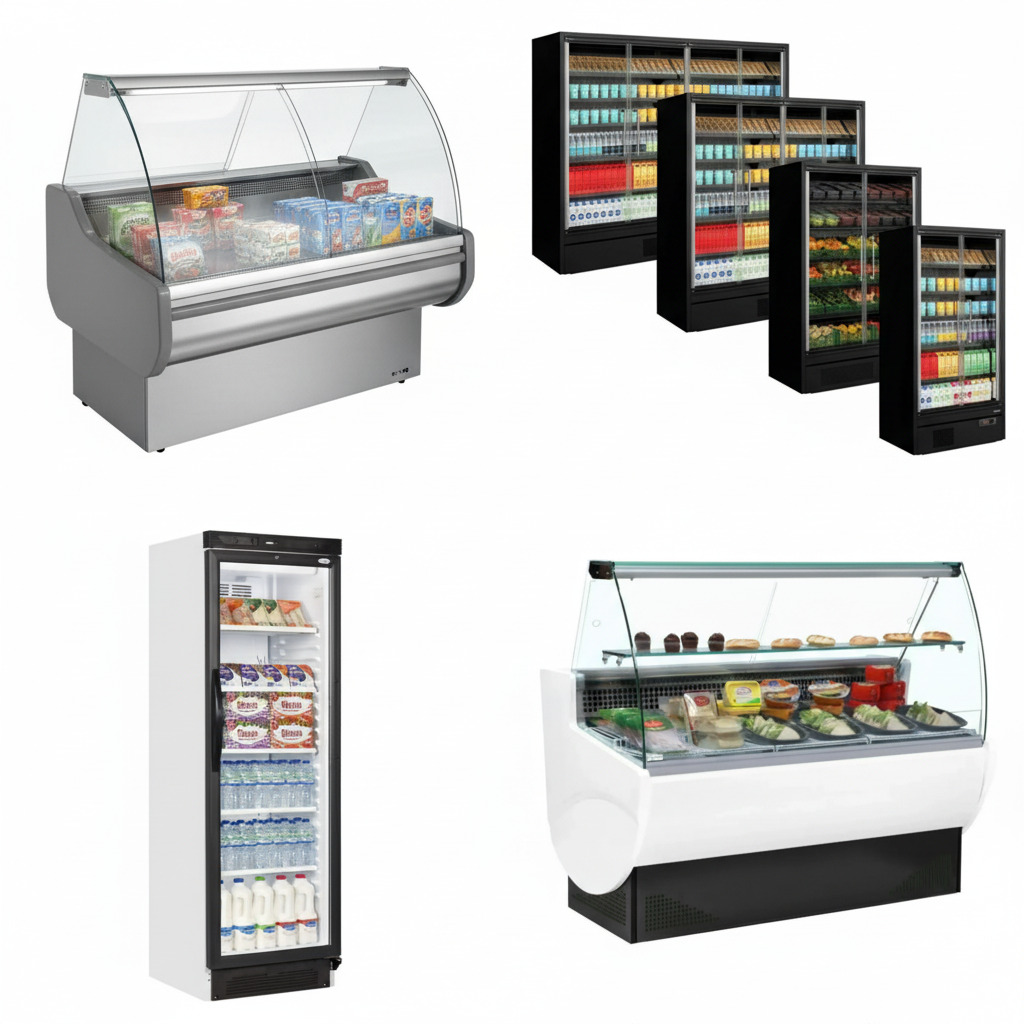
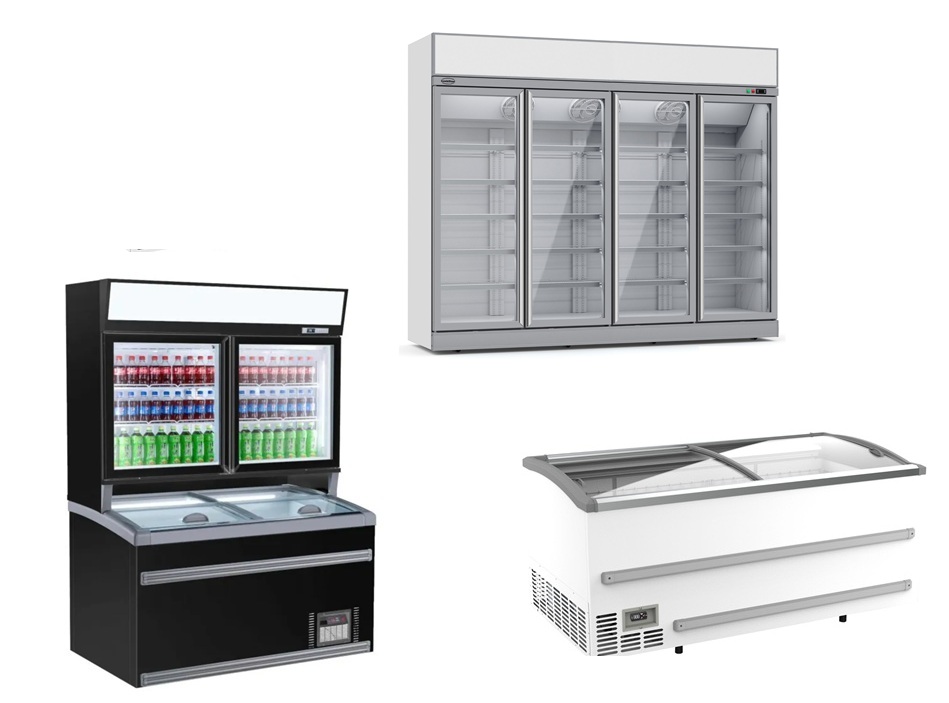
If you’re comparing back-bar options, start with units intended for high door-opening frequency and easy access. You can view the range here: Bottle Coolers. For related reading, see Commercial Beer Fridge Energy Efficiency and Running Costs and Commercial Beer Fridge Capacity and Door Count Selection.
Compare suitable equipment in our equipment range.