


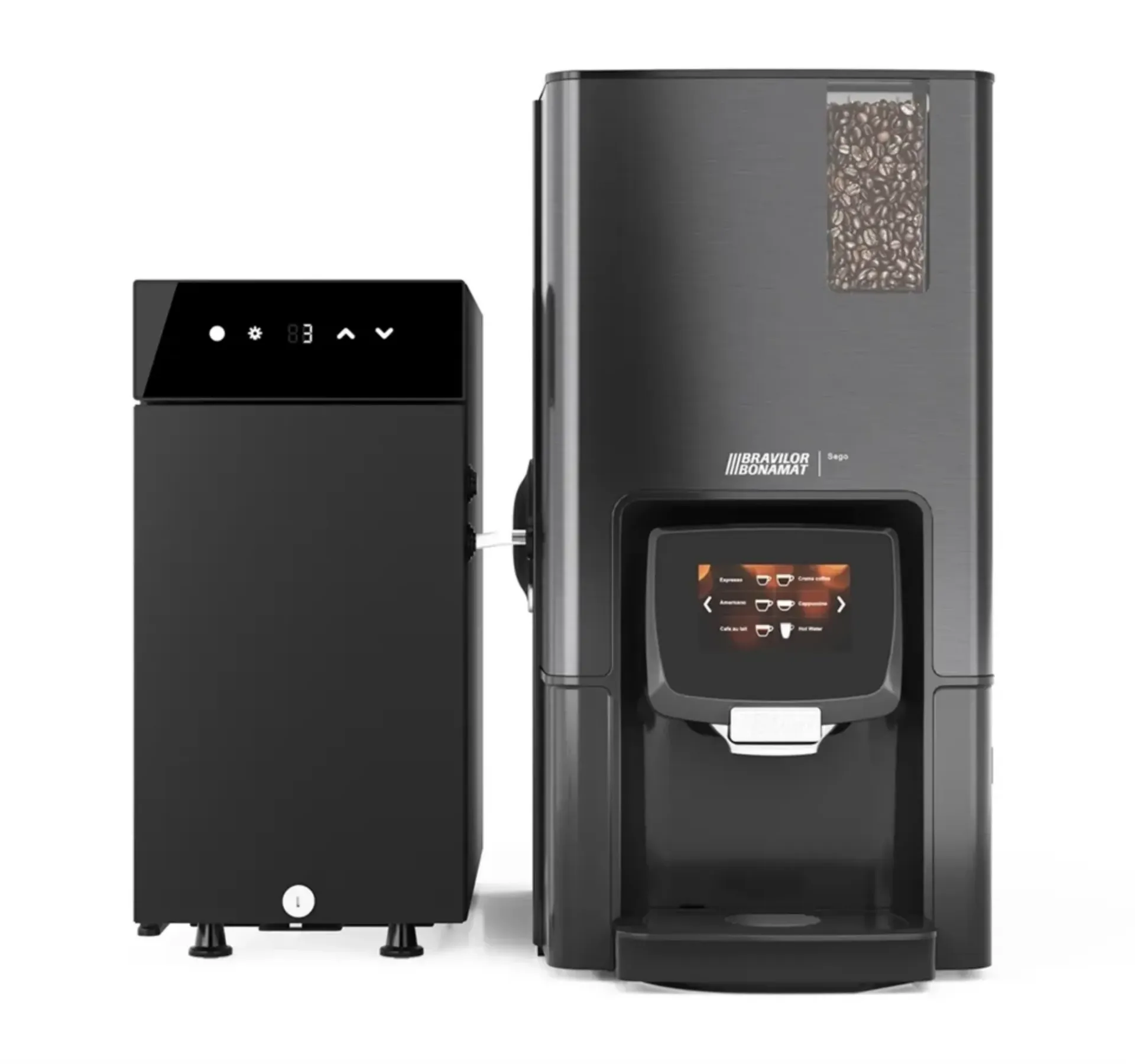
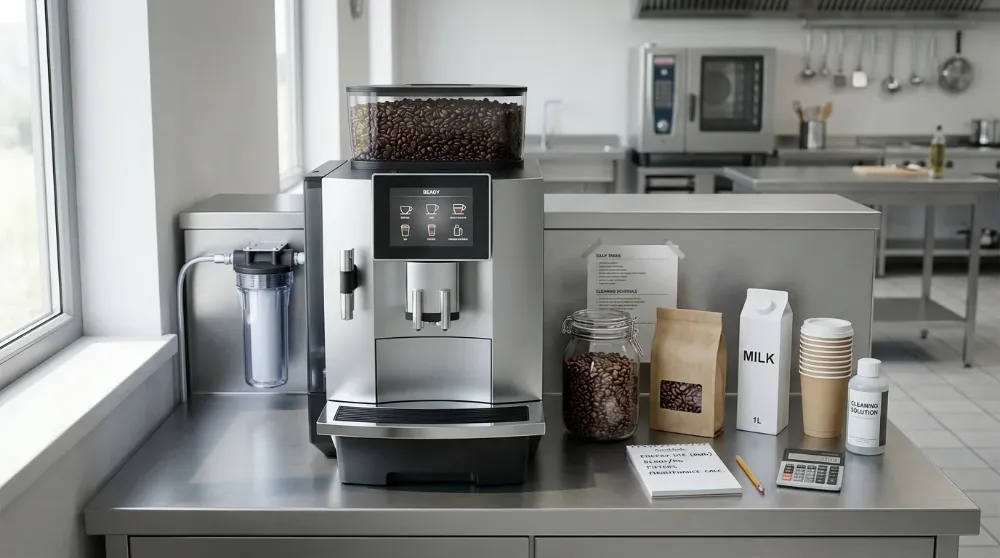
Bean to Cup Coffee Machine Running Costs in Ireland
Running a bean to cup coffee machine in Ireland is not just about the purchase price, because day to day costs can quietly decide what each cup really costs your business.
You are balancing electricity use on Irish tariffs, ingredient spend on beans and milk, water treatment and filters, cleaning products, call outs or service contracts, and the downtime risk that comes with limescale and wear. Your choices matter: energy saving modes and smart scheduling can cut usage, but only if they suit your opening hours; plumbed in setups can improve consistency, yet water hardness and filtration become more important; leasing or renting can protect cashflow, while buying may reduce long term cost if volumes are steady. Machine type also shifts the maths, especially when you compare bean to cup automation with traditional espresso workflows.
With the right numbers in front of you, you can set realistic budgets, protect margin, and make immediate tweaks starting with a clear breakdown of what it costs to run your machine.
How Much Does It Cost to Run a Bean to Cup Coffee Machine in Ireland?
Running costs come down to three moving parts: electricity to heat water, ingredients per cup, and routine maintenance. SEAI’s Energy Price Report is the right reference point for Ireland because it tracks real unit prices paid, not brochure assumptions. Your total will swing most with daily volume, because energy use is fairly steady while beans, milk, and filters scale with every drink, which is why getting your per-cup cost right matters.
Electricity, ingredients, and maintenance (the real split)
Use the electricity unit rate on your business supply contract or latest bill, on a consistent VAT basis. Multiply that rate by measured machine consumption in kWh to estimate the variable electricity cost; household averages are not a substitute for your commercial tariff.
- Electricity: heat-up, standby, and hot-water demand
- Ingredients: beans, milk, cups/lids, water filtration
- Maintenance: descaling, brew-group seals, grinder burr wear
Do Bean to Cup Coffee Machines Use a Lot of Electricity?
Bean to cup machines do not usually use loads of electricity, because the high draw happens in short bursts when the boiler heats water and the grinder runs. The real reason bills creep up is frequent heat-up cycles, standby heating, and high-volume use back-to-back. It also depends on your tariff and whether the machine is left on all day between quiet spells, which is common enough in a busy café.
What numbers are typical in Ireland?
Use your own Irish business tariff when estimating running costs. Check the contract’s time bands and billing basis, because extra standby consumption is charged at the rate applying when the machine draws that electricity.
What pushes consumption up most?
What we see in practice is that leaving the machine hot for long gaps can cost more than making a tight run of coffees during a defined service window, especially if the unit has aggressive standby heating. Treat it like any other always-on bit of kit, and sanity-check your broader energy habits using a simple running-costs mindset like this running costs guide, because the same kWh thinking applies whether it is a coffee boiler or a dishwasher heating tank water.
Factors Affecting the Running Costs of a Commercial Coffee Machine
Running costs vary depending on your drink mix, opening hours, and how hard the machine is driven from open to close. In practice, most Irish operators find beans and milk dominate the cost per cup, while energy use and maintenance decide whether margins stay steady in busy service. A high-spec machine can reduce waste and improve consistency, but it can also bring higher parts and service costs if cleaning and preventative maintenance slip, so it pays to look at the full picture.
Beans, milk, and water
Beans and milk costs swing with supplier pricing, storage losses, dial-in waste, and over-pouring, so portion control and training matter as much as the invoice price. Water is usually a smaller line item per cup, but filtration and limescale protection can be significant in Ireland, especially in harder water areas, because scale drives up energy use and can shorten component life. For premises that are billed for water services, it is also worth keeping an eye on how your business water charges are applied and whether your usage is being metered correctly under Irish Water’s non-domestic arrangements, as outlined on Citizens Information for water charges for businesses.
Energy and heat-up behaviour
Electricity cost is shaped by boiler type, insulation, standby settings, and how often staff switch the unit on and off between peaks. In day-to-day terms, leaving a machine idling for long quiet stretches can quietly add up, while repeated heat-up cycles can also be inefficient on some setups, so your best approach depends on service pattern and the machine’s energy management features. Getting this balance right also helps the machine run at stable temperatures, which tends to improve extraction consistency and reduces the knock-on strain that can lead to avoidable wear.
Maintenance and consumables
Daily cleaning chemicals, grinder burr wear, water filter changes, and scheduled servicing matter because small hygiene lapses quickly turn into breakdowns, inconsistent coffee, and wasted product. Milk system cleanliness is a particular cost driver in real cafés because it affects both quality and downtime, and it is usually where shortcuts show up quickest during inspection or in customer complaints. Keeping on top of consumables and service intervals is also one of the simplest ways to protect your warranty position and avoid the kind of mid-shift failure that hits revenue when you can least afford it.
How Can I Reduce the Energy Usage of My Coffee Machine in Ireland?
Use the machine’s built-in eco, sleep and scheduling functions where the manufacturer recommends them. Keep cleaning and descaling on schedule and allow for required rinse and heat-up routines. Any external timer or smart plug must be suitable for the equipment’s load and connection type and expressly compatible with the manufacturer’s instructions; do not use a domestic smart plug with hardwired equipment.
1. Turn on eco features and tighten auto-off settings
Start by enabling eco or sleep mode, reducing cup-warming and standby temperature where your machine allows it, and setting auto-off to minutes rather than hours because idle heat is where waste quietly creeps in. If you are running a café or deli, even small tweaks here tend to matter more than people expect because the machine can sit hot for long stretches between rushes.
2. Use a smart plug to cut standby at predictable times
Schedule reduced-power periods around opening hours using the manufacturer-supported controls. Do not interrupt automatic cleaning, rinsing or other required cycles, and ask a qualified installer about any changes to fixed electrical controls.
3. Avoid “hard” power cuts during rinse or shut-down
Treat smart control as scheduling, not yanking power mid-cycle, and avoid cutting power while the machine is rinsing, backflushing, or running an automatic shut-down routine. If you want a feel for safe smart-control thinking, this WiFi thermostat guide follows the same principle: do not defeat safety routines that protect equipment and keep day-to-day operation predictable. That same mindset also makes it easier to spot whether high consumption is down to settings or a maintenance issue like scale build-up.
Most commercial bean-to-cup machines in Ireland get replaced because reliability drops under constant daily use, not because they hit a fixed “expiry date”. If you stay on top of cleaning and scheduled servicing, you’ll usually get a longer working life before breakdowns start disrupting service. Water treatment matters as much as workload, because scale and corrosion quietly shorten component life, so it pays to think about what’s coming through your mains as well as what’s going through your grinder.
Water quality is the Irish wild card
Hard water drives limescale in hot-water appliances, and Uisce Éireann warns it can cause limescale build-up in hot water appliances and systems, which is exactly what stresses boilers, valves, and flow meters in coffee machines. If you are in a hard-water area, a suitable filter system and a sensible descaling routine can be the difference between steady performance and repeated call-outs, which is why water treatment tends to come up early in any serious machine conversation.
Maintenance beats “brand reputation” in the real world
Daily rinse cycles, correct detergents, and timely seal and valve replacements keep you in control of downtime and parts bills; it’s the same logic you’d apply to any high-use kit that has heat, water, and moving parts. Once your cleaning routine is tight, it becomes much easier to judge whether a machine is genuinely undersized for your volume or simply suffering from preventable wear and tear.
Frequently Asked Questions About Commercial Coffee Machine Lifespan in Ireland
What is a realistic lifespan for a commercial bean-to-cup coffee machine in Ireland?
There is no single number that applies to every site, because lifespan depends on daily cup volume, cleaning standards, water hardness, and how quickly wear parts are replaced. In practical terms, machines in steady, high-volume service tend to get replaced when downtime starts impacting trading, while the same model in a lower-volume site can run for significantly longer with proper servicing and water filtration.
What parts usually fail first on a commercial bean-to-cup machine?
In busy Irish cafés and self-service sites, you often see issues around the brew unit seals, grinder burrs, valves, boilers, pumps, and flow meters, along with milk system components if you are running fresh milk or automated milk lines. These are not “bad machine” problems as much as predictable wear areas, which is why preventative maintenance and stocking the right consumables can keep service interruptions to a minimum.
Does hard water in Ireland really shorten coffee machine life?
Yes, it can. Hard water promotes limescale, which reduces heat transfer and stresses boilers and valves over time, and it can also contribute to blockages and inconsistent flow. Uisce Éireann specifically flags that hard water can cause limescale build-up in hot water appliances and systems, so matching a filter to your site’s water conditions is a very practical way to protect your machine and stabilise performance.
How often should a commercial coffee machine be serviced?
Service frequency should be based on usage and the manufacturer’s requirements, and many businesses set a planned schedule with a service partner rather than waiting for faults. If your machine is central to revenue, planned servicing and periodic replacement of wear parts generally costs less than emergency breakdowns, especially when you factor in lost sales and staff time during peak trading.
What daily maintenance makes the biggest difference to machine longevity?
Consistent daily cleaning routines usually have the biggest impact, including running the machine’s rinse cycles, cleaning milk circuits correctly, emptying and washing grounds and drip trays, and using the right cleaning tablets or detergents for your model. Skipping routine cleaning tends to show up later as blocked lines, sticking brew units, poor coffee quality, and more strain on components, which is where lifespan starts getting quietly eroded.
Is it better to repair or replace a commercial coffee machine?
It depends on the age of the machine, parts availability, the pattern of faults, and how critical uptime is for your operation. If you are seeing repeated failures that disrupt service, or if the machine is no longer a good match for your volume, replacement can be the more predictable option, while a well-maintained machine with an isolated issue is often worth repairing. The most sensible approach is to weigh repair cost against downtime risk and the value of improved reliability, especially in high-footfall sites.
Can the wrong detergent or descaler damage a bean-to-cup machine?
Yes. Using incorrect chemicals can degrade seals, affect sensors, or leave residues that cause operational issues, and it can also complicate warranty support depending on manufacturer terms. Sticking to manufacturer-approved cleaning products and following the recommended procedure is a small operational discipline that protects both performance and longevity, particularly where milk systems and internal brewing components are involved.
Keep Your Coffee Service Reliable in Busy Trading
If you are replacing a machine because breakdowns are creeping into service, it is usually a sign to review volume, water conditions, and the day-to-day cleaning routine alongside the equipment itself. Browse Caterboss’s range of trade-grade options in Commercial Coffee Machines and, if you want to tighten up maintenance at the same time, stock up on essentials in Coffee Accessories such as cleaning and filter products that help protect your machine in Irish water conditions. If you are balancing cash flow, ask the Caterboss team about flexible finance options, subject to approval and partner terms, so you can upgrade without putting pressure on working capital."
What Sort of Maintenance is Required to Keep Running Costs Down?
Clean on schedule, descale based on your actual water hardness, and keep seals, brew unit, and grinders free of coffee oils and fines. Put a simple weekly routine in place for cleaning, and do a monthly check for leaks, worn gaskets, and blocked vents. Log each service so you spot creeping issues early, not when the machine starts pulling slow shots in the middle of a busy day. In a hard-water area, maintenance frequency is what protects your energy use, reliability, and parts budget, so it pays to set it properly.
1. Check your Irish water hardness and set descale intervals
Start by checking your supply zone because limescale builds fastest where hardness is high, and that drags efficiency down over time. Look up “hardness (as CaCO3)” in your local results using the Uisce Éireann water quality results tool, then match your descale interval to that number rather than guessing. Once you know your baseline, you can plan cleaning tasks around what actually happens in your water system instead of fighting problems after they show up in the cup.
2. Keep the hydraulics and brew path clean (daily/weekly)
Stick with the basics because old oils and compacted grounds make the machine work harder for the same cup. Rinse and wipe the brew group, clean drip trays, and backflush if your model supports it, then replace water filters when the machine tells you to rather than stretching it. That routine also makes it much easier to spot early warning signs like slower flow, odd noises, or inconsistent pressure before they start eating into service speed and consistency.
Frequently Asked Questions About Coffee Machine Maintenance and Running Costs in Ireland
How often should a commercial coffee machine be descaled in Ireland?
It depends on your local water hardness and how many coffees you’re pushing through daily. In harder-water areas, scale can build quickly and reduce heating efficiency, which nudges electricity use up and increases the risk of breakdowns. Use your local “hardness (as CaCO3)” reading from the Uisce Éireann water quality results tool and follow the manufacturer’s descaling guidance for your model, adjusting frequency to suit your volume and hardness rather than using a one-size-fits-all schedule.
Does using a water filter reduce running costs for espresso machines?
A proper filtration setup can reduce limescale and improve taste consistency, which typically lowers the need for heavy descaling and can help prevent scale-related callouts. It does not eliminate maintenance, and it is not a guarantee of lower bills, but it often supports steadier performance and fewer efficiency losses over time. Change filters on schedule and to spec, because an overdue filter can restrict flow and create its own problems.
What daily cleaning actually matters for energy use and reliability?
The simple jobs matter most: keeping the brew group clean, emptying and washing drip trays, and removing coffee oils and fines from contact points. Built-up residue can cause slow shots, temperature instability, and extra strain on pumps and valves, which is where you start to see inconsistency and unnecessary wear. A quick close-down routine also helps you spot leaks or unusual behaviour before it becomes downtime.
Should you log maintenance on a commercial coffee machine?
Yes, it is one of the easiest ways to keep costs predictable in a busy site. A basic log helps you track descaling, filter changes, gasket wear, grinder cleaning, and any recurring faults so you can fix patterns early. It also supports warranty conversations and service diagnostics, especially when you are trying to prove the machine has been cared for properly.
When should you call a technician instead of doing it yourself?
If you’re seeing persistent leaks, electrical faults, repeated error codes, unusual burning smells, or major pressure and temperature issues, get a qualified technician involved. Cleaning and filter changes are normal operator tasks, but internal repairs and anything electrical should be handled by a competent professional to protect staff safety, equipment warranty, and compliance expectations in an Irish commercial kitchen environment. If you’re unsure, stop and get advice rather than forcing the machine through service.
Keep Your Coffee Service Consistent and Your Costs Predictable
If you’re speccing a new setup or trying to cut downtime on an existing machine, choose trade-grade equipment that is built for daily commercial use and straightforward to maintain. Browse Caterboss for commercial coffee and beverage equipment, grinders, water filtration, and the cleaning and hygiene essentials that keep your kit running smoothly, with delivery across Ireland and practical support from a team that understands busy service. If cash flow is tight, ask about flexible finance options that may be available, subject to approval and partner terms, so you can protect quality without taking a big hit upfront.
Buying, leasing, and renting all change how predictable your bean to cup coffee machine running costs feel month to month. The main difference is whether you pay upfront (buy) or spread the cost as an operating expense (lease or rental). Buying is usually cheapest over a long lifespan, but it ties up cash and leaves you holding more of the repair risk once warranty cover ends. Renting often costs more per month, but it can suit short peaks, pop-ups, seasonal trade, or uncertain volumes. Leasing tends to sit in the middle and can help you protect cash flow while still getting a trade-grade machine on the counter.
That cost predictability is usually what matters most in busy service, so it helps to look at how each route stacks up in real operational terms.
How do leasing, renting, and buying compare overall?
Leasing can suit you when you want fixed monthly outgoings and you are planning to use the machine for a steady period of time. Buying tends to win on total cost if you keep the machine running for years and you stay on top of maintenance, water filtration, and cleaning routines. Renting can be the easiest decision when you need flexibility and quick setup, and you do not want any long-term commitment hanging over you if footfall changes.
The right choice usually comes down to cash in the bank, how stable your coffee volume is, and how much risk you are comfortable carrying if something goes wrong mid-week.
Leasing
Leasing spreads the cost over an agreed term and is often used by Irish hospitality businesses that want to preserve working capital for stock, staffing, fit-out, or marketing. It can also make budgeting easier because you know what the machine is costing you each month, which matters when you are trying to keep your gross profit consistent across coffees, milks, and cups.
Tax treatment depends on the business, the equipment and the rules applying when it is purchased. Check Revenue’s current capital-allowance guidance and ask your accountant to confirm whether the exact machine qualifies; do not assume that every coffee machine is eligible for an accelerated allowance. Revenue capital allowances and deductions
Once you are comfortable with the numbers, the other big question is how much flexibility you need if your coffee volumes rise or fall.
Renting
Renting is simplest when you need flexibility and minimal commitment, especially for short-term needs or where you are still proving demand. In practice, rental packages in Ireland often bundle service and maintenance, which can reduce the stress factor when a machine goes down at the wrong time, but the trade-off is you typically pay more overall for that convenience.
Even with rental, you still need to think about practical day-to-day costs like beans, milk, cleaning products, and water filtration, because those are usually where ongoing spend quietly adds up regardless of which ownership route you choose.
Which is best for you?
If cash is tight, leasing can be the more manageable route; if trade is uncertain or seasonal, renting can keep you nimble; if volumes are stable and you are thinking long-term, buying is often the cheapest over the life of the machine. Whatever route you pick, make sure you are comparing like with like on service cover, warranty terms, call-out response expectations, and what happens if the machine needs a major part after heavy use, because those details are what decide whether the “cheap” option stays cheap.
Frequently Asked Questions About Leasing, Renting, or Buying a Bean to Cup Machine in Ireland
Is it better to buy or lease a bean to cup coffee machine for a cafe in Ireland?
It depends on your cash flow and how stable your coffee volume is. Buying usually works out cheaper over a long lifespan if you keep the machine maintained and you plan to run it hard for years. Leasing can suit a growing cafe that wants to protect cash for fit-out, staffing, and stock while keeping monthly costs predictable, and it is a common approach for trade-grade equipment in Irish hospitality.
What is the difference between renting and leasing a commercial coffee machine?
Leasing is usually a fixed-term finance arrangement where you spread the cost of the equipment over time, and the package may or may not include servicing depending on the provider. Renting is generally more flexible, often shorter term, and is more likely to include service and maintenance as part of the monthly payment, but that convenience can come with a higher monthly cost.
Can I claim tax relief or allowances on a coffee machine in Ireland?
Tax treatment depends on the business, the equipment and the rules applying when it is purchased. Check Revenue’s current capital-allowance guidance and ask your accountant to confirm whether the exact machine qualifies; do not assume that every coffee machine is eligible for an accelerated allowance. Revenue capital allowances and deductions
What costs should I compare when pricing lease vs rent vs buy?
Look beyond the monthly figure or sticker price and compare the total picture:
- Service and maintenance cover (what is included and what is chargeable)
- Call-out charges and response times
- Warranty length and what it actually covers
- Consumables such as cleaning tablets, milk system cleaner, and filters
- Water filtration requirements and replacement schedule
- Downtime risk and whether a backup machine is available
The “cheapest” option on paper can flip quickly if service support is limited or your water filtration is not up to spec.
Which option is best for pop-ups, events, or seasonal venues in Ireland?
Renting is often the most practical for pop-ups and seasonal sites because you are not committing to a long finance term if the concept changes or footfall drops off outside peak periods. It can also reduce hassle if the rental package includes servicing, which matters when you have limited time and staff to troubleshoot equipment during a short trading window.
Get the Right Bean to Cup Machine, With Finance That Fits Your Cash Flow
If you are weighing up lease, rent, or buy for a bean to cup machine, it usually comes down to one thing: matching the machine and the payment plan to your real coffee volume, your space, and your budget without getting caught out on servicing and running costs.
Talk to Caterboss for practical, trade-first advice and flexible finance options for commercial catering equipment, so you can choose a setup that makes sense for your business in Ireland.
Impact of Machine Type on Running Costs
Bean-to-cup machines usually cost more to run because they heat, grind, brew, and auto-rinse in short, repeated cycles all day, so you are paying for convenience through constant electricity draw and more wear parts. Traditional espresso setups can be cheaper per cup at volume because the grinder and machine are separate, simpler to service, and you can control flushing and standby habits. The catch is staff technique matters, because poor dosing, waste, and long idle times can wipe out any savings, even with good kit.
Where the extra costs really come from
With bean-to-cup, the hidden spend is in the internals: brew group seals, milk system cleaning cycles, and energy used keeping thermoblocks or boilers ready between orders. That cost tends to show up most in busy sites where the machine sits “ready” all day, even when orders come in peaks and lulls.
Why machine choice hits harder in Ireland
Business electricity costs depend on the supplier contract, consumption band and operating pattern. Measure standby and rinse consumption alongside brewing demand so the estimate reflects the machine’s actual working day.
How Do Electricity Prices in Ireland Influence Coffee Machine Costs?
When your electricity unit rate goes up, every heat-and-pump cycle in a bean to cup machine costs more immediately, so your “cost per coffee” rises even if your bean price stays flat. Irish tariffs can vary by time of day on smart plans, so the same machine run at peak times can cost noticeably more than off-peak. Over a year, that difference compounds, especially in high-volume sites where the machine is powered on all day, keeping boilers hot and systems ready between orders.
Tariff type matters more than county lines
Most “regional variation” in Ireland is really tariff choice (24-hour, day/night, or smart time bands), as the CRU explains in its guidance on dynamic price tariffs for electricity. If you already track energy use for other big draws in the kitchen, you will recognise the same pattern across equipment: runtime, standby load, and when you use it often matter as much as the headline kW rating, which is why it’s worth looking at how your coffee routine and opening hours line up with your supplier’s rate bands.
How Caterboss Supports Your Hospitality Business
The real value in pricing a bean to cup coffee machine is knowing your running costs before they start quietly eating margin. SEAI’s energy price and cost data is a useful reminder that electricity costs are a moving target for Irish businesses, so the “cheap” machine can become the expensive one over a busy year. The nuance is that two sites serving the same coffees can see very different costs depending on tariff, cleaning routines, and peak-time usage, which is why it pays to cost it properly from the start.
Cost basis: use your current business electricity tariff and measured or manufacturer-documented machine consumption. Any worked example is illustrative and is not a supplier quotation.
Costing coffee properly links straight to operational efficiency
When you track beans, milk, filters, water treatment, and downtime together, you spot waste quickly and protect consistency, which tends to show up fast in customer experience and staff workload.
Where a reliable equipment supplier fits in
Having one place to compare specs, parts, and support, like the range of bean to cup coffee machines, helps you choose kit that suits your volume, power set-up, and service pace, which matters most when you’re flat-out and need predictable performance day after day.
Frequently Asked Questions About Bean to Cup Coffee Machines for Irish Hospitality
What are the main running costs of a bean to cup coffee machine in Ireland?
Running costs typically come from coffee beans, milk, cleaning chemicals, water filtration, electricity, servicing, and wear parts such as seals and brewer components. Electricity can vary a lot depending on your tariff and usage pattern, so it is worth sanity-checking your expected kWh consumption against current Irish business electricity pricing data like SEAI’s published trends.
Cost basis: use your current business electricity tariff and measured or manufacturer-documented machine consumption. Any worked example is illustrative and is not a supplier quotation.
Why can two cafés have very different costs on the same coffee machine?
Even with the same model, costs can change based on how many coffees you serve per day, your peak-time workflow, your cleaning routine, your water quality and filter changes, and whether the machine is left on all day. Small differences like inconsistent cleaning or poor water treatment can increase downtime and call-outs, which hits both costs and service speed during busy periods.
What should you track when pricing your coffee properly?
Track inputs and losses together so you can see the true cost per cup:
- Beans per shot and grinder settings
- Milk usage and wastage (especially at peak times)
- Filters and water treatment (cartridges, softeners, RO if used)
- Cleaning tablets, milk line cleaner, and daily maintenance time
- Staff time lost to slow service or breakdowns
- Downtime and service call-outs
Once you see those numbers in one place, operational decisions like portion control and cleaning discipline become much easier to enforce.
How do I choose the right bean to cup coffee machine for my site?
Match the machine to daily cup volume, peak rush demand, drinks menu, available power supply, and your team’s ability to maintain cleaning routines. In simple terms, a machine that is fine for steady throughput can struggle in a sharp lunchtime spike, so the best fit is usually the one that keeps pace without compromising on consistency or reliability when the queue builds.
Why does it help to buy from an Irish commercial equipment supplier rather than shopping around?
A reliable Irish supplier gives you a single place to compare specifications, source parts, and get support that understands Irish hospitality realities, including local delivery expectations and warranty coordination. Having that backup matters most when something goes wrong mid-service and you need a practical fix rather than another email thread.
Price Your Coffee With Confidence
If you are comparing bean to cup coffee machines for a café, deli, hotel, or office coffee point, take the guesswork out of the numbers by choosing a machine that suits your volume, power set-up, and service pace from day one. Browse Caterboss’s range of bean to cup coffee machines and, if you are scaling up or managing cash flow, ask the team about finance options that are subject to approval and partner terms so you can protect margin without compromising on trade-grade reliability.
Frequently Asked Questions About Bean to Cup Coffee Machine Running Costs in Ireland
How much does it cost per cup to run a bean to cup coffee machine in Ireland including beans, milk, and electricity?
It depends far more on your ingredient spec than on electricity. A practical way to price it is to calculate a cost per drink from your own supplier invoices:
- Beans per drink: dose (g) ÷ 1,000 × bean price per kg
- Milk per drink (if used): milk used (ml) ÷ 1,000 × milk price per litre
- Electricity per drink: machine kWh per day ÷ drinks per day × your €/kWh
Once you have a per drink figure, add a small allowance for cleaning products, filters and wear parts if you want a truer “fully loaded” cup cost. If you share your typical dose size, milk usage and drinks per day, you can turn this into a reliable Irish office cost model in a few lines.
How does Ireland’s water and milk quality affect the maintenance and running costs?
In Ireland, water hardness is a major driver of running cost because limescale accelerates wear on boilers, valves and flow meters, and increases the frequency of descaling or water filtration changes. Uisce Éireann notes that hard water is a natural characteristic of much of Ireland’s drinking water supply and provides hardness results by area, which is exactly what you need to choose the right filtration or softening approach for your machine’s spec (Uisce Éireann guidance on hard water).
Milk quality affects costs more indirectly. Richer milk can improve texture and perceived drink quality, but any milk system will still need consistent daily cleaning to avoid performance issues and waste. In practice, better routine cleaning and the right water treatment usually saves more money than switching milk alone, because it reduces call-outs, downtime and premature component replacement.
What are the approximate monthly operating costs for a small to medium Irish office?
Monthly running costs are best estimated from volume and drink mix, because a 10 person office can easily out-consume a 30 person office if coffee is a core perk.
Use this structure and plug in your own prices:
- Ingredients: (espresso-based drinks × bean cost per drink) + (milk drinks × milk cost per drink)
- Utilities: (machine kWh per month × your €/kWh) + (water filtration cartridges or softener service per month)
- Maintenance: planned service allocation + any milk system cleaning consumables
As a sense check, most workplaces find ingredients dominate the bill, with electricity and water treatment usually a smaller slice unless the machine is left on for long hours or the local supply is very hard.
Which energy‑saving features should I look for in a modern bean to cup coffee machine?
Look for features that reduce heat-up and idle losses, because that is where most avoidable electricity use tends to sit:
- Auto standby or sleep mode with adjustable timers.
- Auto on and auto off scheduling to match office hours and cut overnight draw.
- Insulated boilers or thermoblock style heating that reduces the amount of hot metal kept at temperature.
- Fast heat-up and “ready on demand” logic so the machine is not holding full operating temperature all day.
- Separate circuits for steam and brew so you are not heating more than you need for the drinks you actually make.
Even the most efficient machine benefits from simple habits such as powering down when the building is closed and keeping seals and door gaskets in good condition so heat stays where it should.
How do preventative maintenance contracts in Ireland reduce long‑term costs?
A preventative maintenance contract reduces long-term costs by trading unpredictable call-outs for planned servicing that keeps the machine within manufacturer tolerances. In practical terms, that can mean:
- Fewer breakdowns during peak use, which cuts downtime and emergency repair charges.
- More consistent drink quality, which reduces waste from rejected coffees and repeated pours.
- Parts replaced before they fail, lowering the risk of secondary damage such as scale-related leaks.
- Documented service history, which protects resale value and can support warranty discussions.
In Ireland, this matters even more where water hardness or heavy daily use can push a machine out of spec faster than you would expect from the calendar alone.
Is there any tax relief or grants for energy-efficient coffee machines for Irish SMEs?
Tax treatment depends on the business, the equipment and the rules applying when it is purchased. Check Revenue’s current capital-allowance guidance and ask your accountant to confirm whether the exact machine qualifies; do not assume that every coffee machine is eligible for an accelerated allowance. Revenue capital allowances and deductions
Where equipment qualifies under the scheme, Revenue’s guidance describes an accelerated capital allowance of 100% of the capital expenditure that can be claimed in the year the equipment is first provided and used in the trade (Revenue guidance on ACA for energy-efficient equipment). Eligibility is specific to the product and listing status, so it is worth checking the exact model before you buy.
What are the benefits and drawbacks of plumbed‑in vs. tank‑fed machines?
Plumbed-in machines suit higher volumes and reduce day-to-day hassle.
Benefits
- Steady supply for busy teams, fewer interruptions for refills.
- Easier to pair with a properly sized filtration or softening setup, which is important in hard-water areas.
- More consistent operation where staff turnover is high, because “someone forgot to fill the tank” stops being a problem.
Drawbacks
- Upfront install cost and the need for a suitable location near services.
- You are committing to water treatment being done correctly, because scale risk can increase with continuous use.
Tank-fed machines are flexible and quick to deploy.
Benefits
- No plumbing required, easier to move within the building.
- Lower install complexity for smaller workplaces or temporary setups.
Drawbacks
- Refilling time and risk of stoppages.
- Water quality can vary depending on what is poured into the tank, which can increase descale frequency if hard tap water is used.
Your best choice usually comes down to daily drink volume, whether a permanent location is available, and how well you can control water quality.
How many drinks per day justify investing in a commercial unit?
A commercial unit is justified when your daily volume and expectations consistently push beyond what a domestic style machine can deliver without stress. The decision is usually driven by:
- Throughput and queueing: if staff are waiting for drinks, you are paying for lost time.
- Consistency and downtime risk: higher-use environments benefit from heavier-duty grinders, brew groups and milk systems.
- Cost control: once drink volume is stable, predictable per-cup costs and planned servicing can be easier to manage than ad hoc replacements.
A simple test is to compare what you spend on coffee over a typical month against the cost of supplying the same number of drinks in-house, while also valuing reliability and convenience, which is where many Irish workplaces see the real return. If you want ongoing, practical cost-control tips delivered regularly, it helps to keep the advice close to hand.
Get Practical Cost-Control Tips by Email
If you are tracking bean spend, milk waste and machine uptime, small changes add up quickly. Subscribe to our newsletter for Ireland-focused guidance on keeping your coffee operation efficient, consistent and cost-effective.
When you are ready to match a machine to your daily drink volume and setup, browse our range of bean to cup coffee machines.