

Bean-to-Cup Coffee Machine Capacity for Daily Cup Volume (Ireland)
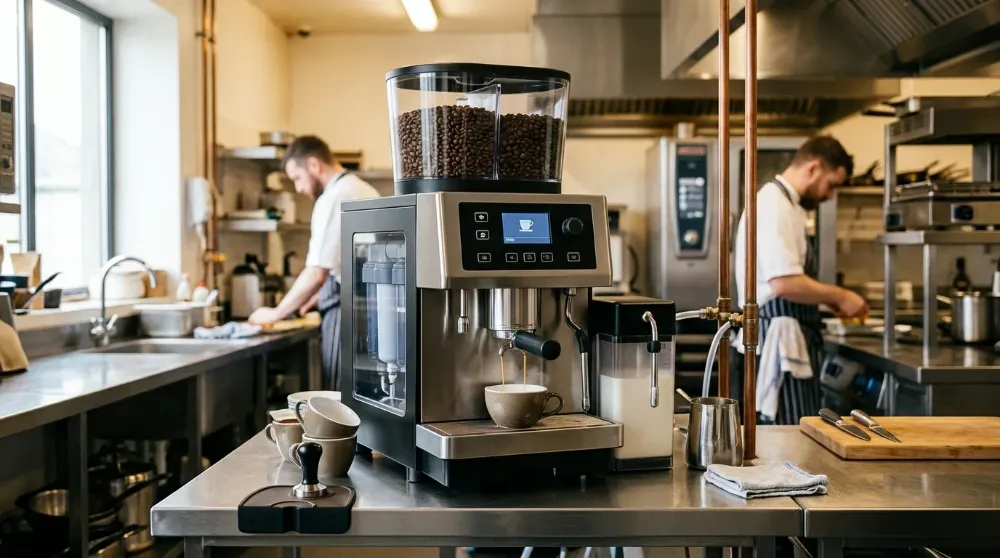
Bean-to-cup coffee machine capacity determines whether you can serve consistent coffee without constant refilling, waiting for the machine to recover, or interrupting service to empty waste. In practice, “capacity” isn’t just a cups-per-day headline: it is the combined effect of peak-hour throughput, bean hopper size, water supply, drip tray and spent-grounds capacity, and how quickly the machine returns to temperature and pressure after repeated drinks.
In Ireland, the same questions come up whether it’s a staff kitchen in Dublin or a small café counter in Galway: how many cups are realistic on a normal day, what does your busiest hour look like, and how much counter space can you give up for a larger hopper and water tank (or for a mains-fed setup). Comparing machines side-by-side in the bean to cup coffee machines category helps, but it pays to translate “specs” into what will actually slow you down mid-rush.
Capacity in real service: the chain that causes downtime
A bean-to-cup machine can only keep pouring if every link in the chain keeps up:
- Bean hopper: too small and you’re topping up during the busiest part of the day; too large and you may prefer more frequent refills to keep beans fresh (especially in warm indoor conditions).
- Water supply: tank-fed machines are limited by how often you can refill; mains-fed machines are limited by the installation constraints of your premises and the manufacturer’s requirements.
- Heat and recovery time: even if a machine can make a drink quickly, repeated use can expose slow recovery—this shows up most during back-to-back orders.
- Waste handling: spent-grounds drawer (dregs box) and drip tray capacity can become the surprise bottleneck that forces a stop at the worst moment.
- Rinse/clean prompts: automated rinses protect taste and hygiene, but they also create short pauses that matter when the queue is building.
When assessing “capacity,” focus on what will force a refill, empty, or wait during your busiest 30–60 minutes, not what looks fine over a whole day on paper.
Daily cups vs peak-hour throughput (why peak usually wins)
Many manufacturers publish recommended cups per day and/or drinks per hour. Both are useful, but they answer different questions:
- Cups per day predicts how often you will refill beans and water, empty waste, and run cleaning cycles across a shift.
- Drinks per hour (or similar guidance) is a closer proxy for queue management—whether the machine can keep up when orders land back-to-back.
A site making fewer cups overall can still need a higher-throughput machine if demand is concentrated (for example, breakfast service, a mid-morning office rush, or a short lunchtime spike). That’s also when recovery time becomes visible: if the machine slows or output changes under load, you will feel it immediately in service.
Simple sizing tiers (use as a shortlist, then sanity-check peaks)
Because models vary so much, a practical way to narrow the field is to start with broad tiers and then check whether peak-hour throughput and refill/empty frequency match your reality:
- Lower-volume / spread-out demand: typically suits compact machines, often tank-fed, where refilling and emptying can be done outside rush periods.
- Moderate daily volume with defined peaks: look for enough hopper/water capacity to avoid mid-peak interruptions, and pay attention to recovery time after consecutive drinks.
- High-volume or continuous service: usually points toward larger-capacity machines and often a mains-fed water setup to remove tank refills as a bottleneck, plus larger waste capacity to reduce stoppages.
Even within a tier, the best indicator is whether you can get through your busiest stretch without (a) refilling water, (b) topping up beans, (c) emptying waste, or (d) waiting for the machine to catch up.
Water supply: tank-fed vs plumbed-in for capacity planning
Tank-fed machines use an internal reservoir you refill manually. They can work very well for lower to moderate volume sites, locations where plumbing is awkward, or where you want flexibility in where the machine sits. The trade-off is simple: refilling becomes part of service labour, and if the reservoir is small (or access is awkward), it can disrupt workflow.
Plumbed-in (mains-fed) machines remove the “refill” interruption and are often better suited to steady high footfall (for example, breakfast service or all-day counters). However, suitability depends on the premises and the specific model’s requirements. Water quality management matters either way; Irish hardness varies by area, and scale can affect reliability and drink consistency over time. If you want a starting point for local supply information, Uisce Éireann provides a water quality results tool.
Whatever the water setup, follow the manufacturer’s requirements for filtration/softening and maintenance. (Any plumbing changes should be handled by qualified professionals.)
Bean hopper capacity: balancing top-ups and freshness
Bean hopper size affects how often you need to intervene during service. A larger hopper reduces top-ups, which helps during peak periods. The flip side is freshness: many operators prefer refilling smaller amounts more often so beans are rotated regularly and not sitting in a warm environment for long periods.
For capacity planning, treat the hopper as a workflow tool. If topping up beans forces staff to step away during the rush, move up a hopper size (or change the process so top-ups happen before peak periods).
Recovery time: the spec that shows up when the queue hits
Two machines can look similar in daily-cup guidance but behave differently under pressure. What you notice in real service is whether output stays consistent across repeated drinks:
- Temperature and pressure stability across consecutive extractions
- Speed drift (first few drinks fast, then noticeably slower)
- Interruptions for automated rinses or “ready” delays
When you’re shortlisting, think in terms of your busiest sequences (for example, multiple drinks in a row). A machine that “recovers” quickly and keeps output consistent will feel higher capacity than one that forces pauses or slows significantly.
Footprint and access: capacity often costs space
Bigger capacity usually means a bigger footprint. Before you commit, check not only width × depth × height, but also the practical access space you’ll need:
- Clearance to open the bean hopper lid and remove/replace the water tank (if tank-fed)
- Room to slide out the drip tray and spent-grounds container without moving the whole machine
- Manufacturer-required ventilation clearances
In tight counters or staff kitchens, a slightly smaller machine that is easy to access and maintain can outperform a “bigger” model that’s awkward to refill and empty.
Waste capacity: drip tray and dregs drawer are easy to underestimate
If you only look at beans and water, you can still get caught out mid-service. Drip trays and spent-grounds drawers fill faster than many expect during busy periods, especially if staff are running extra rinses or drinks are being rejected and remade.
As a rule of thumb for service planning: if emptying waste requires stopping drinks production, plan waste-handling into your quiet moments, or choose a machine with larger waste capacity for your peak demands.
Cleaning routines that support capacity (without becoming the bottleneck)
Capacity depends on reliability, and reliability depends on hygiene and maintenance. Build cleaning into routine rather than leaving it until the machine forces a stop. From a food safety perspective, align cleaning with your HACCP and general hygiene practices, as outlined by the Food Safety Authority of Ireland in the Guide to Good Hygiene Practice. For general cleaning steps, FSAI summarises the approach as clean with detergent, rinse, disinfect, rinse, then air-dry.
If your drink menu is milk-heavy, the milk side can dominate cleaning time and therefore effective capacity; for that topic, use the dedicated guide: Bean-to-Cup Coffee Machine Milk System Options.
One quick checklist: what to confirm before you choose
- Your busiest hour demand (not just daily cups)
- Whether a tank-fed routine is realistic during peaks, or you need mains-fed to avoid refills
- Bean hopper size vs your preference for freshness and your staff’s ability to top up outside rush periods
- Recovery behaviour under consecutive drinks (avoiding “slowdown” when queues form)
- Waste capacity (dregs drawer and drip tray) and how disruptive emptying is on your counter
- Footprint + access for refilling and emptying, not just “will it fit”
FAQ: Should I size a bean-to-cup machine by cups per day or drinks per hour?
Use cups per day to estimate refill/empty frequency and general suitability for your site, but use drinks per hour (and recovery performance) to prevent bottlenecks. If your demand is “peaky,” size for the busiest stretch so the machine isn’t forcing refills, waste emptying, or waiting during the queue.
Browse machines by capacity and footprint: Start with the bean to cup coffee machines category, then shortlist by water setup, hopper/waste capacity, and counter space so the machine keeps up when service is at its busiest.