





Bean to Cup Coffee Machine Milk Systems in Ireland
Choosing the right milk system for a commercial bean-to-cup coffee machine affects drink quality, food-safety routines, and the day-to-day workload in an Irish workplace or venue.
This guide compares fresh milk, UHT milk, and powdered milk options in practical terms: taste, storage, hygiene, and how much cleaning your team can realistically manage during service. It also covers site constraints that commonly come up in Ireland, such as space for an integrated fridge, ventilation, drainage and plumbing access, and electrical capacity. Requirements vary by machine model and by premises, so your final plan should be confirmed against the machine data plate/manual and with appropriately qualified installers.
With that context in mind, it helps to ground the decision in what a commercial bean-to-cup coffee machine is and how it typically fits into Irish offices, hotels, cafés, and forecourts.
Introduction to Bean-to-Cup Coffee Machines
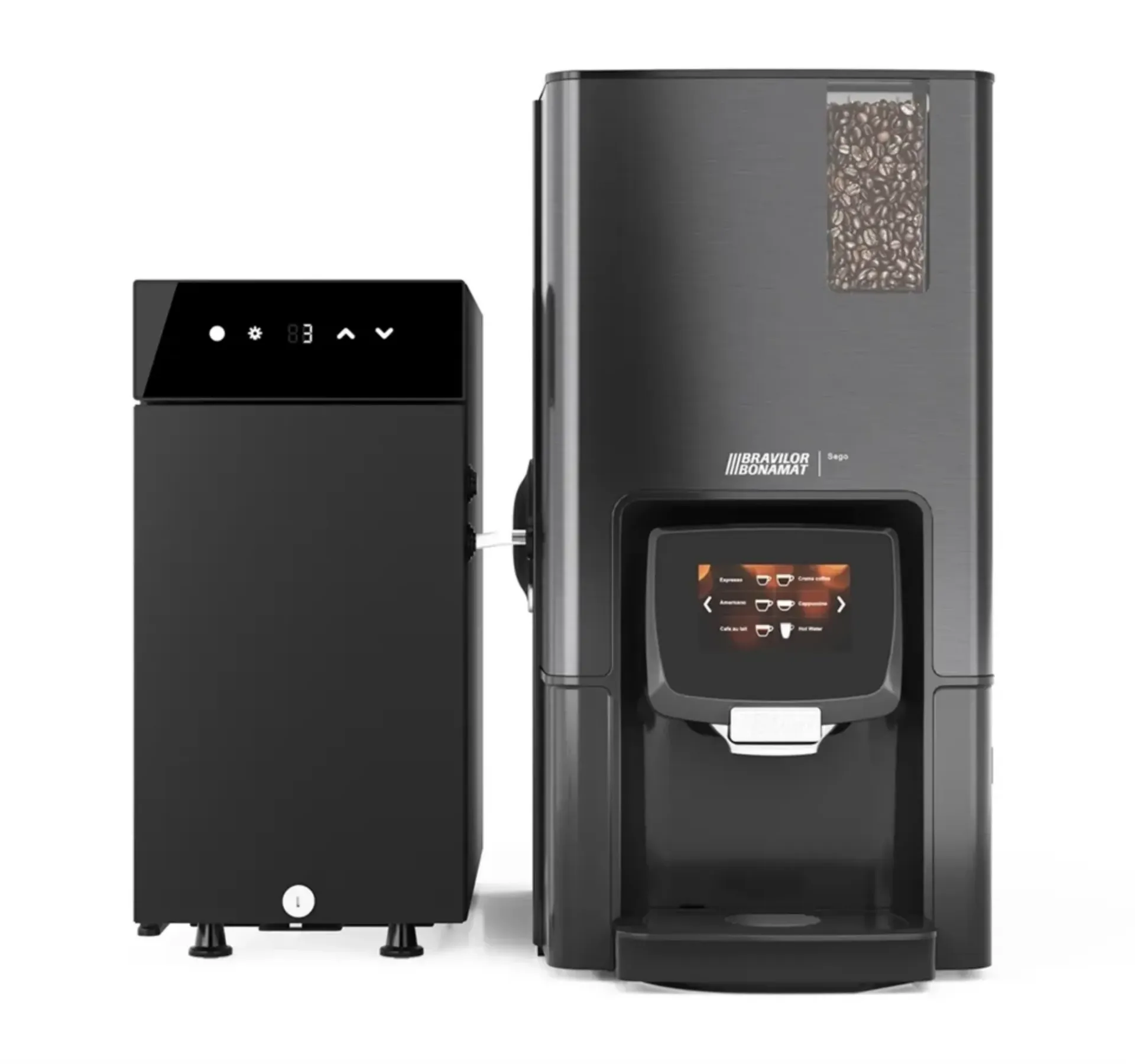
Choose a commercial bean-to-cup coffee machine when you need fast, consistent coffee without relying on a skilled barista on every shift. These machines grind whole beans per drink, automate espresso extraction, and can produce one-touch milk drinks when paired with a compatible milk system. Matching the machine to your real-world peak volume (not just average demand) is central to avoiding slowdowns, inconsistent output, and service disruption.
Where they fit in Irish businesses
In hospitality and workplace settings, speed, consistency, and downtime directly affect service flow and staffing. Offices, hotels, cafés, and forecourts often choose bean-to-cup systems for repeatable results and simpler operation across different staff members. Milk-system choice (fresh, UHT, or powdered) can materially change both hygiene workload and running costs.
Frequently Asked Questions About Commercial Bean-to-Cup Coffee Machines
What’s the difference between a commercial and a domestic bean-to-cup machine?
A commercial bean-to-cup machine is designed for higher daily volumes, faster recovery between drinks, and more robust components (for example grinders, brew units, and heating systems). Commercial units also typically provide larger ingredient capacity, better waste handling, and controls that make it easier to standardise drink recipes across multiple users. Always compare the manufacturer’s stated duty cycle, recommended drinks per day, and service/support expectations for the specific model you are considering.
How do I size a bean-to-cup machine for my café, office, or hotel in Ireland?
Size around peak demand rather than average demand. A quiet office may need steady output across the day, while a hotel breakfast service can require high output in a short window, placing pressure on heating performance, milk capacity, and rinse/recovery times. When comparing models, ask for realistic throughput guidance for your drink mix (espresso vs milk drinks) and your peak window, not just a headline cups-per-day figure.
Do bean-to-cup machines need a mains water connection, or can they use a tank?
Many commercial models are available as tank-fed, mains-plumbed, or configurable depending on specification. A mains feed can reduce interruptions in higher-volume settings, but it introduces requirements around filtration/conditioning and proper plumbing. If you cannot plumb in, a tank model can still work well if staff can reliably refill and follow the manufacturer’s hygiene and water-quality guidance.
Do I need a water filter in Ireland?
In many Irish commercial settings, filtration and/or water conditioning is strongly recommended for taste consistency and to reduce scale-related breakdowns, but the right solution depends on your site water and the machine manufacturer’s requirements. Ask your supplier/installer what the manufacturer expects for warranty support and what is appropriate for your specific water supply.
What cleaning and daily maintenance should I expect?
Expect routine tasks such as emptying waste/grounds containers, cleaning drip trays, wiping user touchpoints, and running manufacturer-recommended rinse/clean cycles. Milk systems require additional hygiene attention because milk residue can quickly affect flavour and food safety. Follow the machine manufacturer’s written cleaning schedule and keep cleaning records where they form part of your food safety management system.
Are bean-to-cup machines suitable for cafés that care about coffee quality?
They can be, provided you choose a model with strong espresso performance and set it up to suit your beans and desired recipes. Many operators value consistency: different staff members can produce the same drink standard without extensive barista training. If your brand is built around manual espresso preparation and high control over extraction variables, a traditional espresso machine and grinder workflow may still be a better fit for your primary bar.
What milk options work best for Irish businesses?
You typically choose between fresh milk systems (often with a fridge or cooled container), UHT milk (still requiring correct handling once opened), or powdered milk systems depending on your drinks menu, your cleaning capacity, and your storage constraints. Fresh milk is commonly preferred for premium taste and texture. Powdered systems can reduce perishability risks and refrigeration load, but the drink result and menu capability can vary by machine configuration. Your decision should be aligned to the drinks you intend to offer and the hygiene routines you can consistently maintain.
Can I lease or finance a commercial bean-to-cup coffee machine in Ireland?
Many Irish businesses use leasing/finance rather than paying upfront. Options and eligibility vary by provider, and finance is typically subject to approval and provider terms. When comparing offers, confirm what is included (installation, commissioning, servicing, consumables, response times) and what sits outside the agreement.
Choose the Right Bean-to-Cup Coffee Machine for Your Site
To keep day-to-day service consistent, match capacity, milk system type, and water setup to how your team actually works. If you are considering finance, review the written terms and what is included, noting that finance is subject to approval and provider terms. When you are ready, contact Caterboss for trade-focused advice on selecting a commercial bean-to-cup machine and a milk system suitable for your premises and expected workload.
Overview of Coffee Machine Milk Systems
Choose your milk system based on what you can realistically store, clean, and control day to day, not just what looks best on a spec sheet. Fresh milk, UHT milk, and powdered milk systems can support similar café-style milk drink menus, but the exact menu (and the drink quality) depends on the specific machine model and configuration. For example, some machines need additional canisters/modules for chocolate drinks, and milk texture performance varies across fresh, UHT and powdered systems depending on the frothing technology used.
The practical difference is whether you’re managing a chilled perishable product (fresh), a shelf-stable liquid (UHT before opening), or a dry ingredient (powder). Fresh milk often delivers the most familiar dairy taste and texture, but it demands strict temperature control and consistent cleaning. UHT and powdered options can simplify storage and reduce wastage, but drink texture and flavour can differ depending on the system and settings.
Taste and texture in the cup
Taste matters because repeat coffee sales are driven by consistency. Many sites prefer fresh milk for mouthfeel and foam quality, particularly for cappuccinos and lattes, but results still depend on the machine’s milk-frothing design and how well it is maintained. When comparing options, ask for a demonstration on the same drink types you plan to sell (for example flat white vs cappuccino), because “milk drinks” can look similar in a brochure but perform differently in practice.
Hygiene and temperature control
Milk is a higher-risk food, so your hygiene routines must be realistic during busy service. For chilled storage controls, FSAI guidance indicates refrigerated foods should be maintained at 0–5°C (see FSAI temperature control advice for food businesses). Fresh milk setups therefore depend on adequate refrigeration capacity, good stock rotation, and reliable cleaning routines.
UHT milk reduces some risk before opening because it is shelf-stable, but once opened it still needs appropriate chilled storage and handling in line with food-safety practice and your HACCP controls.
Storage and waste in Irish premises
Storage matters because many counters have limited space and undercounter refrigeration is already busy with other products. UHT or powdered milk can reduce pressure on fridge space and lower the risk of spoiled stock if volumes fluctuate. That advantage only holds if staff can follow the operating routine correctly, including cleaning and ingredient rotation.
Cleaning workload and staff habits
Cleaning matters because milk residue can cause off-flavours, blockages, and hygiene risks. Fresh milk systems typically require the most consistent milk-circuit cleaning routines. Powdered systems can reduce some perishable handling, but they still require disciplined cleaning of dispense areas and any mixing components to prevent build-up and stale flavour. The “best” system is usually the one your team can keep consistently clean across all shifts.
Fresh Milk vs Powdered Milk Systems
Fresh and powdered milk systems change how your bean-to-cup machine delivers milk drinks day to day. Fresh milk uses chilled dairy that is frothed on demand, while powdered systems dispense from a dry ingredient and mix according to the machine’s design. Fresh milk often delivers the most familiar café-style taste and texture, but it generally brings higher cleaning demands and tighter temperature control requirements. Powdered systems can be operationally simpler for some sites, particularly where service is stop-start or where refrigeration space is limited.
Taste and texture in the cup
Milk is a major part of the drink, and customers notice changes in foam and mouthfeel. Fresh milk is commonly preferred for a clean dairy finish and creamy texture. Powdered milk results vary significantly by recipe, machine configuration, and drink type; some sites find it acceptable for certain menus and customer expectations, while others prefer fresh milk for milk-forward drinks such as flat whites and lattes.
Cleaning workload and downtime
Fresh systems typically require the most structured daily routine because milk contact surfaces and internal milk pathways must be kept hygienic. Powdered systems can reduce some perishable handling, but they still require cleaning of product-contact areas to maintain taste consistency and hygiene. When evaluating options, ask the supplier to outline (in writing) what cleaning tasks are expected daily, weekly, and periodically for the exact model you are considering, and which tasks are user tasks versus technician tasks.
Food safety and Irish compliance
Food safety matters because milk handling can be a control point in inspections and in your internal HACCP checks. The Food Safety Authority of Ireland (FSAI) notes refrigerated food should be maintained at 0–5°C in its advice on maintaining food temperatures. If you choose fresh milk, plan refrigeration capacity, temperature checks, stock rotation, and a cleaning schedule your team can follow during busy service.
Which system suits your site?
Fit matters because the “best” system is the one your team can run correctly every day. Fresh milk is a strong choice where coffee quality is a priority and staff can follow cleaning and temperature-control routines consistently. Powdered systems may suit locations with uneven demand, limited refrigeration, or frequent staffing changes, where reduced perishability and simplified ingredient handling are priorities. Your expected drink volume, peak periods, and customer expectations should drive the decision.
Frequently Asked Questions About Fresh vs Powdered Milk Systems (Bean-to-Cup)
Which tastes better in a bean-to-cup coffee machine, fresh milk or powdered milk?
Fresh milk is commonly preferred for taste and texture, especially for milk-forward drinks. Powdered milk results vary by machine model and configuration, as well as by drink recipe. If milk texture is a key selling point for your menu, ask for a demonstration on your target drinks using the exact machine configuration you intend to buy.
Which option is easier to keep clean in a busy café or deli?
It depends on the specific machine’s milk system design and your team’s routines. Fresh milk systems often require more structured daily hygiene because milk is perishable and milk-contact paths must be kept clean. Powdered systems can reduce perishable handling, but they still require consistent cleaning of dispense areas and any mixing components. Ask your supplier for the manufacturer’s cleaning schedule for the exact model you’re choosing and confirm what your staff must do versus what requires a technician.
What temperature does fresh milk need to be kept at for food safety in Ireland?
For chilled food safety controls, the FSAI advises refrigerated food should be maintained at 0–5°C (see FSAI advice on maintaining food temperatures). How you monitor and document this should align with your own food safety management procedures.
Is powdered milk safer than fresh milk for low-volume sites?
Powdered systems can reduce some operational risks associated with storing and handling open chilled milk, particularly if service is sporadic. However, any system still needs proper cleaning and appropriate ingredient storage. The safer choice is the one that best matches your staff capacity and allows you to maintain consistent hygiene controls.
Which system suits a pub, hotel, or convenience-style counter in Ireland?
It depends on your drinks volume, staffing, and the role coffee plays in your offer. Fresh milk can suit hotels and food-led venues where premium milk drinks are expected and cleaning routines are reliable. Powdered systems may suit sites where demand is inconsistent or where refrigeration and staff time are constrained. Use your peak-period workflow as the deciding factor, not just the headline spec.
Choose a Bean-to-Cup Milk System That Works in Real Service
Match the milk system to your actual daily volume, staffing cover, cleaning routine, and the coffee standard your customers expect. Caterboss can help you shortlist a trade-grade bean-to-cup solution based on your site and service pattern, with finance options potentially available subject to approval and provider terms. Contact the Caterboss team to discuss your requirements and narrow down suitable machine configurations.
Installation and Technical Requirements
Plan power, water, space, ventilation, and access properly and your machine is more likely to run reliably in day-to-day service. Because commercial machines vary significantly by model and configuration, confirm requirements against the specific manufacturer documentation and with qualified professionals before purchase and installation.
This section is not an installation guide. A qualified specialist should design, install, commission, and test all electrical and plumbing connections in line with applicable Irish requirements and the manufacturer’s instructions.
1. Check electrical supply and protection (planning questions)
In Ireland, premises are commonly supplied at 50Hz, and many sites have either single-phase or three-phase service, but exact arrangements and available capacity vary. Confirm your site supply and the machine’s stated electrical requirements (from the data plate/manual) with an appropriately qualified electrician before you commit.
Questions to ask your electrician/installer:
- What is the site’s existing supply type and available spare capacity for this specific machine configuration?
- Does the machine manufacturer require a dedicated circuit, and what protection/isolation is required?
- Will any upgrades be needed to meet the manufacturer’s stated requirements and local rules?
2. Decide on tanked vs plumbed water (and waste) as a specification choice
Tanked setups can suit locations where plumbing changes are impractical, but they require reliable staff refilling and hygiene routines. Plumbed-in setups can suit higher-volume service, but they depend on correct plumbing, suitable filtration/conditioning as required by the manufacturer, and a planned waste route where applicable.
Questions to ask your supplier/installer:
- Is this model available tank-fed, mains-plumbed, or both, and what changes (if any) are required to switch between them?
- What filtration/conditioning does the manufacturer require for warranty and performance?
- Does the machine require a waste connection or drip-tray management plan, and what are the options for our counter layout?
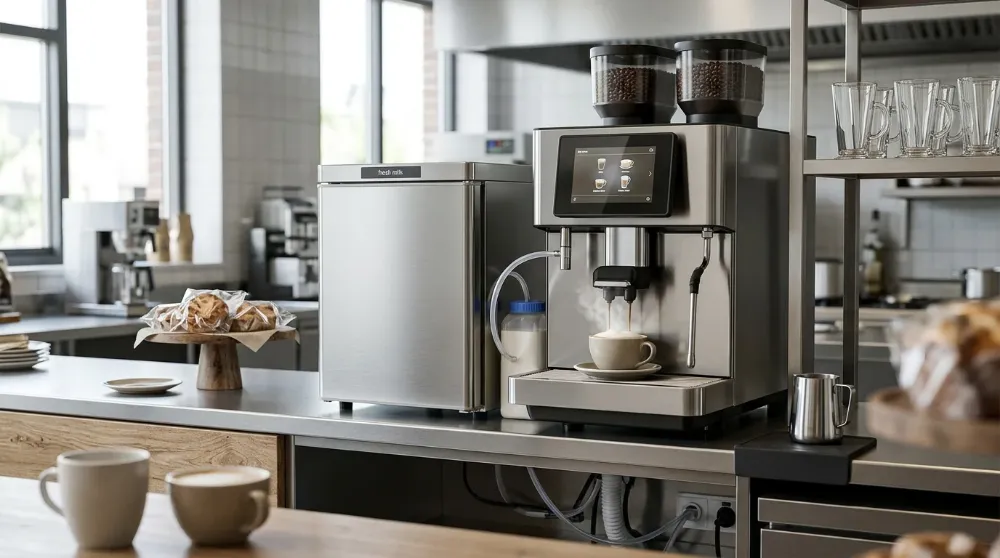
3. Allow space and airflow for integrated milk fridges (site planning)
Integrated fridges and cooling modules need adequate ventilation and must be sited appropriately to maintain safe temperatures in day-to-day use. The Food Safety Authority of Ireland notes that fridges and chill storage cabinets should be between 0°C and 5°C (see FSAI storage guidance).
Questions to ask during planning:
- What are the manufacturer’s minimum clearances for ventilation, cleaning access, and servicing access?
- Is the planned location likely to be exposed to heat sources (ovens, hot counters, direct sun) that could affect cooling performance?
- Where will staff store backup milk, and how will stock rotation be handled at peak times?
Frequently Asked Questions About Bean to Cup Coffee Machine Milk System Installation in Ireland
Do bean to cup coffee machines with milk need a dedicated electrical circuit in Ireland?
Some models do, and some don’t; it depends on the machine’s rated load and the site’s existing electrical capacity. Have an appropriately qualified electrician confirm requirements from the manufacturer documentation and assess your site before purchase. Avoid assuming a dedicated circuit is unnecessary, particularly where the machine includes heating elements plus a milk fridge or cooling unit.
Is it better to choose a tanked or plumbed-in milk coffee machine for an Irish café?
It depends on volume and workflow. Tanked machines can suit lower-volume or flexible placements but require staff refilling discipline. Plumbed-in machines can reduce service interruptions in higher-volume environments but require proper plumbing and adherence to the manufacturer’s filtration/conditioning requirements. Your installer and supplier should confirm what’s appropriate for your premises and intended usage.
Do I need filtration or a water softener for a plumbed coffee machine in Ireland?
Often, yes, but the right approach depends on your local water and the manufacturer’s requirements for the specific model. Ask your supplier/installer what water treatment is required for performance and warranty support, and base the choice on site conditions rather than assumptions.
What temperature should milk be kept at for coffee service in Ireland?
For chilled storage, the Food Safety Authority of Ireland advises that fridges and chill storage cabinets should be kept between 0°C and 5°C (see FSAI storage guidance). Your procedures for monitoring and documentation should follow your food safety management system.
How much space should I allow around an integrated milk fridge on a bean to cup machine?
Exact clearances vary by model and must follow the manufacturer’s specifications. In planning terms, allow for ventilation clearance, plug and hose clearance, door opening, and enough access for staff to remove and clean milk-contact components as required. Ask the supplier for a dimensional drawing and service-access requirements for the exact model/configuration.
Who should install a commercial coffee machine in Ireland?
Electrical connection and any fixed wiring should be carried out by an appropriately qualified electrician. Plumbing connections should be done by a competent professional. Many manufacturers and service providers also require commissioning by an approved technician to confirm correct setup and warranty eligibility. Confirm requirements in writing for the specific machine model you plan to install.
Get Your Coffee Machine Setup Right Before It Hits Service
If you are fitting out a café, deli, hotel breakfast station, office, or self-serve site in Ireland, match the machine and milk system to your power, water, and space constraints before you commit. Browse Caterboss’s range of Bean To Cup Coffee Machines and, if you want help checking requirements for your premises, call Caterboss on 01 687 5772 to discuss suitable models and what information your electrician/plumber will need for a compliant installation. Finance options may be available subject to approval and provider terms.
Customization and Drink Options
Drink capability varies by machine model and configuration. In practice, many Irish sites focus on a core set such as espresso, americano, cappuccino, latte and flat white. Hot chocolate and mocha availability depends on whether the machine includes (or can be configured with) a compatible chocolate system/canister and suitable programming.
Drink menus you can realistically run
Match drink variety to what your customers actually order and what your staff can maintain. Look for programmable recipes and user profiles if multiple staff members will operate the unit. If you require chocolate-based drinks, confirm (in writing) that the specific model/configuration supports them rather than assuming they are included.
Milk temperature and foam texture controls
Controls and milk-texturing performance differ across models. If foam texture is part of your brand standard, ask for a demonstration using the milk types you intend to serve (dairy and/or alternatives) and the cup sizes you sell most. Also confirm what changes are user-adjustable versus technician-only settings, so you can maintain consistency without “guesswork” adjustments on shift.
High-volume suitability and contactless payments
In busy environments, queue management matters. The Central Bank of Ireland notes that, at POS terminals, mobile wallets have overtaken physical contactless cards in both volume and value (see Changing payment patterns in Ireland). If you operate self-service or high-throughput coffee points, consider payment flow and counter layout alongside machine throughput and cleaning routines.
Maintenance, Servicing, and Support
Ongoing reliability depends on consistent cleaning, periodic servicing, and clear ownership of daily tasks across shifts. Before you purchase, confirm service arrangements, parts availability, and warranty conditions in writing. For milk systems in particular, clarify what is expected of your staff daily versus what requires a technician visit.
1. Clean daily and control temperatures (operational controls)
Build daily cleaning and temperature checks into your documented routine. The FSAI states refrigerated food should be maintained at 0–5°C (see FSAI advice on maintaining food temperatures). For fresh milk setups, ensure your refrigeration capacity and staff practices can maintain that range during busy periods.
2. Service the system, not just the screen prompts
Planned servicing matters because some residues and wear points are not obvious from the outside. Ask your service provider to confirm what is included in routine servicing for your specific model (for example, which components are dismantled, cleaned, sanitised, or replaced) and what is excluded.
3. Lock in training and call-out expectations
Ask for clarity in writing on training scope, response times, and what counts as a chargeable call-out. Training should cover how staff are expected to complete the manufacturer’s cleaning routine and how to spot early warning signs (for example unusual taste, temperature drift, or repeated prompts) so issues can be resolved before they disrupt service.
Integrating Bean-to-Cup Machines with Irish Businesses
The best setup varies depending on your service style, your peak rush, and how milk-heavy your menu is. A hotel breakfast station, a café counter, and a forecourt self-serve unit can have very different staffing patterns and cleaning realities, so the milk system decision should be made with workflow and hygiene control in mind.
Hotels, cafés, and forecourts: match milk to throughput
In high-volume settings, simplify wherever you can without compromising your brand standard. The Accommodation & Food Services sector recorded the largest proportion of new entrant employments in 2023 (22.5%), according to the CSO’s Earnings of New Entrants to Employment 2023 key findings. In practical terms, that can mean higher staff turnover and less time for training, so choosing a system with a realistic cleaning routine and clear staff accountability can reduce inconsistency and waste.
Cultural and logistical details that trip people up
Customers notice temperature and texture fast, but consistency depends as much on process as on equipment. Confirm who is responsible for cleaning at each shift change, where milk is stored during service, and how stock rotation is managed. If the machine sits in a warm or enclosed counter, confirm ventilation clearances and refrigeration performance with the supplier and installer before you finalise the layout.
Frequently Asked Questions
How do you keep bean-to-cup coffee machine milk systems safe, consistent, and customisable?
Use a documented routine that your team can follow consistently: chilled storage controls for milk, manufacturer-specified cleaning cycles, and scheduled servicing. “Customisable” should mean controlled and repeatable: lock in your preferred drink recipes and limit who can change settings. Where your operation is covered by HACCP procedures, keep appropriate records for cleaning and temperature checks.
How often should you clean the milk system?
Follow the specific manufacturer cleaning schedule for the exact model and milk system configuration you use, and align it to your volume and operating hours. If you are comparing machines, ask each supplier to provide the written daily/weekly cleaning requirements and specify which tasks are staff tasks versus technician tasks. This is one of the most important “real-life” differences between models.
Can you customise foam and temperature reliably?
Many machines allow adjustment, but reliability depends on the model, the milk system design, and keeping the underlying hygiene and temperature controls stable. If consistency is critical, ask for a demo and confirm which parameters are user-adjustable and which require technician access. Also confirm how the machine performs with the milk types you intend to serve (for example whole milk, low-fat, and plant-based alternatives), as results vary.
Bean-to-Cup Coffee Machine Milk Systems FAQs (Ireland)
What is a commercial bean-to-cup coffee machine?
A commercial bean-to-cup coffee machine is a higher-capacity system designed for workplaces and hospitality venues that grinds whole beans per drink, automatically extracts coffee, and can prepare milk drinks using an integrated fresh-milk or powdered-milk solution depending on the model. Compared with domestic machines, commercial systems are built for higher output, programmable recipes, and easier repeatable operation across multiple users.
If you want a baseline on common features and considerations, the bean-to-cup coffee machines guide is a useful reference point.
Is a bean-to-cup machine suitable for my Irish office, hotel or hospitality venue?
Often, yes, if the machine and milk system match your real service pattern.
Bean-to-cup can be a strong fit when you need:
- Speed with consistency across shifts
- Lower training overhead for day-to-day operation
- A milk system that suits your environment (fresh, UHT handling, or powdered), based on refrigeration capacity and cleaning discipline
In practice, the decision comes down to peak volume, your ability to keep milk safely chilled where applicable, and whether your team can complete the cleaning routine consistently.
How automated are the milk and coffee cleaning routines?
Most commercial bean-to-cup machines include guided cleaning prompts and programmed rinse/clean cycles. Automation typically means the machine runs a cycle while staff complete supporting tasks such as emptying waste containers, cleaning contact parts, and checking ingredient areas. Confirm the exact cleaning routine for the model you choose and ensure it fits your staffing reality.
Milk hygiene matters because milk is a higher-risk food. The FSAI highlights the importance of maintaining safe cold chain controls (see FSAI temperature control guidance), which is why correct chilled storage and consistent cleaning discipline are central to milk-based coffee service.
Can this machine be used in high-traffic commercial environments such as canteens or forecourts?
Yes, provided you select a true commercial model sized for your peak rush and configured appropriately for your drink mix. Confirm realistic throughput for milk drinks (not just espresso), verify that refrigeration and cleaning routines are workable, and check service support and parts availability. Uptime in high-traffic environments depends as much on maintenance planning as it does on the machine specification.
Do you offer nationwide installation and support across Ireland?
Ask your supplier to confirm, in writing, the installation scope, commissioning requirements, service coverage, parts availability, and what is included in planned maintenance versus call-outs. Also review contract and warranty terms, including any conditions around commissioning and ongoing maintenance, as these can vary by supplier and manufacturer.