




Food waste is often discussed in broad environmental language. The EPA's newly released 2024 estimate gives Irish hospitality a better starting point: a national scale, a defined sector and a reminder that measurement has to come before confident claims about prevention or savings.
A large share, with a broad hospitality scope
The EPA estimates that restaurants and food services generated about 181,000 tonnes of food waste in 2024, roughly 26% of Ireland's total. [Environmental Protection Agency]
That sector estimate was 3%, or about 6,000 tonnes, higher than the 2023 estimate. [Environmental Protection Agency]
The increase describes the estimated national sector total. It does not show that every venue wasted 3% more, and it cannot supply a waste rate or euro cost for an individual business. Those require measured purchasing, production and disposal data from the site.
For this statistic, restaurants and food services include hotels, B&Bs, pubs, restaurants, cafés, takeaways and canteens. [Environmental Protection Agency]
That scope is important. A hotel breakfast operation, a pub kitchen and a canteen may have different menus, service patterns and waste routes. The national figure groups them for reporting; it does not erase those operational differences.
The national denominator is wider again
Across all five food-supply-chain sectors, the EPA estimates 708,000 tonnes of food waste in Ireland in 2024, equivalent to 132 kg per person. [Environmental Protection Agency]
The 26% share is calculated against that national total, not against food purchased by restaurants or meals served. Applying it to a venue's own bins, purchasing budget or sales would create a number the release does not support.
Definition and status change the reading
The EPA definition includes inedible material such as bones and fruit cores, and the 2024 figures remain subject to further validation after submission to Eurostat. [Environmental Protection Agency]
Including inedible parts means the estimate is not a synonym for avoidable edible food. The validation note also means the figures should be dated and described as preliminary where they appear in a policy, investment proposal or public statement.
Build a number the kitchen can act on
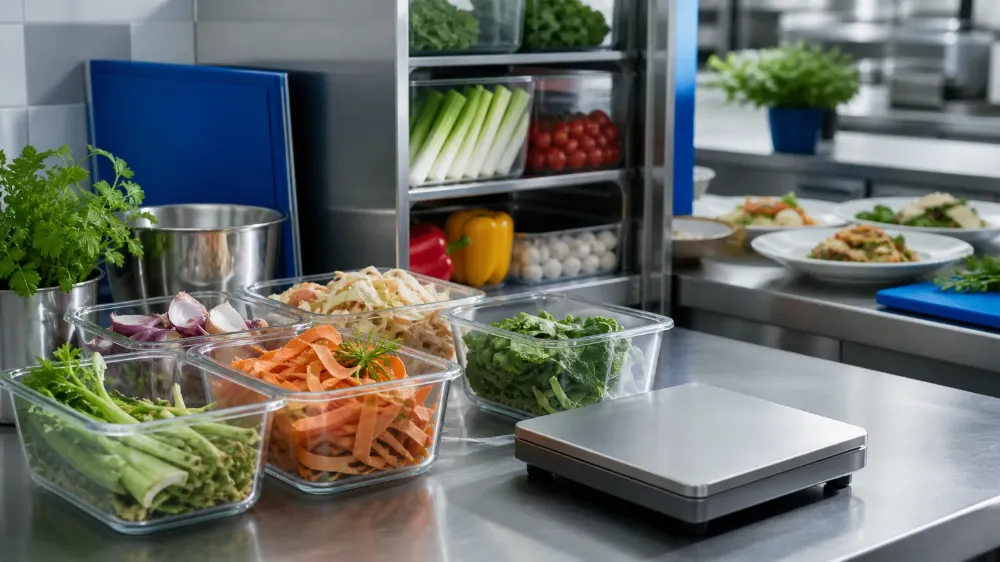
The practical response is a short, consistent measurement period. Record weight, where the material arose and the service or preparation stage; keep the categories simple enough for staff to use; and link the results to covers or portions for that same period. Repeat the exercise before and after one clearly defined change.
That local baseline can distinguish a purchasing issue from preparation loss, a menu problem from portion return, or a storage failure from an unavoidable inedible component. Only then is it sensible to assess changes to forecasting, storage, prep equipment, menu design or service method.
Define the measurement boundary before the first container is weighed. Decide whether the exercise covers one service or a full trading week, which storage and preparation areas are included, and how inedible parts will be distinguished in the local record. Keep tare weights and units consistent, and do not compare two periods if one includes a function, closure or menu change that the other does not. A short note on unusual trading conditions is often as valuable as another column of figures.
The EPA estimate establishes scale and urgency. A venue's own measured record establishes what to change—and whether the change worked.