


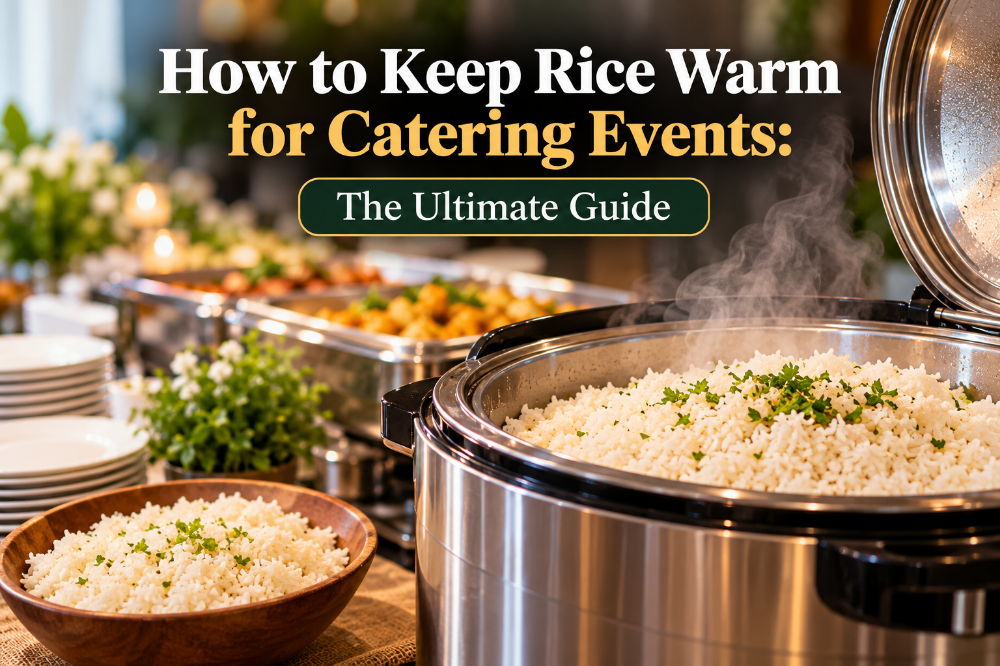
How to Keep Rice Warm for Catering Events: The Ultimate Guide
Having years of experience as a catering equipment supplier, I have seen the challenges that caterers face when it comes to keeping different foods warm. It is a common issue that can really make or break your catering event. This blog will be dedicated to discussing how to keep rice warm and maintain its high quality so your rice stays warm, fresh and ready to serve.
Table of Contents
-
How Do You Keep Rice Warm for Catering?
-
Why Keeping Cooked Rice Warm Safely Matters
-
Common Challenges in Keeping Rice Warm
-
Effective Solutions for Keeping Rice Warm
-
How to Keep Rice Warm Without Drying It Out
-
Best Rice Warming Equipment for Catering
-
Case Studies: Real-World Success Stories
-
Frequently Asked Questions
-
Final Thoughts
How Do You Keep Rice Warm for Catering?
To keep rice warm for catering, use a commercial rice warmer, steam table or suitable chafing dish that can maintain a consistent hot-holding temperature. In Ireland, hot-held rice should generally be kept at 63°C or above. Keep the rice covered where appropriate to prevent it from drying out, check its temperature regularly with a food thermometer and follow the equipment manufacturer's instructions. For transport, use a suitable insulated food carrier and verify that the rice remains at a safe temperature.
Why Keeping Cooked Rice Warm Safely Matters
First, let’s talk about why keeping rice warm is so important. Rice is a staple in many cuisines and often forms the base of different dishes. If rice is not at the optimal temperature, it can become dry, clumpy and even unsafe to eat. This can affect food quality, overall guest experience and can even damage your reputation as a caterer.
According to the Food Safety Authority of Ireland (FSAI) hot foods like rice should be maintained at a temperature of at least 63°C (145°F) during hot holding to prevent the growth of harmful bacteria, including Bacillus cereus.
Cooked rice needs a little extra care because Bacillus cereus spores can survive the cooking process. If rice is left at unsuitable temperatures, the bacteria may multiply and produce toxins, some of which aren't reliably destroyed by reheating. That's why it's important to keep rice properly hot during service or cool and refrigerate it promptly when it's not being served.
Common Challenges in Keeping Rice Warm
Over my time in the hospitality industry, I have heard many stories from caterers who struggled with keeping rice warm. Here are some common challenges:
1. Drying Out
Rice can lose moisture when exposed to heat for extended periods. This means it turns into dry, unappetising grains that can ruin a perfectly good dish.
2. Uneven Heating
Improper heat distribution can lead to some of the rice being too hot while other portions are lukewarm or even cold.
3. Overcooking
Another thing to take note of is: keeping rice at high temperatures for too long can cause it to overcook, resulting in mushy grains.
4. Food Safety Concerns
If rice isn’t at a specific safe temperature, it can become a breeding ground for harmful bacteria.
5. Equipment Limitations
A struggle for many caterers is finding the right equipment that will maintain optimal temperature and moisture levels for rice over long periods.
Effective Solutions for Keeping Rice Warm
Now, let’s examine some solutions that are effective in keeping rice warm:
How to Keep Rice Warm Using Steam Tables
Steam tables are a popular choice for keeping rice warm. These units use hot water to create steam which helps maintain temperature and moisture.
Best Practices for Using Steam Tables:
-
Add hot water to the steam table before the event starts.
-
Follow the steam table's recommended pan depth and loading capacity to ensure even heating.
-
Keep the water level in the steam table consistent, adding hot water as needed.
Using Commercial Rice Warmers
Then there are rice warmers. These are specialised units that are designed specifically for keeping rice at the optimal serving temperature and moisture level.
Advantages of Rice Warmers:
-
Maintain consistent temperature and humidity.
-
Often have non-stick interiors for easy cleaning.
-
Designed specifically for keeping cooked rice warm, helping maintain a consistent serving temperature and reduce moisture loss when used correctly.
How to Keep Rice Warm in Chafing Dishes
Chafing dishes are not as specialised as rice warmers but they are effective for smaller events or even as a backup option.
Tips for Using Chafing Dishes:
-
Use high-quality fuel to maintain consistent heat.
-
Keep the lid closed when not serving to retain heat and moisture.
-
Consider using a humidity dome or water pan to prevent drying.
Transporting Hot Rice in Insulated Food Carriers
For short-term storage or transport, Insulated food carriers can also be a useful option for transporting cooked rice to catering venues.
How to Transport Cooked Rice Safely:
Insulated food carriers help reduce heat loss during transport, making them useful for catering events away from your kitchen. How long rice stays hot depends on the carrier, its starting temperature and the transport conditions, so it's important to check the temperature rather than rely on a set holding time.
Which Rice Warming Equipment Is Best for Catering?
|
Equipment |
Best suited for |
Main consideration |
|
Commercial rice warmer |
Regular rice service |
Designed for holding cooked rice |
|
Steam table |
Buffet and large-scale service |
Monitor heat and moisture |
|
Chafing dish |
Buffet serving stations |
Check holding temperature |
|
Insulated food carrier |
Transporting cooked rice |
Retains heat but doesn't actively heat food |
How to Keep Rice Warm Without Drying It Out
Based on personal experience and feedback from successful caterers, there are some key practices that can keep rice warm without endangering its quality:
1. Don't Overfill Containers
Something that also leads to uneven heating and potentially unsafe temperatures in areas of the rice is overfilling (both rice warmers and steam table pans). You should follow the equipment's maximum fill level to allow for proper heat distribution.
2. Stir Regularly
Depending on the equipment you're using, gently stirring the rice can help distribute heat and moisture more evenly. Always follow the manufacturer's instructions, as some dedicated rice warmers are designed to retain heat and moisture without frequent opening.
3. Monitor Temperature Consistently
You should use a food thermometer to check the rice temperature often. Cooked rice should be maintained at an internal temperature of at least 63°C (145°F) to ensure food safety.
4. Use the Right Type of Rice
Different varieties of rice hold up better to extended warming than others. For instance, long-grain rice tends to stay separate and fluffy longer than short-grain rice.
5. Proper Initial Cooking
Start with properly cooked rice. Undercooked or overcooked rice will not hold up well during the warming process.
Best Rice Warming Equipment for Catering
Having the right equipment is important for successfully keeping rice warm during catering events. Here’s a look at some top recommendations:
1. Commercial Rice Warmers
Example: Roband Rice Warmer SW9600
-
Capacity: 55 portions
-
Features: Gasket sealing lid, non-stick coated rice bowl, solid stainless steel body
-
Price: €682.43
Why I Recommend It: This unit has received excellent feedback from my customers who cater large events regularly. Its large capacity makes it ideal for high-volume catering.
2. Electric Chafer
Example: Olympia Square Electric Chafer
-
Capacity: 6 litres
-
Features: Soft close glass lid, wet heat operation, supplied with pan
-
Price: €702.02
Why I Recommend It: This electric chafer offers excellent temperature control making it easier to maintain the ideal temperature for rice.
3. Insulated Food Carrier
Example: Cambro S Series Ultra Insulated Top Loading Gastronorm Food Tray Carrier
-
Capacity: 28 litres
-
Features: Built-in seal and self-venting design makes for easy cleaning
-
Price: €428.28
Why I Recommend It: These carriers are excellent for transporting rice to event sites. They're durable and easy to clean, making them a worthwhile investment for caterers.
Case Studies: Real-World Success Stories
Here are some success stories from my customers who have used these rice warming strategies:
Case Study 1: Asian Fusion Food Truck
An Asian food truck was struggling to keep their rice warm and fluffy throughout their working hours. They were using a standard food warmer but this was drying out the rice by the end of the day.
Solution: We recommended they invest in a commercial rice warmer.
Result: After taking our advice and investing in a commercial rice warmer, they reported a significant improvement in rice quality - even during their busiest days. Customer satisfaction increased and they saw a boost in repeat customers that first month.
Case Study 2: Large-Scale Catering Company
A catering company that usually caters events for 500+ people was having problems with uneven heating when using multiple chafing dishes for rice.
Solution: We suggested they switch to a combination of large-capacity rice warmers for bulk storage and electric chafers for serving stations.
Result: This allowed the company to maintain consistent rice quality throughout their events. They reported a reduction in food waste and received rave reviews from clients on the improved quality of their rice dishes.
FAQs
Q: How long can I safely keep rice warm in a rice warmer?
Cooked rice should be kept at a temperature of 63°C (145°F) or above when hot-held. For best quality, it is advisable to serve rice within 4 hours, although this is not a universal food safety time limit when the correct temperature is continuously maintained. Always check the rice's temperature with a food thermometer and follow appropriate food safety procedures.
Q: Can I use a slow cooker to keep rice warm for catering?
Slow cookers can indeed keep rice warm, but they can lead to rice being overcooked. Commercial rice warmers or steam tables tend to be better suited for maintaining rice quality over longer periods.
Q: How do I prevent rice from becoming mushy when keeping it warm?
In order to prevent rice becoming mushy, you should avoid overfilling your warming container, stir the rice regularly and maintain proper temperature and moisture levels. Using long-grain rice can help as it tends to hold its shape better than shorter grains.
Q: Can you reheat rice that has been left at room temperature?
Rice that has been left at room temperature for too long may be unsafe to eat, even if it is reheated. Cooked rice should be kept at a safe hot-holding temperature or cooled and refrigerated promptly using appropriate food-safety procedures. If you're unsure how the rice has been stored, it should not be served.
Final Thoughts
Keeping rice warm for a catering event doesn't have to be tricky. With the right equipment and a little preparation, you can keep your rice fluffy, tasty and ready to serve, whether you're catering for a small gathering or a crowd of 500.
From commercial rice warmers to chafing dishes and insulated food carriers, it's all about finding what works best for your setup. Just remember to keep an eye on temperatures, avoid letting the rice dry out and follow proper food-safety practices.
At the end of the day, it's the little details that make a big difference. Get those right, and you'll have one less thing to worry about when the guests start arriving!
Need help finding the right equipment for your next event? Explore our range of catering food warmers at Caterboss and find an option that suits your setup.