






When an electrical concern arises around a fryer, dishwasher or other powered kitchen equipment, the immediate job is not to diagnose it. Record what was reported, check what the current risk assessment and Safety Statement cover, identify missing evidence and send each question to the right person. The Health and Safety Authority (HSA) maintains guidance on electrical safety as well as dedicated catering and hospitality material. This guide applies that wider workplace framework to restaurant, takeaway and pub-kitchen scenarios; it is not a separate set of kitchen-electrical rules.
Place the concern within the workplace risk assessment
In Ireland, the Safety, Health and Welfare at Work Act 2005 is the primary health and safety legislation. The Safety, Health and Welfare at Work (General Application) Regulations 2007 include requirements concerning workplace electricity and the use of work equipment. The HSA treats Safety Statements and risk assessment as core workplace management obligations.
Start there rather than creating a detached purchasing note. Describe the equipment or activity, the concern raised and the people who could be affected. At this stage, the task is to establish whether the workplace documents represent the situation accurately, not to reach a technical verdict about the equipment or installation.
Check what the existing assessment covers
Locate the relevant entry in the current risk assessment. Check whether it identifies the equipment or work activity, electricity-related concerns, existing controls and the person responsible for follow-up. Irish workplace safety topics include defined duties for employees alongside regulatory roles. In the kitchen scenario, record the affected employees and any relevant contractors.
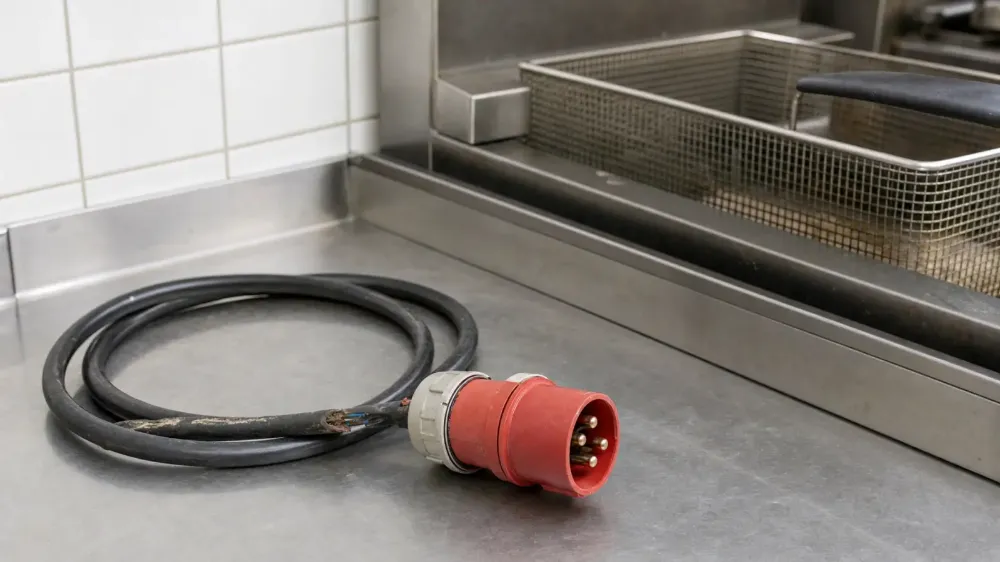
Write down a report of lead damage, adaptor use or uncertain maintenance arrangements in neutral terms. Note who reported it, when it was noticed and where the equipment is located. Do not ask managers or kitchen staff to diagnose the cause, declare continued use safe or assume that replacement is the answer.
Build the evidence file before deciding what to do
Separate records already held from information that is still missing. The HSA provides electrical-safety information and dedicated catering and hospitality guidance, while BeSMART.ie is available as an online risk-assessment tool for Irish workplaces. These resources support workplace management, but the file must still reflect the facts of the individual kitchen.
| Evidence item | Status | Owner and follow-up |
|---|---|---|
| Incident or defect report | Held or missing | Record who will obtain it |
| Manufacturer instructions | Held or missing | Request the correct document |
| Equipment datasheet | Held or missing | Confirm the exact model |
| Available maintenance records | Held or missing | Locate the existing history |
Do not fill gaps by guessing inspection dates, connection details or technical results.
Keep management, electrical and supplier questions separate
These three lanes are not interchangeable. Irish workplace guidance references IS 10101, the National Rules for Electrical Installation, and works needing certification. This review should not attempt a technical interpretation of either matter.
| Management | Competent electrical professional | Equipment supplier |
|---|---|---|
| Record the concern, check workplace documents, gather records and assign follow-up. | Address questions about the premises installation, proposed connection and professional verification. | Provide model-specific ratings, connection documents, operating instructions and manufacturer requirements. |
Supplier documents are useful inputs, not professional verification that the kitchen installation suits the equipment. Keeping the lanes distinct also prevents an equipment enquiry from becoming an accidental safety declaration.
Prepare a chip-fryer enquiry without pre-judging suitability
Give the supplier the exact model under consideration. Ask for its electrical ratings, connection documentation, operating instructions and manufacturer requirements, including whether the stated requirement is 230 V single-phase or 400 V three-phase. If an existing fryer is involved, identify it separately so records for the two models are not mixed.
Use the reply to identify information gaps and prepare any professional referral. Do not present it as proof that an existing connection is suitable, that either fryer is safe or that replacement is necessary. A proposed change is a reason to organise the evidence, not a conclusion about the premises installation.
Review the Safety Statement and risk assessment
Consider whether the current risk assessment and Safety Statement adequately represent the reported concern, proposed equipment, work process, people affected and newly available technical information. If the position is unclear, record the gap, assign the appropriate management, professional or supplier input and set a follow-up.
Do not treat every enquiry or purchase as a major installation alteration. Keep that question open until the relevant information has been gathered and routed to the appropriate person.
Worksheet for the review and follow-up
Use this editorial worksheet to keep the review orderly and stop unresolved questions disappearing into an email chain.
| Reported concern | What was reported, by whom and when? |
|---|---|
| Issue category | Equipment, installation, documentation or maintenance arrangement |
| People potentially affected | Employees and relevant contractors |
| Evidence available | Which records and documents are held? |
| Missing information | What still needs to be obtained? |
| Action category | Management, professional referral or supplier request |
| Responsibility | Named person and required outside input |
| Follow-up | Target date and evidence of completion |
This is an editorial organising worksheet, not a workplace risk-assessment template or compliance certificate. It cannot be used to declare equipment or an installation safe. The completed entries should feed into the business's own safety-management process and the appropriate professional or supplier discussion.
Frequently asked questions
Does a supplier's reply prove that the kitchen installation is suitable?
No. It provides model-specific information for the review. Questions about the premises installation, connection and professional verification belong with an appropriate competent electrical professional.
Does every proposed chip-fryer purchase automatically create a certification requirement?
No automatic conclusion should be drawn from the purchase alone. HSA guidance references IS 10101 and works needing certification. Whether particular work falls within that scope should be referred for appropriate professional input rather than decided from a supplier enquiry.
Who should handle a damaged lead report or concern about adaptor use?
Management should record the report and assign follow-up without asking kitchen staff to diagnose it. Route the electrical issue to a competent electrical professional. Ask the supplier only for relevant model documents where these are needed.
Is the worksheet a substitute for a risk assessment or compliance certificate?
No. It is an editorial aid for recording concerns, responsibilities, missing evidence and follow-up. It neither replaces the workplace process nor certifies equipment or an installation.
Where can an Irish food-service operator find official support?
The HSA publishes official guidance on Safety Statements and risk assessment. BeSMART.ie also provides an online risk-assessment tool supporting Irish workplace safety management.
Complete the worksheet, mark each unresolved question and bring the organised information to the appropriate competent professional or equipment supplier.
Referenced sources