








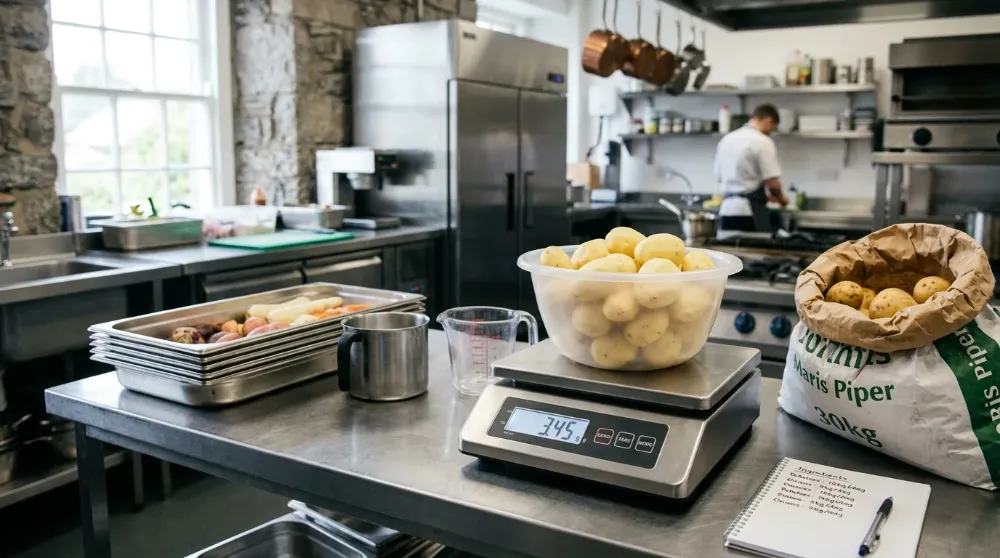
Commercial Weighing Scales Capacity in Ireland
Commercial weighing scale capacity affects your accuracy, throughput, and compliance when you buy, portion, pack, or sell goods by weight in Ireland.
You are choosing a scale that comfortably covers your heaviest typical loads while still giving you the readability you need for day to day tasks, whether that is portion control in a commercial kitchen, fast check weighing in a warehouse, or price computing at a counter. You also need to match capacity decisions to legal for trade requirements where applicable, since scales used for transactions by weight must meet Irish legal metrology rules and be suitable for verification.
Alongside capacity, you are balancing practical constraints like platform size, power options, material choice for wet or food prep areas, and core functions such as tare, zero, counting, and price computing. Longer term reliability matters too, so calibration, servicing access in Ireland, and how the scale is used and cleaned become part of the real cost of ownership.
With those tradeoffs in mind, you can get clear on what capacity means in practice and how to match it to the work you do.
Understanding Commercial Weighing Scale Capacities
The right capacity is the foundation of a commercial weighing scale because it defines the heaviest load you can weigh without risking poor readings or damaging the load cell. In Ireland, operators often take their cue from legal-for-trade expectations and what is required in real premises, not just what looks good on a spec sheet. The nuance is that a bigger capacity can reduce sensitivity for lighter items, so you are always balancing maximum load against the smallest weights you need to measure accurately.
Capacity in day-to-day Irish settings
Capacity matters differently in a prep kitchen (portion control and recipe consistency), a warehouse (incoming goods and pick-pack speed), and retail (customer-facing accuracy). If you regularly run close to max capacity, you will see more overload errors, more knocks to the load cell, and more recalibration headaches, which tends to show up at the worst possible moment during busy service.
Why capacity links to accuracy and workflow
A well-matched capacity keeps you weighing in the middle of the scale’s range, where results are typically steadier and faster to settle. That translates into fewer re-weighs during peak periods, fewer disputes at goods-in, and cleaner stock figures when you are costing margins, especially when you also pay attention to the readability and verification details that sit behind the number on the display.
Frequently Asked Questions About Commercial Weighing Scale Capacities
What capacity should I choose for a commercial kitchen in Ireland?
Choose a capacity that comfortably covers your heaviest routine container plus product, with headroom for busy service. For example, if you portion 10 kg boxes into gastronorms and you also weigh mixing bowls, a 15 kg or 30 kg bench scale is often more practical than a 6 kg unit, provided the readability still suits your portion sizes. If your work is mostly spices, small batch prep, or coffee, a lower-capacity scale with finer readability usually gives you better day-to-day control.
Is a higher-capacity scale always better?
No. Higher capacity often comes with a coarser increment (readability), which can make small weights jump around or round up more than you would like. In simple terms, a scale built to weigh heavy items can be less sensitive for light items, so you get the best results by matching capacity to what you actually weigh most of the time.
What happens if I overload a weighing scale?
Most commercial scales will throw an overload error, but repeated overloading can damage the load cell, knock the calibration out, and shorten the scale’s working life. In a working kitchen or goods-in area, that usually turns into downtime, re-checking deliveries, and inconsistent portioning, all of which cost you time and money.
How much “headroom” should I allow above my normal maximum weight?
A practical rule in busy Irish hospitality settings is to avoid operating at the top end of the scale during normal use. Aim to keep your typical heaviest weighments well below the maximum capacity so the scale stays stable, settles quickly, and is less likely to be accidentally overloaded when someone drops a heavy container on during a rush.
Does capacity affect legal-for-trade use in Ireland?
Capacity itself is only one part of legal-for-trade suitability. If you are selling by weight, the scale generally needs to be appropriate for trade use, set up correctly, and verified in line with Irish legal metrology requirements. For Ireland-specific guidance, check the Legal Metrology Service under the National Standards Authority of Ireland (NSAI) so your equipment and processes align with what is expected on inspection.
Choose the Right Commercial Scale Capacity for Your Kitchen or Stores
Get your weighing sorted without guesswork. Talk to Caterboss about what you are weighing day-to-day, the containers you use, and whether you need trade-approved weighing for retail. You will get practical, Ireland-specific advice on picking a capacity that holds up in busy service, with delivery nationwide and support if you are fitting out a new site or upgrading equipment. If cash flow matters, ask about flexible finance options that are subject to approval and partner terms, so you can match the scale to your operation without tying up unnecessary capital.
Pick a commercial weighing scale that suits your heaviest day-to-day loads, gives you the right readability for portioning and pricing, and is compliant for trade use in Ireland when you’re selling by weight. Measure the biggest tray, bowl, or box you actually use in service, allow practical headroom so you are not pushing the max capacity during a rush, and match the graduation to the way you work, such as grams for bakery prep or stable larger increments for butchery and deli counters. Confirm whether the scale is suitable for trade use and properly verified for Irish use, since compliance sits under legal metrology rules and is enforced in practice. Choose a build that fits your environment, including wet prep, flour dust, washdowns, and tight counter space, so the scale stays accurate and dependable when the pressure is on and the queue is out the door.
How to Choose the Right Capacity Scale for Your Business
How do you pick the right capacity scale for an Irish bakery, restaurant, butchery, or deli?
Start by mapping your heaviest real item, then add headroom so you’re not overloading the scale in a rush. Choose a graduation (readability) that matches how you portion and price. Confirm trade suitability where relevant and make sure the scale will survive your prep area, because the wrong spec costs time and can create compliance issues when you are selling by weight.
1. Size capacity to your heaviest job
In practice, you want your biggest tray, box, or cut of meat to sit flat and weigh comfortably, so build in extra capacity for bowls, liners, and a bit of overflow in busy service using a suitable option from Commercial Weighing Scales. That extra headroom tends to pay for itself quickly when staff are moving fast and you still need consistent results.
2. Match graduation to how you portion
Fine graduation matters most for bakeries (grams for ingredients), while butcheries and delis often prioritise stable readings under heavier loads, especially when portions are being cut quickly on a counter. In Ireland, the framework for non-automatic weighing instruments is given effect through the European Union (Non-Automatic Weighing Instruments) Regulations 2018 (S.I. No. 47/2018). Getting the readability right keeps portion control tight without slowing the team down when you are trying to hit speed and consistency at the same time.
3. Confirm it’s legal for trade (if you sell by weight)
If you charge customers by weight, you are in legal metrology territory and the scale needs to be suitable for use in trade, not just accurate in a general sense. In Ireland, legal metrology enforcement and information sits with NSAI Legal Metrology, including inspection of measuring instruments used in trade, as outlined on its Legal Metrology enforcement information and wider Legal Metrology pages. Once you know the scale is compliant for trade use, it becomes much easier to focus on the practical realities of where it will live and how it will hold up day after day.
Frequently Asked Questions About Choosing a Commercial Capacity Scale in Ireland
What does “capacity” and “graduation” mean on a weighing scale?
Capacity is the maximum weight the scale can handle safely and accurately, such as 6 kg, 15 kg, or 30 kg. Graduation (also called readability or division size) is the smallest increment the scale shows, such as 1 g, 2 g, or 5 g. In simple terms, capacity is how heavy you can go, and graduation is how fine the numbers are, which affects portion accuracy, waste control, and speed during prep.
Do I need a trade-approved scale in Ireland?
You need a scale suitable for trade use when you sell or charge by weight, for example meats, cheeses, salads, or pay-by-weight hot counter items. In Ireland, this falls under legal metrology requirements enforced through NSAI Legal Metrology, so it is worth checking that the model you are buying is intended for trade use and is set up correctly for that environment. The practical point is that a non-trade scale can be a false economy if you are using it at the point of sale.
Is a kitchen prep scale different from a retail counter scale?
Yes, and the difference matters. Prep scales are often chosen for fast, repeatable weighing in the kitchen and may not be suitable for trade use where customers are charged by weight. Retail counter scales are commonly selected with trade use in mind and may include features like clear customer display, price computing, and configurations designed for front-of-house use, which ties directly into compliance and daily workflow.
How much extra capacity should I allow above my heaviest item?
A sensible rule in busy hospitality is to allow headroom for the container, packaging, and the reality that staff may overload slightly during a rush. If your heaviest typical load is close to the scale’s limit, readings can become less stable and you risk premature wear. A bit of extra capacity gives you calmer service and fewer “why is this jumping around?” moments on a Friday evening when everything is flying out.
What’s the best graduation for an Irish bakery?
For bakery ingredient weighing, finer graduations are usually more useful, often in grams, because small differences affect dough hydration, batch consistency, and cost control. The right choice still depends on your batch sizes and workflow, since extremely fine readability can sometimes feel slower or fussier in a high-volume prep environment. A scale that stays stable on a floury bench and is easy to wipe down tends to be just as important as the numbers on the spec sheet.
Can I use one scale for both the kitchen and the counter?
You can, but it depends on your layout and how you sell. If the scale is being used for trade transactions, it needs to be suitable for trade use, and it also needs to physically suit front-of-house demands such as visibility and durability. Plenty of businesses run a dedicated prep scale in the kitchen and a separate trade scale at the counter, which keeps service smooth and avoids unnecessary handling and re-calibration issues.
Choose a Commercial Scale That Fits Your Service and Stays Compliant
Get your weighing right and the rest of the prep line runs cleaner, faster, and with less waste. Browse Caterboss for trade-grade options in Commercial Weighing Scales, and if you are unsure on capacity, graduation, or whether you need a scale suitable for trade use, contact the Caterboss team for straight, practical advice that fits how your kitchen actually operates.
Legal Metrology and Compliance in Ireland
Legal metrology compliance means your weighing scale meets Irish rules for accuracy and verification when money changes hands based on weight. In practice, it’s what makes a scale suitable for trade use for pricing meat, deli items, fish, ingredients sold by weight, or prepacked packs. The nuance is that a perfectly good kitchen scale can still be non-compliant if it isn’t appropriate for regulated use in trade or isn’t set up and used in line with applicable requirements, which is where many businesses get caught out.
What “legal for trade” means day to day
If you sell by weight, the rules for non-automatic weighing instruments are implemented in Ireland and enforced through the Legal Metrology Service of the National Standards Authority of Ireland (NSAI). That’s why trade scales will typically have required markings and documentation, along with capacity and graduation details you are expected to use correctly. That matters because an under-capacity scale or the wrong graduation can misprice portions, trigger customer disputes, and create unnecessary hassle during an inspection, so it’s worth getting the spec right before you start comparing features.
Picking a compliant capacity and graduation
Once you know you need a trade-approved model, choosing the right capacity and graduation gets practical fast. The scale should handle your heaviest routine loads without living at the top end, where accuracy and stability can suffer in real use, especially in a busy prep area. Also pay close attention to the division (d) or graduation because this is what controls how finely the scale displays weight and how it behaves near the lower end of its range.
It’s worth scanning the Commercial Weighing Scales category with “capacity” and “division/graduation” in mind before you narrow to specific models, because that spec choice tends to decide whether the scale suits your portions and pricing as cleanly as it suits compliance.
Essential Features and Functions of Weighing Scales
Experts generally agree the “best” commercial scale is the one that speeds up routine jobs without sacrificing repeatable accuracy. For Irish businesses selling by weight, the key reference point is legal metrology, as set out by the National Standards Authority of Ireland (NSAI), because it covers weighing instruments used in trade where consistency and transparency matter in day-to-day buying and selling. What you need still varies by job: portion control, stock-taking, dispatch, or direct-to-customer pricing all push you toward different functions and build choices, so it pays to match the scale to how you actually work on the floor.
Core functions you’ll actually use
- Zero resets the display for a clean start after bumps or drift.
- Tare subtracts bowls, trays, or boxes so you weigh product only.
- Counting estimates piece quantity from a sample weight, handy for fast stock counts.
- Price computing multiplies weight by €/kg to reduce till errors when pricing by weight.
These are the buttons you reach for in busy service, and they only stay reliable if the hardware and power setup suit your environment.
Power, platform, and construction
For trade use in Ireland, accuracy expectations sit under the NSAI’s legal metrology work on measurements used in commerce, so it is worth grounding your buying decision in official guidance from the National Standards Authority of Ireland (NSAI). In practical terms, choose stable power (mains power with battery backup is common in busy counters) and a platform size that fits your largest container without overhang. Stainless platforms tend to cope best with damp conditions and regular cleaning routines, which is where day-to-day durability starts to matter as much as the numbers on the spec sheet.
Sector-Specific Recommendations for Scale Capacities
Choosing a commercial weighing scales capacity is really about matching your busiest job, not your average one. Hospitality and retail usually prioritise fine graduation and compact footprints, while logistics and manufacturing prioritise higher capacities and larger platforms. Across all sectors, if you sell by weight, the “legal for trade” requirement can decide the exact model, so it pays to get clear on compliance as well as capacity.
Hospitality (cafés, restaurants, food production)
Hospitality weighing is about repeatable portions and day-to-day control. A bench scale suits most prep, while higher-capacity bench platforms cover heavier tubs and batches without teetering on the edge of the platter. If you’re selling by weight, you need to factor in “legal for trade”, and the NSAI notes it inspects measuring instruments in trade use in Ireland, so correct markings, documentation, and use matter just as much as the numbers on the spec sheet.
Retail (butchers, delis, farm shops)
Retail counters commonly suit moderate capacities with a compact platter for quick, accurate serving, while back-of-house packing often benefits from higher capacity on a larger bench platform to stop boxes overhanging and rocking. That extra stability is a small detail, but it makes a big difference when staff are moving fast and you still need consistent weights you can stand over.
Logistics (couriers, warehouses)
Logistics needs headroom for dense parcels, so higher-capacity floor platforms with larger deck sizes help prevent overload errors and speed up scan-and-weigh. In busy depots, that capacity buffer tends to protect both the scale and your workflow, especially when odd-shaped loads show up without warning.
Manufacturing (batching, QA, dispatch)
Manufacturing often splits: bench scales for batching and QC, then heavier-capacity platforms for pallets and outbound, because a single “do-it-all” scale is usually slower and less accurate in practice. Once you start thinking in terms of separate jobs like mixing, checking, and dispatching, it becomes much easier to pick platforms and capacities that actually suit each station.
Running and Servicing Considerations in Ireland
Keep a commercial scale accurate and reliable in Ireland by building a simple routine around cleaning, calibration, and clear records of checks and repairs. Use trained service support and confirm whether your use case needs verified “legal-for-trade” weighing under NSAI Legal Metrology rules. Store and operate the scale within its rated environment and capacity to reduce drift and damage. If readings change after moving the scale or changing typical loads, treat it as a clear checkpoint to have it checked and calibrated before relying on it, especially where pricing, portion control, or compliance is on the line.
1. Keep day-to-day wear under control
Daily spills, vibration, and overloads are what shorten scale life fastest, so basic cleaning and sensible loading matter more than people think. Follow the manufacturer’s cleaning instructions and your own food safety cleaning procedures, and keep flour, sugar and grease away from load cells, feet, and the indicator housing, as these are the spots that quietly cause unstable readings over time.
2. Calibrate to your risk and usage
Calibration is your accuracy reset; in busy prep rooms, schedule it after knocks, moves, refits, or workload spikes. Where weights are used for selling by weight, for prepacked quantities, or for customer-facing transactions, you may also need verification for trade use, which sits under NSAI Legal Metrology, so it is worth confirming what applies before you set your servicing cadence.
3. Choose service cover you can actually reach
Local turnaround is the difference between a quick fix and costly downtime, so check who will actually service the unit on the island of Ireland, what typical call-out lead times look like, and whether spare parts are readily available. If you are speccing new kit, it also helps to stick to established commercial ranges and a supplier who can coordinate warranty support, which is why many buyers start by browsing a dedicated range like Commercial Weighing Scales and working backwards from capacity, readability, and serviceability.
Supporting Irish Business Growth with Right Scale Choices
The right scale choice quietly drives growth because it tightens portion control, speeds up prep, and reduces customer complaints about “light” servings. Irish enforcement also matters. NSAI’s legal metrology role, referenced in the SFPA’s overview of NSAI weighing system requirements, is a good reminder that accurate equipment helps protect trust in traded weights where legal-for-trade rules apply. The nuance is that “best” depends on what you weigh most often, not the biggest occasional item, which is where a lot of purchasing mistakes creep in.
Where capacity and durability show up in day-to-day margins
In a busy kitchen, under-sized capacity forces workarounds, while over-sized capacity can mean poorer readability at small weights. The practical sweet spot is matching routine loads so staff do not have to fight the tool during service. If you want a deeper walkthrough on matching capacity and graduation to real workloads, the commercial weighing scales buying guide is a useful step, especially when you are weighing the value of trade-grade build quality, calibration support, and reliable after-sales backup in Ireland.
Frequently Asked Questions About Commercial Weighing Scale Capacity in Ireland
What is the maximum weighing capacity of this commercial scale?
The maximum weighing capacity is the highest load the scale is designed to measure accurately, and it is always model specific. Check the product specification for the Max value (for example, 6 kg, 15 kg, 30 kg, 150 kg) and allow headroom for bowls, gastronorms, crates, or packaging so you are not weighing close to full capacity during service.
If you regularly load items near the limit, consider stepping up in capacity or choosing a larger platform and sturdier build, as overloads and heavy handling are common causes of drift and damage in busy kitchens and prep areas.
What is the readability/graduation of the scale?
Readability, also called graduation or division, is the smallest step the scale displays, such as 0.1 g, 1 g, 2 g, or 5 g. A lower number gives finer detail for portion control and recipe consistency, but it usually comes with a lower maximum capacity.
When comparing scales, look for the displayed increment across the full range and note that some models use multi-interval graduations, meaning the increment becomes larger as weight increases. If you are pricing, portioning, or batching, the graduation matters as much as capacity because it determines how precisely you can repeat the same result day to day.
Is this scale suitable for commercial/trade/legal-for-trade use?
A scale is suitable for legal-for-trade use in Ireland when it is appropriate for trade applications, meaning it can be used where customers are charged by weight (for example, deli, butchery, fish counter, retail packing, or price computing).
As a practical check, look for trade-related markings and documentation from the supplier, and confirm the model is intended for regulated weighing. In Ireland, the rules for non-automatic weighing instruments are implemented through S.I. No. 47/2018, which applies to instruments made available on the market and used for specified purposes such as determining mass in commercial transactions in scope of the regime (electronic Irish Statute Book).
If you are only weighing ingredients internally for recipes and production control, legal-for-trade approval is often not required, but reliability and repeatability still matter for margins and consistency.
What are the running and servicing considerations for commercial weighing scales in Ireland?
For smooth running in Ireland, plan for both day-to-day care and the occasional service visit:
- Environment and placement: Keep the scale on a stable, level surface away from heavy vibration (mixers, slicers), heat sources, and draughts. Stainless-steel platforms and sealed keypads are worth prioritising in wet prep areas.
- Cleaning: Follow the manufacturer’s cleaning instructions and your site procedures, and avoid flooding the indicator or load cell area. Remove spills quickly to prevent sticky keys and corrosion.
- Power and battery: If you rely on battery operation during service or for mobile setups, keep a charging routine and a spare power supply on hand.
- Checks and recalibration: If readings start to drift, the scale has been moved, or it has taken a knock, arrange calibration and inspection as needed, especially for trade use.
- Downtime risk: Consider how quickly you can get parts or a call-out in your county, because a failed scale can stall portioning, packing, and pricing.
Keeping a record of checks, cleaning, and any servicing makes it easier to defend consistency and confidence in your weights, which is where the real operational value shows up.
What capacity and readability should I choose for a commercial kitchen in Ireland?
Match capacity to the heaviest thing you will routinely weigh, and match readability to the smallest change you need to control.
Typical kitchen setups:
- Recipe and prep bench scale: common low-to-mid capacities with fine readability for spices, baking powder, portioning, and batching smaller mixes.
- Portion control and larger bowls: mid capacities with practical increments for consistent plating and takeaway portions.
- Goods in and heavier containers: higher-capacity platform scales with coarser readability where you are checking deliveries, meat boxes, or bulk ingredients.
If you are weighing for customer charging by weight, add the extra requirement that the scale must be appropriate for legal-for-trade use and maintained accordingly. Once you know your working range, staying on top of equipment updates and practical buying tips helps you keep accuracy, compliance, and cost in balance.
Stay Sharp on Weighing, Compliance, and Kitchen Efficiency
Unlock the potential of your business by subscribing to our newsletter for expert insights and updates on the latest in commercial catering equipment.
When you are ready to turn those insights into a better day-to-day setup, browse our range of commercial weighing scales to compare capacities and graduations suited to Irish kitchens and trade environments.