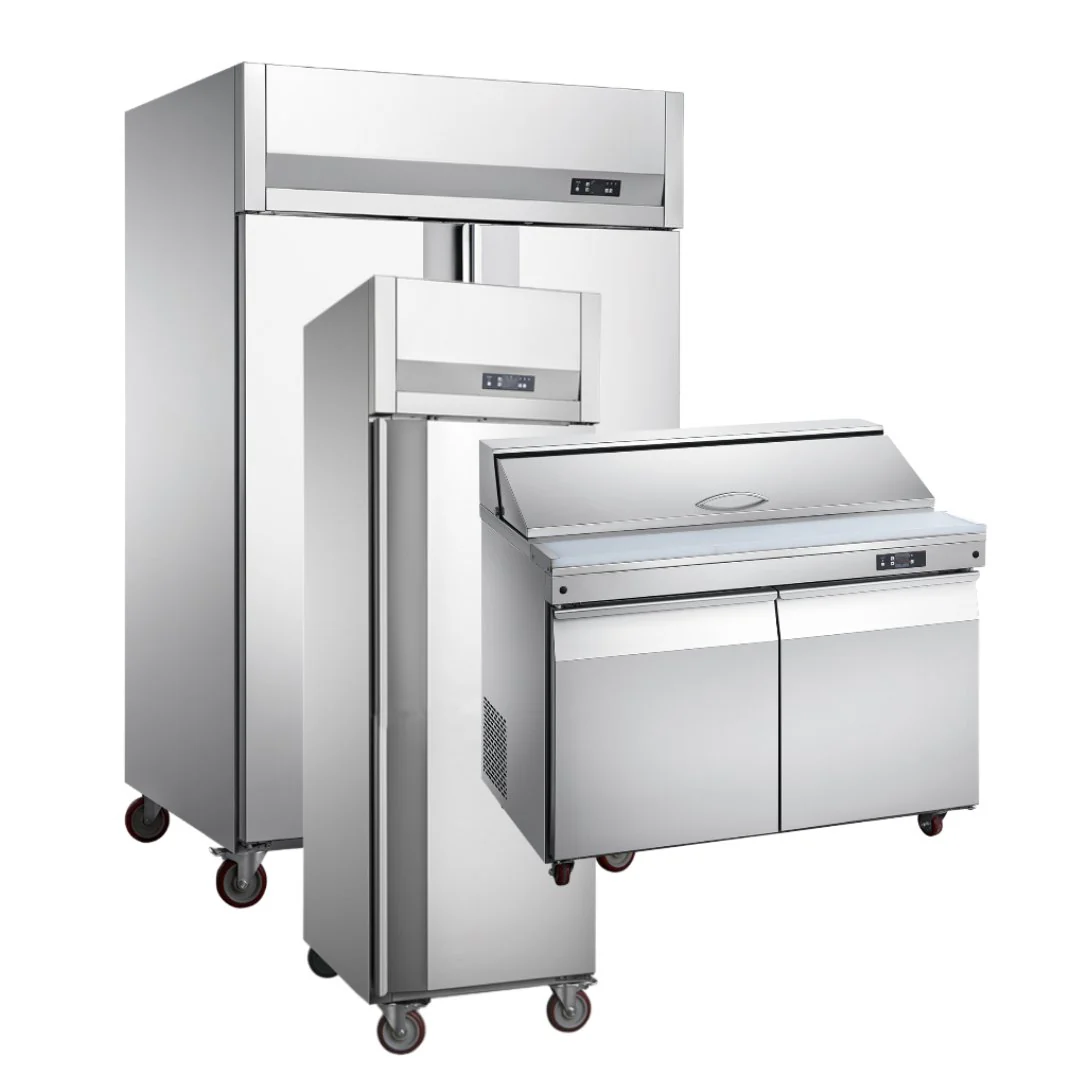






Choosing the right commercial beer fridge matters because it protects beer quality, speeds up service, and keeps running costs predictable in a busy Irish bar or restaurant.
You match the unit to how you actually trade, including bottle and can volume, peak demand, available floor space behind the bar, and whether you need a display-forward glass door or a more efficient solid door. You weigh practical details that affect daily operations, such as single, double, or triple-door layouts, hinged or sliding doors in tight serving areas, temperature control and recovery when doors open repeatedly, adjustable shelving for mixed formats, and lighting that supports quick stock checks without adding unnecessary heat.
You also plan for real-world constraints, including ventilation clearance, noise, power supply, cleaning access, and after-sales support, so downtime does not hit takings on a Friday night. Alongside performance, you keep an eye on energy use and compliance expectations in Ireland, aligning your choice with your food safety management and maintenance routines.
With those priorities in mind, it helps to pin down what counts as a commercial beer fridge in Ireland and what sets it apart from other refrigeration on the market.
Choose the right commercial beer fridge by focusing on what keeps your bar moving in real Irish conditions: stable serving temperatures, fast recovery when doors are opening all night, and a build that stands up to heat, humidity, and hard use. Set temperature control with food safety expectations in mind, including the practical 0–5°C cold-holding guidance used in Irish compliance conversations, and match the fridge type to where it will live, whether that is behind the bar, in the back-bar, or in a tight store room. Compare trade-grade features that actually matter day to day, like airflow, compressor strength, door type, lighting, shelving, and how quickly the unit pulls down after a rush. Factor in what can trip you up in Ireland, including ventilation, placement beside hot equipment, electrical supply, and service access, because a great unit on paper can struggle if it cannot breathe properly. Keep an eye on what is and is not counted in typical BER discussions, since plug-in appliances sit outside the usual fabric-and-heating focus, and make sure you are still buying for running cost and reliability rather than labels alone. If you are stocking bottles and cans for busy rounds, even a small temperature swing can show up in pour quality and customer experience, so dial in your spec and get it right from the start.
Understanding Commercial Beer Fridges in Ireland
What is a commercial beer fridge?
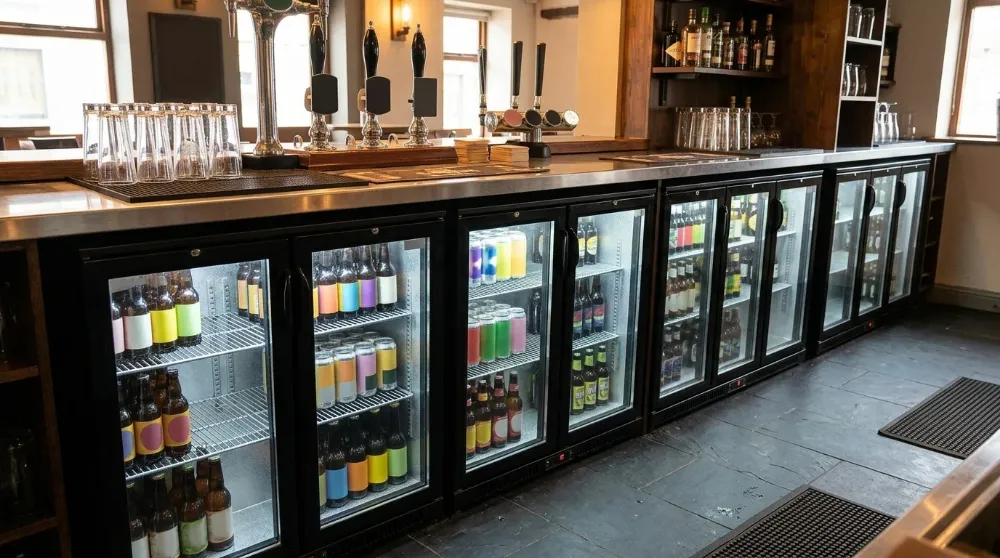
A commercial beer fridge is a trade-grade refrigeration unit designed to chill and hold bottled and canned beer at stable, serving-ready temperatures. In Irish pubs and bars, it is used behind the bar or in the back-bar to keep stock cold, organised, and quick to grab during busy rounds. The key nuance is duty cycle and build quality: they are made for frequent door openings and higher ambient heat than domestic fridges, which is exactly what you get on a packed Friday night.
Temperature control matters in Irish bars
Good temperature management protects quality and compliance, and the FSAI notes that refrigerated food should be maintained at 0–5°C in business settings. Even when you are mainly focused on beer, that same discipline around consistent chilling, monitoring, and not overloading shelves is what keeps you out of trouble during inspections and keeps stock tasting as intended. The practical point is that a commercial unit should recover temperature quickly after repeated openings, because a slow pull-down tends to show up during service.
How they differ from other refrigeration units
Beer fridges prioritise fast recovery, bottle and can visibility, and bar-friendly footprints, while general uprights focus on bulk food storage. That is also why BER discussions typically exclude plug-in appliances like fridges, as noted in this Irish BER overview. In real terms, you still need to think about day-to-day running cost, noise, and heat output into the bar area, because those practicalities are what you and your staff will live with every shift, and they influence what features are worth paying for.
Frequently Asked Questions About Commercial Beer Fridges in Ireland
What temperature should a commercial beer fridge be set to in an Irish bar?
For compliance and general cold-holding practice, many Irish businesses work within the FSAI guidance that refrigerated food should be maintained at 0–5°C in business settings, and that is a sensible benchmark to understand when setting up your refrigeration regime. In practice, the best setpoint depends on your product, stock rotation, and how often the doors are opened, so you are aiming for a stable temperature that holds up during busy service rather than a perfect number on a quiet morning.
Can I use a domestic fridge as a beer fridge in a pub?
You can chill beer in a domestic fridge, but it is usually a false economy in a commercial bar. Domestic units are not designed for constant door openings, warm ambient conditions behind a bar, or the same duty cycle, so temperature recovery and reliability can suffer when you need them most. A trade-grade commercial beer fridge is built to cope with service conditions, and that resilience is what keeps you from losing stock or scrambling mid-shift.
Are commercial beer fridges included in BER calculations in Ireland?
Typically, plug-in appliances like fridges are not a core part of BER, which focuses more on the building fabric and fixed services, and this is commonly reflected in Irish BER explainers such as the one linked above. That does not mean running costs are irrelevant, it just means BER is not the best tool for comparing fridges. You still want to compare specifications, energy use information from the manufacturer, and suitability for the space you are installing it in.
Where should a commercial beer fridge be placed behind the bar?
Place it where it can breathe and where your staff can work safely and quickly. Avoid boxing it into tight cabinetry with no airflow, and keep it away from heat sources like coffee machines, glasswashers, fryers, or direct sunlight, because high ambient heat makes recovery harder and can shorten component life. You also want a layout that reduces steps during peak service, because efficiency behind the bar is often the difference between smooth rounds and a queue at the counter.
What features matter most for a back-bar beer fridge in Ireland?
The features that tend to matter in Irish pubs are fast temperature recovery, strong airflow, durable hinges and door seals, adjustable shelving for mixed bottle and can formats, and clear internal lighting for quick picking during service. If the unit will sit in a customer-facing area, noise level and door style also matter, because constant compressor cycling can be more noticeable in quieter venues. The right feature set is the one that matches your service style and how hard the fridge will be worked on a typical week.
Get the Right Commercial Beer Fridge for Your Bar
If you are fitting out a new bar, replacing a tired unit, or trying to speed up service on busy nights, Caterboss can help you choose a trade-grade commercial beer fridge that suits your space, your stock volume, and how your team actually works behind the bar. You can also explore flexible finance options to protect cash flow, subject to approval and partner terms, and get practical advice from an Irish team that deals with hospitality equipment every day. Browse Caterboss’s Refrigeration range and reach out for sizing and spec help so you can lock in stable temperatures and smoother service straight away.
Key Considerations for Buying
You buy a commercial beer fridge for one reason: to keep stock at a stable serving temperature while you’re busy, not babysitting equipment. That means choosing the right size, door style, and efficiency so you don’t lose sales to warm product or waste margin on electricity. The nuance is that “bigger” and “glass-front” can be great for access and upsell, but they can punish you if the unit sits in a warm bar, is opened nonstop, or has poor airflow around it, which is where the detail on capacity really matters.
Sizing and capacity: why it’s the first decision
Sizing matters because you’re really buying airflow and recovery time. A fridge that is too small, overstocked, or tightly packed will struggle to pull product back down to temperature during a busy shift, even if the stated litre capacity looks fine on paper. The SEAI guidance on energy labels and ecodesign rules is useful context here because efficiency and declared performance are tied to how the appliance is tested and rated, and real-world use in Irish bars often includes frequent door openings and warmer plant rooms or back bars.
Door type and energy efficiency: what changes your running cost
Door choice matters because glass doors boost visibility and impulse buys, but they typically bring more heat gain than solid doors, so the compressor has to work harder in a busy venue. SEAI’s energy labelling overview is a handy way to compare models on a like-for-like basis before you commit, particularly if you are weighing up running costs over a long service week. Once you’ve settled on the right door style for how you sell, the practical question becomes how the unit will cope with your layout and day-to-day use.
Critical Buying Factors
What works best depends on your venue’s volume, how staff actually use the fridge in busy service, and where it sits behind the bar. Fáilte Ireland’s operational resources for hospitality regularly come back to flow and efficiency, and that is exactly where the right back-bar fridge spec quietly pays you back night after night. In practice, two fridges with the same litre capacity can perform very differently once you factor in frequent door openings, loading warm stock straight off a delivery, and whether the unit can breathe properly.
Door options and visibility
Start with how you serve: sliding doors suit tight back-bars, while hinged doors tend to seal better but need clearance in front. Visibility matters too because clear sightlines speed up service and reduce the time doors are left open, which is where temperature stability is won or lost in real life.
Temperature settings, shelving, lighting, and energy efficiency
Good controls matter because every degree warmer shortens shelf life, and every degree colder can increase foaming risk when bottles move between cold storage and warmer handling. SEAI’s energy-efficiency guidance for business highlights practical points that apply directly to bar refrigeration, including switching off lights in cooled spaces when not needed and avoiding overfilling fridges so air can circulate properly, as noted in their Energy Efficiency Guide. That ties directly to choosing LED lighting, adjustable shelves that leave airflow gaps, and a commercial beer fridge that pulls temperature back quickly after a rush, especially when you are cycling through stock at pace.
Types and Options of Beer Fridges
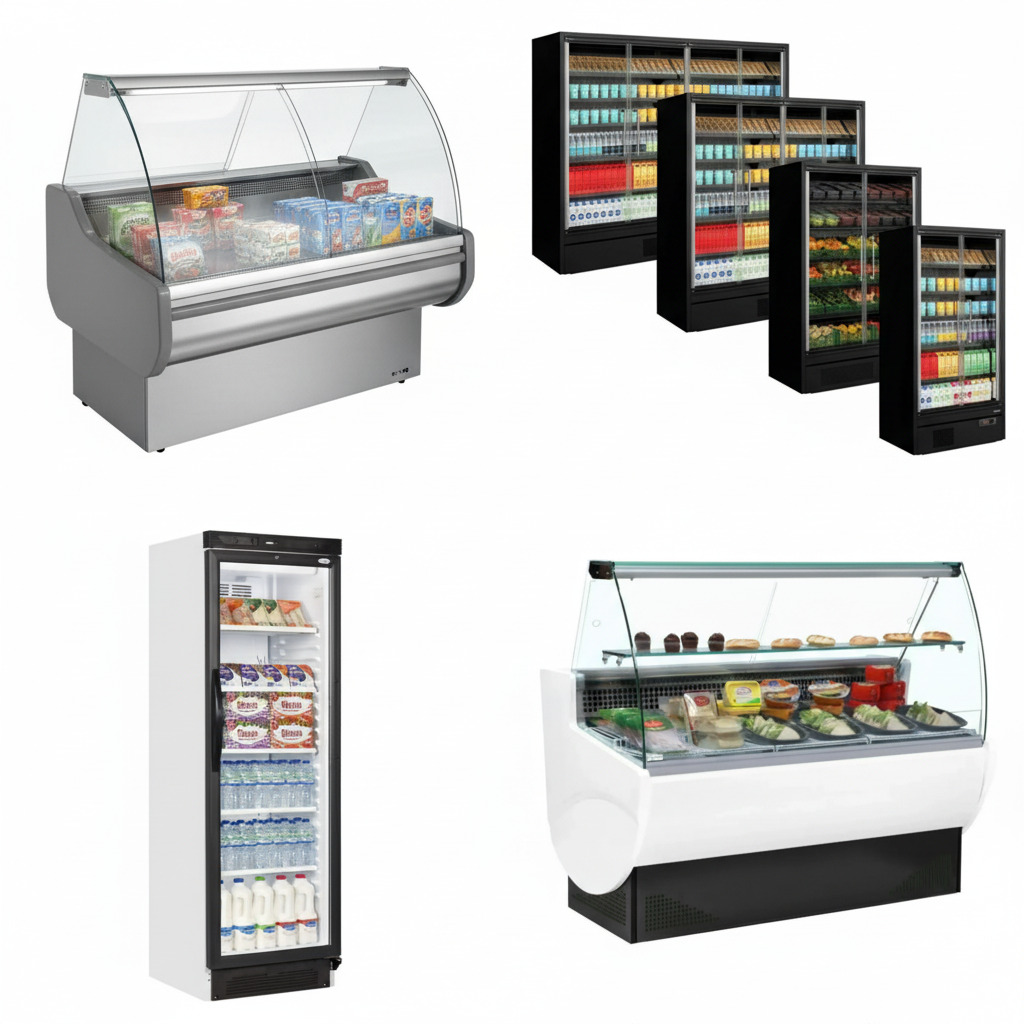
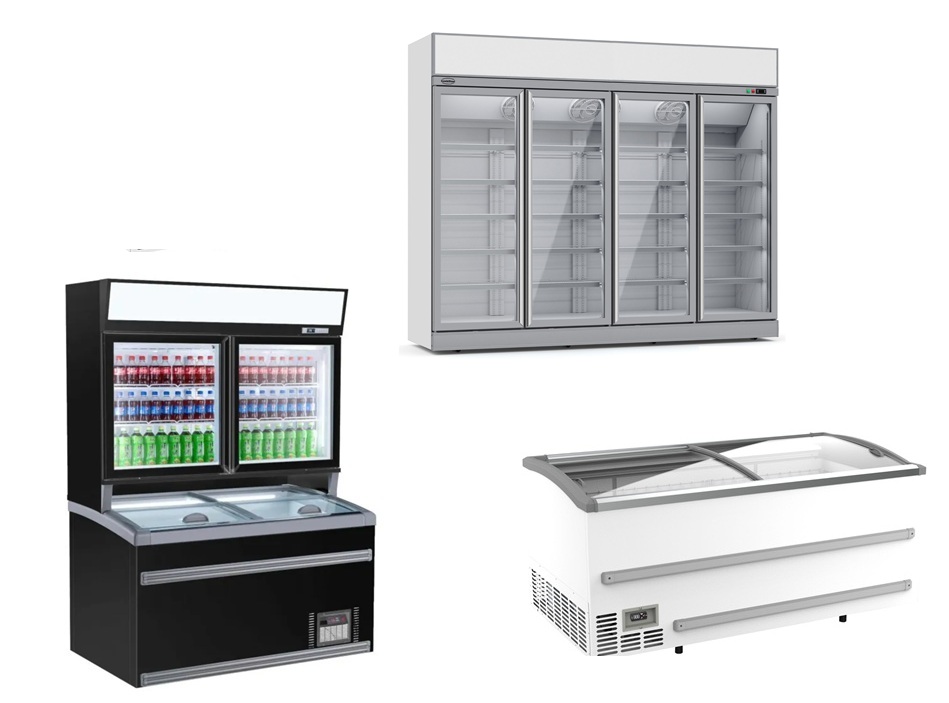
Choosing the right commercial beer fridge comes down to access speed, display needs, and how many kegs or bottles you shift in a normal Irish weekend. The main differences are capacity and workflow: single-, double-, and triple-door units trade footprint for storage and temperature recovery. A single door suits tight back bars, while double and triple doors spread stock so you are not constantly robbing cold by opening the same bay all night. Glass doors sell what is inside at a glance, while solid doors prioritise insulation and steadier internal temperatures. Hinged doors give a tighter seal, while sliding doors save aisle space behind a busy counter, which can make all the difference in a compact bar setup.
Door count: single vs double vs triple
More doors matter because they let you separate best-sellers from backup stock, so service stays fast and temperatures stay more stable during peak trade, even with frequent openings.
Solid vs glass doors
Glass doors help staff pick stock quicker, and SEAI notes in its Energy Efficiency Guide for Retailers that glass-door refrigeration systems are considered more energy efficient than open-case cabinets, mainly due to reduced air leakage. Solid doors still have their place when you want maximum insulation and less light exposure, especially for storage areas where customers are not making the choice at the point of sale.
Hinged vs sliding doors
Hinged doors suit narrower units and tend to seal better, while sliding doors shine when you have no clearance for a door swing behind the counter and you need staff moving past each other without hassle.
How this flows into buying considerations
Once you have picked a type that suits your bar layout and service style, the practical questions around sizing, ventilation, temperature range, and siting on premises become much easier to answer with confidence.
Step-by-Step Buying Process
Select the right commercial beer fridge in Ireland by sizing your capacity (bottles, cans, or kegs), choosing a door style that suits service, and deciding where it will live behind the bar. Shortlist models based on temperature control, airflow, and energy use, then confirm practical site details like power supply, ventilation clearances, and delivery access. Compare Irish suppliers on lead time, warranty terms, and after-sales support, because a breakdown on a busy weekend is never just an inconvenience. Before you pay, double-check your temperature targets and the unit’s noise and heat output in the bar area, as comfort for staff and customers matters more than you think.
1. Define capacity and serving style
Start with your busiest trading window, because peak service exposes weak cooling and awkward layouts fastest. Once you’re clear on volume and how you’ll serve, it’s much easier to pin down the temperature performance you actually need.
2. Set your temperature and control requirements
Aim for stable chilling, because the FSAI states refrigerated food should be kept at 0–5°C, and that same discipline around verified temperatures (not “it feels cold”) carries well into drink storage. When you know the temperature range you want to hold consistently, you can also judge whether a supplier’s support and warranty process will be strong enough to protect your service.
3. Compare suppliers and complete the order
Confirm stock, delivery dates, warranty terms, and who handles call-outs in Ireland, because downtime usually costs more than the price difference. It also pays to ask where parts come from and what typical response times look like, since that’s what keeps your bar moving when something goes wrong.
Frequently Asked Questions About Buying a Commercial Beer Fridge in Ireland
What size commercial beer fridge do I need for a pub or bar?
Base it on peak service and how you stock the bar. Count the maximum number of bottles or cans you want cold at any one time, allow space for bestsellers to be front-loaded, and leave headroom for busy weekends, events, and seasonal uplift. If you serve draught, plan separately for keg storage and gas bottle positioning, because a “beer fridge” and a keg cooler are often different setups in practice.
What temperature should a commercial beer fridge run at?
Most bars aim for a consistent chilled range suited to the beer style and glass service, with stable control being more important than chasing the coldest possible setting. The key habit is monitoring and recording actual cabinet temperature, and keeping product consistently chilled rather than fluctuating through the day. The FSAI’s general food refrigeration guidance of 0–5°C is a good benchmark mindset for any refrigerated storage where you want reliable temperature control.
Do I need special ventilation clearance around a beer fridge?
Yes, in most cases. Refrigeration needs airflow to reject heat, and poor ventilation is a common cause of high running costs and early failures. Always follow the manufacturer’s installation requirements for side, rear, and top clearances, and avoid boxing units into tight joinery unless the model is designed for it, because heat build-up behind the bar tends to show up as warm beer and a struggling compressor.
What power supply should I check before ordering?
Confirm the unit’s voltage and plug type, and make sure you have a suitable, safe socket nearby with capacity on the circuit for continuous operation. In older premises, it is worth having a qualified electrician check the supply if you are adding multiple refrigerated units behind the bar, because nuisance tripping and voltage drop can cause reliability issues you only see during busy service. Any electrical works should be carried out by a competent electrician in line with Irish standards.
How do I compare suppliers in Ireland beyond just price?
Check stock location, realistic lead times, warranty length and what it covers, and who actually handles service call-outs on the island of Ireland. Ask about parts availability, typical turnaround time, and whether the supplier coordinates warranty claims with the manufacturer. A slightly higher price can be good value if it comes with quicker delivery, clearer support, and fewer headaches when you need help fast.
Can I finance a commercial beer fridge in Ireland?
Many Irish hospitality operators choose finance to protect cash flow, especially for new openings or refurbishments. Caterboss offers flexible finance options that can suit different budgets and trading patterns, subject to approval and lender or partner terms. The practical step is to pick the right spec and then match the payment approach to your opening timeline and expected turnover, so you are not under pressure when service ramps up.
Get the Right Commercial Beer Fridge for Your Bar
Choose a beer fridge that stays cold under pressure, fits your space properly, and can be supported quickly in Ireland when you need parts or service. Browse Caterboss’s Refrigeration range for trade-grade back-bar options, or get in touch for practical advice on sizing, delivery, and flexible finance, with all finance subject to approval and partner terms.
Questions to Consider Before Purchase
The right commercial beer fridge depends on how your bar actually runs day to day, not just the spec sheet. In my experience, the biggest headaches come from vague warranty terms and slow call-outs, not the cabinet itself. Your answers will vary with your floor space, opening hours, and whether you need rapid pull-down after deliveries, so it pays to pressure-test the practical details before you buy.
Warranty and service response
Ask what’s covered (labour, parts, compressor) and what service response typically looks like in Ireland, including whether the supplier can support call-outs nationwide or relies on third-party engineers. Getting clarity here is what turns a good-looking unit into something you can actually depend on on a busy weekend.
Installation and compliance
If the system contains F-gas, confirm your installer and servicing engineer are properly certified. The Irish EPA notes that personnel handling F-gases must be certified under the EPA’s F-gas training and qualification rules, which affects who can legally commission and service the unit. Sorting this out early also helps you avoid delays when you are trying to get the fridge in and running.
Operational fit
How many bottles or cans do you need to chill for your busiest night, and how fast must it recover after restock?
Is it fan-assisted, and will the noise level and heat output suit your bar layout?
What’s the cleaning routine for condenser filters, and how easy is access in your space?
What happens if it fails mid-weekend, and who do you contact for support?
Frequently Asked Questions
Set-ups vary by cellar layout, keg throughput, and how tight your service gets on a Friday night. The Food Safety Authority of Ireland is a solid reference point for temperature control expectations in Irish food businesses. Your best choice still depends on door openings, ambient heat behind the bar, and whether you need capacity or fast pull-down when you’re restocking.
What features matter most in Irish pubs?
Start with stable temperature recovery, strong door seals, and easy-clean interiors, because constant openings punish weak cabinets fastest. It’s also worth checking controller accuracy, usable shelf space for your keg sizes, and whether the unit is designed for the ventilation you actually have behind the bar, as airflow issues can undo even a good spec on paper.
How do maintenance, lifespan, and warranties usually work?
Plan simple routines and clear records, because the FSAI notes chilled food should be kept at 5°C or below in its advice on maintaining food temperatures, and temperature checks plus service logs help if a warranty claim comes up. In day-to-day terms, keep condensers clean, don’t block air vents with stock, replace worn door gaskets early, and book preventative servicing if the unit is in heavy use, since small issues tend to show themselves as slow pull-down and higher running costs.
Get the Right Commercial Refrigeration Set-Up for Your Bar in Ireland
If you’re sizing a cellar or back-bar refrigeration set-up, Caterboss can help you match capacity, pull-down performance, and layout to the reality of your service, then sort delivery across Ireland. Browse Refrigeration on Caterboss for trade-grade options, or contact the team for practical advice and finance options where eligible, with all finance subject to approval and provider terms.
Importance of Choosing the Right Equipment
If you choose the right commercial beer fridge, your bar team moves faster, stock stays in spec, and pints hit the counter at a consistent temperature all night. You see it in compliance too. Irish food businesses are expected to control chilled storage tightly, and mistakes become customer-facing incidents very quickly. Over a few busy weekends, a fridge that cannot hold temperature or recover after constant door openings starts costing you in waste, callbacks, and reputation, which is why the basics of food safety and temperature control matter so much.
Food safety and trust in Irish venues
Food safety standards matter because they are measurable, and customers notice when quality slips. The FSAI states that refrigerated food should be maintained at 0–5°C, so a steady, correctly sized unit protects both your HACCP records and your name at the bar, especially when service is busy and the doors are opening all evening.
Commercial Beer Fridge FAQs for Irish Hospitality
What is a commercial beer fridge and how is it used in Irish bars?
A commercial beer fridge is a heavy duty refrigeration unit built for high frequency service in pubs, bars, hotels, and busy foodservice settings. In Ireland it is most commonly used as a back bar bottle cooler for beers, ciders, and soft drinks, or as an upright display fridge on the floor to boost impulse sales.
Compared with a domestic fridge, a commercial unit is designed for faster pull down after door openings, sturdier hinges and shelving, and easier cleaning. Many Irish venues choose glass door models for visibility and lockable doors for security after hours.
How to choose the right size of commercial beer fridge for different Irish venues?
Choose size by matching service volume, space behind the bar, and how you replenish stock during peak periods.
Measure the footprint and clearances: allow room for door swing or sliding tracks, ventilation gaps, and access for cleaning.
Work backwards from your busiest session: estimate the number of bottled and canned drinks you need cold at once, plus a buffer so staff are not constantly restocking during a rush.
Pick a format that suits the layout: undercounter and back bar coolers suit tight bar stations, while uprights suit high volume venues with a dedicated drinks storage area.
Plan for deliveries: if you take larger case quantities, a larger cabinet or multi door layout prevents overpacking, which helps cold air circulate.
If you are unsure, it usually pays to size for the busiest weeks rather than the quietest months, because running out of cold stock shows up immediately in service speed and customer experience.
What are the key differences between single and multiple door beer fridges?
The difference is not only capacity. Door count changes how the fridge performs day to day.
Access and workflow: single door units are simple and compact; multi door units let multiple staff access stock at the same time.
Temperature stability: with multiple doors, you typically open a smaller section at a time, which can reduce warm air ingress during busy service.
Zoning and organisation: multi door models make it easier to separate products, for example lager, stout, cider, and soft drinks.
Placement and clearance: more doors can mean more width, and hinged doors need space to open, while sliding doors suit tighter back bars.
A single door can be ideal for smaller lounges and cafés, while multi door units fit better where speed of service and higher stock depth matter.
What maintenance do beer fridges require regularly?
Regular upkeep keeps temperatures steady, reduces breakdowns, and protects product quality.
Daily: wipe spills, check the door seals are closing cleanly, and confirm the controller temperature display matches what you expect.
Weekly: clean shelving and door rails, and keep vents and grills free of dust and cardboard.
Monthly or as needed: clean the condenser area following the manufacturer instructions, and inspect gaskets for splits or hardening.
Ongoing: avoid overstocking so air can circulate, and do not block internal fans.
If you are storing any perishable food alongside bottled drinks, keep chilled food at 5°C or below in line with FSAI guidance on temperature control for caterers, and verify this with routine checks using a suitable thermometer as well as the cabinet display where possible Food Safety Authority of Ireland temperature control guidance.
What regulations apply to beer fridges in Ireland?
In Ireland, the main compliance areas around beer fridges tend to be food safety temperature control, electrical safety, and refrigerant handling.
Food safety: if the fridge is used to store perishable food, you are expected to manage safe chilled storage, and FSAI guidance highlights keeping food outside the danger zone and controlling fridge temperatures Food Safety Authority of Ireland temperature control guidance.
F gas and refrigerants: for equipment containing fluorinated greenhouse gases, national rules implement EU requirements and set obligations around handling, servicing, and related controls under S.I. No. 404 of 2022 electronic Irish Statute Book.
Because compliance and best practice are closely tied to how you operate day to day, having practical, Ireland specific buying and care advice to hand can make decisions feel a lot more straightforward.
Get Ireland-Focused Equipment Advice by Email
Subscribe to our newsletter for the latest expert advice on catering equipment tailored for the Irish hospitality industry.
If you are comparing models right now, browse our range of commercial beer fridges to see the options Irish venues typically shortlist, and keep an eye out for guidance that helps you choose with confidence.