










Catering Marketing Strategies: How to Get More Clients in 2026
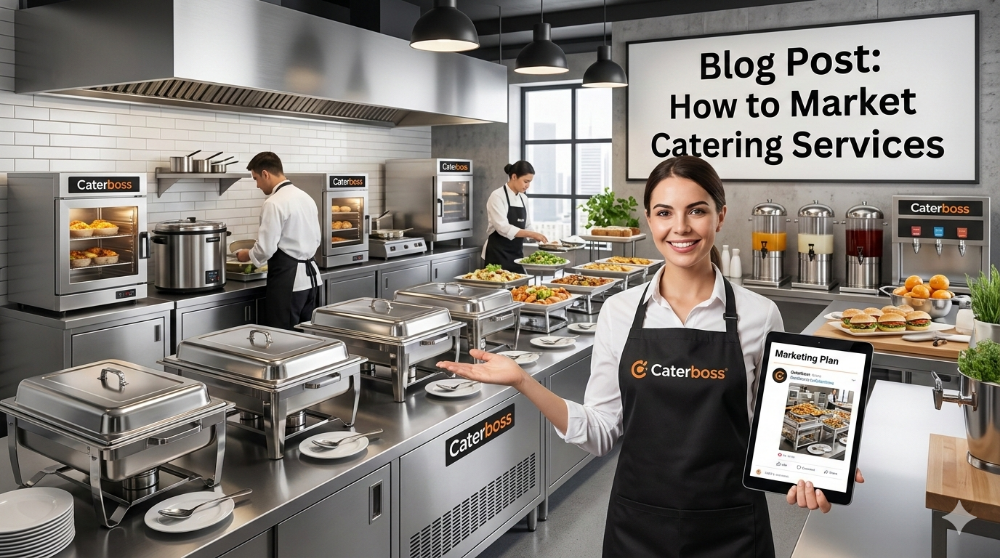
Effective catering marketing strategies are essential if you want to attract more clients and grow a catering business. I launched Caterboss in 2017 and I quickly learned that great food and top-notch equipment were not enough to guarantee success. Spreading the word and attracting clients were also crucial. In this article, I will share insights and strategies I have developed over my career to successfully market catering services.
Quick Overview of Catering Marketing Strategies
The most effective ways to market a catering business include:
- Building a high-converting website
- Using local SEO to attract nearby clients
- Publishing helpful blog content regularly
- Leveraging social media and video marketing
- Running targeted Google Ads campaigns
- Collecting and showcasing customer reviews
- Building relationships with local businesses
Build a High-Converting Catering Website to Attract Clients
Developing a website serves as the digital foundation for any successful catering marketing strategy. For Caterboss, I made sure that our website wasn’t just an online brochure but a powerful lead-generation tool.
Create a Comprehensive Online Presence
An effective website will show your menu, services and unique selling points. For Caterboss, the website highlights our fast delivery times, manufacturer warranties and exceptional customer support. All of this separates us from competitors and gives potential clients plenty of reasons to choose us.
Leverage Content Marketing
Content sharing and blogging have done a lot for our business. We post articles about catering trends, hospitality trends, equipment tips and industry insights. By doing this, we establish our expertise and it significantly improves our search engine rankings.
For instance, one of our blog posts ranked on the first page of Google for related keywords within three months of publication. It increased our organic traffic and led to an increase in equipment rental inquiries.
According to HubSpot, companies that publish blog content regularly generate 55% more website visitors than those that do not.
DIY vs Custom Website
When starting a catering business, I recommend exploring DIY website options. There are different platforms such as Wix or Squarespace that offer user friendly templates specifically designed for catering businesses. As your business grows, however, you might consider investing in a custom-built site for more flexibility and functionality.
As Caterboss grew, we transitioned to a custom-built website. This suited us perfectly as it allowed us to implement advanced features like real-time inventory tracking and an online booking system. This improved our operational efficiency significantly.
Mobile Optimization
Mobile optimization is also so important in today’s digital landscape. In the beginning, when Caterboss launched its website, I was amazed to discover that over 60 per cent of our traffic came from mobile devices. This number has increased over time.
Mobile optimization goes beyond responsive design. It is about ensuring the entire customer journey, from browsing menus to making inquiries, is seamless on a smartphone. After implementing mobile-first design principles, we saw a huge increase in lead generation.
For example, we added click-to-call buttons and simplified contact forms. This made it easier for potential clients to reach out to us while on the go. What happened? A massive 40 per cent increase in mobile inquiries in the first month!
Leverage Visual Content
In the catering industry, visual appeal is paramount. That's why visual content is a crucial part of our catering marketing strategies at Caterboss.
Utilize a Mix of Visual Content
Caterboss uses a combination of professional photos, videos and user generated content across our website and many social media channels. The behind the scenes videos of clients using our equipment tends to generate the most engagement.
For example, a video of Caterboss equipment and the behind the scenes shots of a client called the Dough Bros garnered 25k views on tiktok. Another one of our videos garnered almost 50k views on tiktok. Then there’s the views on instagram and facebook. All of this positive social media has led to an increase in inquiries for our catering equipment.
Collaborate with Influencers
There is also an argument to be made for collaborating with local food bloggers and influencers. They create content featuring catering services which the catering business then shares across their platforms. It provides high quality content and expands their reach to new audiences.
Invest in Professional Photography
Investing in professional photography was one of the best marketing decisions I made for Caterboss. High-quality photos of our catering setups and dishes have been crucial for showcasing what we offer to potential clients. We use these photos in all our marketing materials, including our website and social media.The impact has been significant. We have seen an increase in inquiries since we improved our visual content.
I recommend hiring a professional photographer at least once a year to capture your signature dishes and event setups. It might seem like a lot initially but it will pay off in the long run.
Use Digital Marketing to Get More Catering Clients
Digital marketing has been a game-changer for Caterboss. We've implemented a comprehensive strategy that includes SEO, social media marketing, and pay-per-click advertising.
Use Local SEO to Get More Catering Clients
Local SEO is of the utmost importance to a new and thriving catering business. You should focus on local keywords such as “catering services in Ireland” or if your business is a catering equipment supplier like Caterboss, focus on “catering equipment supplier Dublin” or whatever area you cover. This helps you rank higher in local search results driving more targeted traffic to your site.
46 per cent of Google searches have local intent. This makes SEO one of the most powerful tools in the catering business.
Our own local SEO efforts have resulted in a 50 per cent increase in organic traffic from our target geographical area over the past year.
Leverage Social Media Marketing
Social media marketing can also give your business a boost when building brand awareness and engaging with your audience. Being active on Facebook, Instagram and Linkedin, and sharing a mix of promotional content, industry news and behind the scenes glimpses of your operations can be a great tool for building success.
Utilize Pay-Per-Click Advertising
Pay-per-click advertising, in particular Google Ads, is often effective for targeting people actively searching for catering services. For us, our return on investment has been about 5 euro in sales for each euro spent on ads.
I have seen this work splendidly. For instance, one catering company’s Google Ads campaign targeted corporate event planners and resulted in 50 new inquiries and 10 bookings with a total revenue of 25000 euro from an ad spend of 2000 euro. Effective and absolutely worth it!
Optimize Local SEO and Online Directories
For Caterboss, local SEO has been very important. We have optimized our Google My Business listing, making sure that all of our information is up to date and accurate. The results are significant. It has improved our visibility substantially in local searches.
You can also list your business in online directories like Yelp and TripAdvisor. These listings will help with SEO and can be another avenue for potential clients to find your business.
Implement Content Marketing
While digital marketing includes several channels, content marketing deserves special attention because of its long-term impact on SEO. At Caterboss, we publish blog posts at least once a week on catering trends, event planning tips and other hospitality industry topics. This helps immensely with SEO and also positions us as industry experts.
Our blog posts regularly get over 17k views every month. This consistently drives organic traffic to our site.
Gather and Highlight Testimonials and Reviews
Another thing that is invaluable in building trust with potential clients are customer testimonials and reviews. Because it is so easy to find reviews, this has become vital to a business success. At Caterboss, we encourage our customers to leave reviews on Google.
Research from BrightLocal actually shows 88% of consumers trust online reviews as much as personal recommendations.
Showcase Positive Feedback
Caterboss highlights these testimonials on our website and in our marketing materials. Positive feedback especially about our fast delivery times and excellent customer service has been very effective in attracting new clients.
A glowing review from one type of client can attract other similar clients. For instance, I have seen reviews from one corporate client, leading to three new corporate bookings within a week.
Address Negative Feedback Professionally
It is also very important to respond to ALL reviews; positive and negative. If you receive a negative review, you should address the issue promptly and professionally. This shows that you value customer feedback and place continuous improvement at the top of your list.
For instance, for Caterboss, we once received a negative review about delayed delivery. We responded with a public apology and an explanation. Then we followed up privately to offer compensation. The client in question was impressed and decided to update their review to 5 stars. They have since become a repeat customer.
Engage with the Community
Community engagement should be part of your catering marketing strategies. You can take part in local business events and trade shows which will help you build relationships with other local businesses and potential clients.
Sponsor Local Events
For instance, we recently sponsored a local food festival, providing catering equipment for the event. We got a lot of exposure to our target audience which resulted in several new clients. The amount we gained in contracts eclipsed the cost of sponsorship completely.
Develop B2B Relationships
You may find success in directly approaching local businesses. You can offer them special packages for their events. I have seen this attract and secure long term clients.
We saw this come into action when we approached a local tech company which resulted in a contract to cater their monthly team lunches.
Utilize Offline Marketing
You should try and utilize offline marketing. For Caterboss, our spot in Loughmartin Business Park serves as a physical advertisement. It is well maintained and has a large, clear sign of “Caterboss” and the logo.
Implement Vehicle Branding
Then there’s vehicle branding on delivery vans. These mobile advertisements can be very effective -in particular attracting inquiries from other local businesses. Branded vehicles can generate thousands of impressions every day.
Use Traditional Marketing Materials
Lastly, there is still value in traditional marketing materials like brochures and business cards. You can hand these out at events and give them to clients after deliveries. This practice can result in several referrals. In fact for Caterboss, 15% of our new clients in the past year came from referrals, and many mentioned receiving our brochure or business card.
If you are looking to grow your catering business or improve your equipment setup, speak to our team at Caterboss for practical advice tailored to your needs.
Common Catering Marketing Mistakes
Avoid these mistakes when promoting a catering business:
- Relying only on social media without a website
- Ignoring local SEO
- Not collecting customer reviews
- Posting inconsistent content
- Not tracking marketing ROI
Final Thoughts
Marketing a catering service involves many different tactics that combine digital and traditional methods. At Caterboss, we have succeeded by building a strong online presence, using visual content, executing targeted digital marketing techniques, collecting customer testimonials, connecting with our local community, and maintaining effective offline marketing efforts.
Keep in mind that successful marketing relies on consistency and flexibility. What works today might not work tomorrow, so be prepared to change your strategies based on results and shifting market trends.
As you put these catering marketing strategies into action, remember that your main goal is to highlight your unique value. For us at Caterboss, we focus on fast delivery, quality equipment, and great customer service. Importantly, we also focus on real kitchens and real people. We are not here to sell you the most expensive product - we want to advise you on which equipment will be most suitable for your needs. We are here to help you through the process. We are reliable and want you to get the most out of our partnership.
Whatever makes your catering service unique, ensure it stands out in all your marketing efforts. Ultimately, successful marketing is about building relationships and trust with your clients. By consistently providing value and keeping communication open, you will attract new clients and keep existing ones, securing the long-term success of your catering business.
FAQs
What are the best social media platforms for marketing a catering business?
In my experience running Caterboss, I have found that Instagram, Facebook, Linkedin and Tiktok, are the best platforms for marketing a catering business. Instagram is visually pleasing and can showcase food photos and event setups.
Caterboss films behind the scenes with clients and the equipment they buy from us. These videos have become wildly popular - particularly on Instagram and Tiktok. Many of these videos on Instagram have garnered thousands of views and many of our posts on tiktok have garnered even more. In the few short months we have been doing this, we have 9 video posts that have over 10k views and several have over 20k views.
Facebook is also a great way for reaching a broader audience. We share customer testimonials, new customer spotlights and engage with our community. Facebook can be very effective at securing more customers as there are so many small businesses on it that we are eager to cater to.
We share different blog posts and industry insights on linkedin. It is very effective for B2B catering services. We also use it to connect with corporate clients. It is great for networking and establishing thought leadership in the hospitality industry.
We have written many Linkedin articles that have been shared by industry leaders. For us, this led to more clients as our image and products effectiveness were shared.
The effectiveness of each platform can vary depending on your target audience. Start with several of these and monitor your results. Then adjust your strategy. You can use social media analytics tools to track your performance and then make a content strategy based on engagement metrics.
How can I optimize my catering website for search engines?
Making sure that your catering website is optimized for search engines is so important for attracting organic traffic. There are several SEO strategies that can improve your search rankings.
- Keyword Research: You should focus on long-tail keywords relevant to your services. Example: “Corporate catering services in Ireland” or “wedding catering equipment rental Dublin”.
- On-Page SEO: Ensure that your page titles, meta descriptions and headers include your target keywords. Optimize your images with descriptive alt text. Example: changing the alt text of your images from generic descriptions to specific ones like corporate lunch catering setup in Dublin. This will improve your search rankings.
- Content Creation: You should publish high-quality relevant content on a blog. This drives significant organic traffic to your site.
- Local SEO: You can optimize your Google My Business listing and ensure that your name, address and phone information are consistent through all online directories. This will improve your visibility in local SEO searches.
- Mobile Optimization: You should aim to have a website that is fully responsive and loads quickly on mobile devices - crucial for SEO. You could see a jump in mobile traffic if you have your mobile page speed optimal.
- Link Building: You can build high quality back links through partnerships with local businesses and guest blogging. These can really drive referral traffic and improve your domain authority.
- Technical SEO: You should conduct technical audits to make sure your site structure and sitemap are optimized for search engines. Fixing issues like broken links can improve your site's crawlability significantly.
SEO is an ongoing process. You should regularly review and adjust your strategies based on performance and changes in search engine algorithms. Conducting monthly SEO audits and then adjusting your strategy accordingly can be very effective.
What are some effective offline marketing strategies for catering services?
Digital marketing may be crucial but offline marketing strategies can also be effective for catering services. Here are some strategies that work well:
- Networking Events: Attending local business networking events can help you build relationships with potential corporate clients. You can also offer to cater these events at a discounted rate in order to showcase your services.
- Trade Shows: Participating in food and hospitality trade shows can give you exposure to a wide range of potential clients and partners. Example: having a booth at the annual Dublin Food and Drink Festival.
- Direct Mail: Targeted direct mail campaigns such as sending personalized brochures to businesses in your area can result in new clients.
- Vehicle Branding: The delivery vans you have should be branded with your logo and contact information. Essentially this serves as mobile billboards.
- Local Sponsorships: By sponsoring local events or sports teams, your visibility in the community will increase and it will generate goodwill. This leads to positive PR and catering contracts for future charity events.
- Referral Program: A referral program offers incentives to existing clients to recommend services to others.
- Print Advertising: This is not as effective as it once was, but you may still see some return on investment from ads in local newspapers and industry magazines.
- Collaboration with Complementary Businesses: Partnering with local event planners and wedding venues and offering them a commission for referrals can also lead to many more bookings.
- Tasting Events: Hosting tasting events for potential clients is an effective way to showcase your menu and services.
Essentially, the key to effective and successful offline marketing is to track your results and focus on strategies that provide the best return on investment for your business. Using unique phone numbers and promo codes for each offline marketing channel will accurately track their performance.
About the Author
Nainsi is a content writer at Caterboss, an Irish-owned commercial catering equipment supplier. She writes about marketing strategies, business growth and operational insights for hospitality businesses across Ireland.