





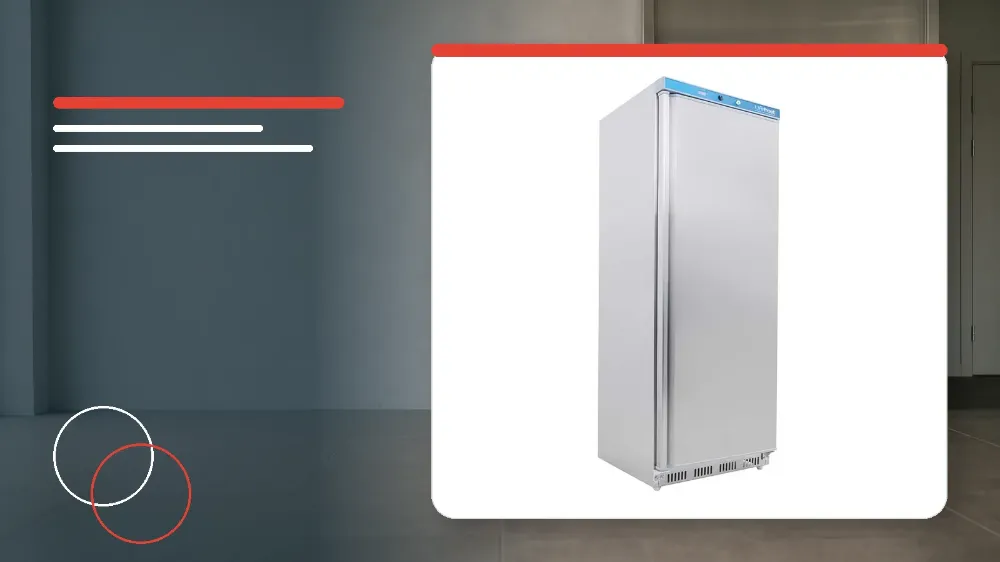
To clean and maintain the Unifrost R410SS upright refrigerator, disconnect the power supply, wash the cabinet surfaces with a mild soap solution, clean the door gasket using only plain water, thoroughly dry all components with a soft cloth, and regularly clear dust from the rear condenser using a brush and vacuum cleaner.
Applies to
This guide applies specifically to trained kitchen operators responsible for the routine care and cleaning of the Unifrost R410SS upright refrigeration unit.
Before you start
- Before beginning any cleaning routine, you must switch off the refrigeration cabinet completely.
- Disconnect the appliance power cable from the electrical mains supply prior to commencing work.
- Prepare a gentle washing mixture consisting only of a mild soap solution and clean water.
- Assemble soft drying cloths, a vacuum cleaner, and a soft brush for routine equipment maintenance.
Safety warnings
- The appliance must never be washed down or cleaned using a high-pressure water jet.
- Never allow the power switch, control panel, electrical cable, or plug to become wet during maintenance.
- Ensure that no cleaning water or liquid moisture penetrates inside any electrical components of the cabinet.
- Abrasive cleansers must not be used on the cabinet interior or exterior housing.
- Plastic parts cannot withstand boiling water and must never be exposed to temperatures exceeding +85 °C.
Cabinet Interior and Exterior Washing
Regular cleaning of the storage cabinet interior and the outer enclosure is essential for maintaining hygiene in a commercial food-service environment.
Operators should always keep the cabinet clean by washing surfaces with a moist cloth soaked in a mild soap solution.
Harsh scouring pads and abrasive cleansers must be strictly avoided because they can damage surfaces and leave harmful residues.
Special care must be taken around all internal and external plastics to ensure wash water remains well below the maximum thermal limit of +85 °C.
Once all soilage is washed away, every surface must be completely dried using a clean, soft cloth to prevent moisture build-up.
- Turn the power switch to the off position and unplug the appliance from the mains electrical socket.
- Dampen a soft wiping cloth in the mild soapy water solution.
- Wipe down all internal cabinet linings, shelves, and external stainless steel surfaces systematically.
- Take extra precautions while wiping near upper sections so that no water penetrates the control panel or switch housing.
- Wipe all cleaned surfaces thoroughly dry using a dry, soft cloth before restoring power.
Door Gasket Maintenance and Seal Care
The flexible rubber door gasket maintains the airtight thermal seal required for proper internal cooling temperatures.
Whenever regular cleaning is performed, operators must wipe the rubber door gasket clean to remove food debris.
Cleaning the door gasket is vital to ensure that sticky substances are removed before they cause physical deterioration or tearing.
Chemical detergents must be avoided on the door seal; operators should clean the rubber gasket using water only.
Following gasket washing, use a dry soft cloth to remove residual moisture from all folds of the rubber seal.
- Inspect the full perimeter of the rubber door gasket for accumulated dirt, spills, and sticky residues.
- Moisten a clean cloth using plain water without adding any detergents or soaps.
- Gently wipe along the entire length and profile of the rubber seal to lift away all deposits.
- Dry the gasket thoroughly with a soft cloth to ensure no standing water remains.
Condenser and Compressor Ventilation Servicing
The refrigeration condenser positioned on the back of the cabinet requires regular cleaning to maintain efficient operation.
Operators should clean the rear condenser using a vacuum cleaner paired with a soft brush to remove accumulated lint and dust.
Care must be exercised when working around the back of the appliance to protect surrounding components.
The condenser fan air outlet located above the compressor must be kept continuously free of leaves, paper, and general debris.
Keeping this ventilation pathway completely clear ensures the normal and uninterrupted operation of the refrigeration cabinet.
- Verify that the appliance is switched off and safely disconnected from the mains supply.
- Gain safe access to the rear of the refrigeration cabinet.
- Use a soft brush and a vacuum cleaner attachment to gently remove all dust buildup from the condenser fins.
- Inspect the condenser fan air outlet situated above the compressor motor assembly.
- Manually clear away any trapped paper, packaging debris, or loose litter from the fan air outlet.
Decommissioning and Long-Term Storage
Specific shutdown procedures must be followed whenever the commercial refrigerator will be left unused for extended periods.
Before taking the cabinet out of service, turn the operating switch to the OFF position and unplug the power lead.
Empty the entire refrigerating compartment and carry out a comprehensive clean of all internal surfaces.
Always leave the cabinet door propped open throughout the inactive period to avoid the development of unpleasant odours and mildew.
- Turn the primary control switch to the OFF position.
- Unplug the electrical lead from the wall mains outlet.
- Remove all stored stock and food products from the refrigerated compartment.
- Wash the interior thoroughly with a mild soap solution and dry it completely with a soft cloth.
- Leave the refrigerator door open for the entire duration of the shutdown to stop mould and odour formation.
Stop and get help if
- Stop all operator tasks immediately if any physical repair or electrical fault correction is required on the cabinet.
- Never attempt internal electrical maintenance or thermostat and sensor testing, as these tasks are restricted strictly to skilled personnel.
When to call an engineer
- An authorised service agent or a qualified technician must be called to carry out all equipment repairs.
- Contact a qualified technician or skilled service person to perform special periodic maintenance, including checking electrical connections and verifying thermostat operation.