


Back to all

TEFCOLD GUC70 Not Cooling? Owner-Safe Checks Before Calling an Engineer

TEFCOLD GUC70 Not Cooling? Owner-Safe Checks Before Calling an Engineer

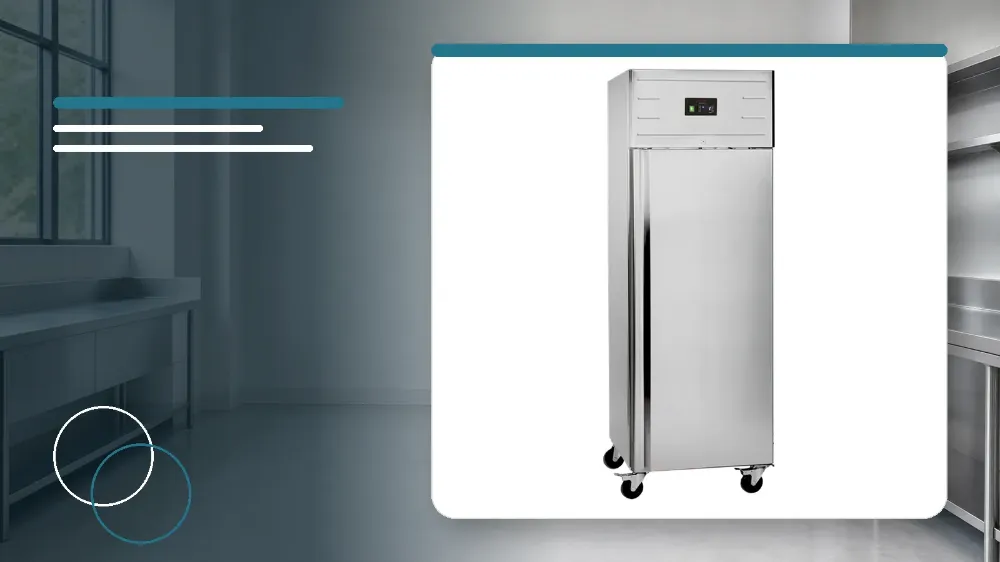
Yes—carry out the limited external checks below, then contact the dealer or a skilled technician if the cabinet still does not maintain the documented 0–5°C refrigerator range. These checks can identify conditions listed in the manual, but they do not establish a remote fault diagnosis. Keep all work external and non-invasive: do not remove a plate, panel, cover, fastener or protective part; do not access wiring, fans or the hermetically sealed cooling system.

Applies to

This guide applies to the TEFCOLD GUC70 refrigerator covered by the supplied GUC50/GUC70/GUC140 user manual.

Before you start

  • Treat this as an owner-check and escalation task only. The machine area can contain sharp, moving and hot components, while the cooling system is hermetically sealed. Do not reach into the machine area, remove protective covers or attempt refrigeration-system work.
  • The cabinet uses flammable R290 refrigerant. Keep open fire away. Do not use mechanical devices to defrost the cabinet and do not use electrical appliances inside the refrigerated storage compartment.
  • Do not use water at or near electrical components. Limit any electrical check to an external visual check of the plug and socket area; do not dismantle, test, rewire or repair electrical connections.

Safety warnings

  • Stop using the cabinet if an electrical connection appears wet or damaged. A loose, damaged, wet, scorched or otherwise suspect plug-and-socket connection requires qualified help, not owner repair.
  • Do not replace a fuse or undertake internal electrical work. The manual reserves repairs for a skilled technician familiar with the product.
  • Do not attempt to inspect, open, separate or repair refrigeration components. Any suspected cooling-system problem requires a skilled technician; the system is hermetically sealed and contains flammable R290 refrigerant.

1. Confirm the external power situation

When the cabinet is not cooling, first check whether there has been a power cut. Also look externally at the plug-and-socket connection only. The manual lists a poor plug-to-socket connection as a possible reason that the compressor is not working and directs the user to check the socket.

The cabinet is specified for a fused, properly earthed 230 V, 16 A, 50 Hz socket. Before use, its electrical connections must be dry and intact. Do not open the socket, access wiring, measure live circuits or investigate an electrical panel to verify this.

  1. Check whether a site power cut has occurred.
  2. Visually check that the accessible plug-and-socket connection appears dry and intact, without an externally visible loose, wet, damaged or scorched condition.
  3. If power is available and the malfunction remains, contact the dealer rather than opening the appliance or investigating its electrical circuits.

2. Check the displayed target set point

For this commercial refrigerator, the manual identifies 0–5°C as the correct temperature range. The SET control displays the target set point; this is the controller target, not a substitute for any separate food-safety process.

A target set point outside the documented 0–5°C range is an external controller condition that can be corrected with the normal front-panel controls. A set point within that range does not identify the cause of a continuing cooling malfunction.

  1. Press SET to display the target set point.
  2. If adjustment is needed, hold SET for 3 seconds until °C flickers, adjust with the arrow buttons, then release the buttons to set the new temperature. Keep the setting within the documented 0–5°C refrigerator range.
  3. If the control or display does not operate normally, or the cabinet cannot maintain the documented range after the permitted checks, contact the dealer.

3. Reduce door openings and an excessive one-time load

The troubleshooting guidance lists frequent door opening as a cause of excessive internal temperature and instructs the operator to reduce the number of openings. It also lists storing too much food at once as a cause of excessive internal temperature and instructs the operator to remove some food.

If either condition is present, it is a manual-listed contributor to high cabinet temperature. Do not treat it as proof of the underlying cause, and do not repair or adjust doors, hinges or seals as part of these owner checks.

  1. Reduce the number of door openings.
  2. If too much food was placed in the cabinet at once, remove some of that food.
  3. If the malfunction remains after these external operating checks, contact the dealer.

4. Restore ventilation and check the installation environment

Leave at least 10 cm of free space around the cabinet for ventilation. Items stored on top of the cabinet hinder airflow and should be removed externally. Do not access panels or internal components to create clearance.

The cabinet should be in a dry, ventilated location, away from heat-emitting sources and direct sunlight. For GUC cabinets, the stated maximum operating climate is 30°C and 55% relative humidity. If the operating climate exceeds those limits and cannot be corrected externally, seek dealer or engineer assistance.

  1. Check that at least 10 cm of free space is present around the cabinet.
  2. Remove items stored on top of the cabinet, without removing panels or covers.
  3. Check that the cabinet is dry and ventilated and is not positioned by a heat-emitting source or in direct sunlight.
  4. If adequate clearance or a suitable dry, ventilated location cannot be provided without internal modification or unsafe relocation, contact the dealer.

5. Allow for a recent move

If the cabinet has recently been moved, the manual says to let it stand for a couple of hours before use so that the refrigerant can settle. Do not manipulate any refrigerant component or attempt to determine the condition of the sealed system.

  1. After a recent move, leave the cabinet standing for a couple of hours before use.
  2. If cooling remains faulty after this and the listed external checks, contact the dealer; do not open the sealed system.

6. Clean only an externally accessible condenser area

The manual specifies condenser cleaning every month. It directs access from above using a foot stool and cleaning with a vacuum cleaner or soft brush. For this owner-safe check, proceed only where the condenser area is externally accessible without removing a plate, panel or other part.

Use no water at or near electrical components. Do not touch wiring, fan parts, refrigerant components or other internal parts. If the area cannot be safely reached without panel removal or entry into the machine area, leave this task for an engineer.

  1. If the condenser area is accessible from above without removing any part, clean it with a vacuum cleaner or soft brush.
  2. Do not use water at or near electrical components during cleaning.
  3. Stop the cleaning task if it requires removal of a plate, panel or cover, or access to internal components; contact an engineer instead.

Stop and get help if

  • Stop using the cabinet and obtain qualified help if the accessible electrical connection appears wet, damaged, loose, scorched or otherwise suspect.
  • Stop owner checks if work would require opening the socket, accessing electrical wiring or panels, replacing a fuse, removing cabinet parts, reaching into the machine area, accessing a fan or handling refrigeration components.
  • Stop and call an engineer if ice or another condition appears to require mechanical defrosting or an electrical appliance inside the refrigerated compartment.
  • Keep open flames away and stop any attempt at refrigeration-system investigation. The cabinet contains flammable R290 refrigerant and its cooling system is hermetically sealed.
  • Stop after the documented external checks if the cabinet still cannot maintain the stated 0–5°C refrigerator range.

When to call an engineer

  • Contact the dealer immediately for any malfunction. Repairs should be carried out only by a skilled technician familiar with the product.
  • Call for professional assistance where power is available but cooling remains faulty, where the controller does not operate normally, or where the cabinet cannot maintain the documented 0–5°C range after the permitted external checks.
  • Call an engineer rather than undertaking any sealed-system, refrigerant, internal electrical, fan, panel or machine-area work.
  • Seek dealer or engineer assistance if the cabinet’s operating climate exceeds 30°C and 55% relative humidity and cannot be corrected externally.

Sources and manuals