
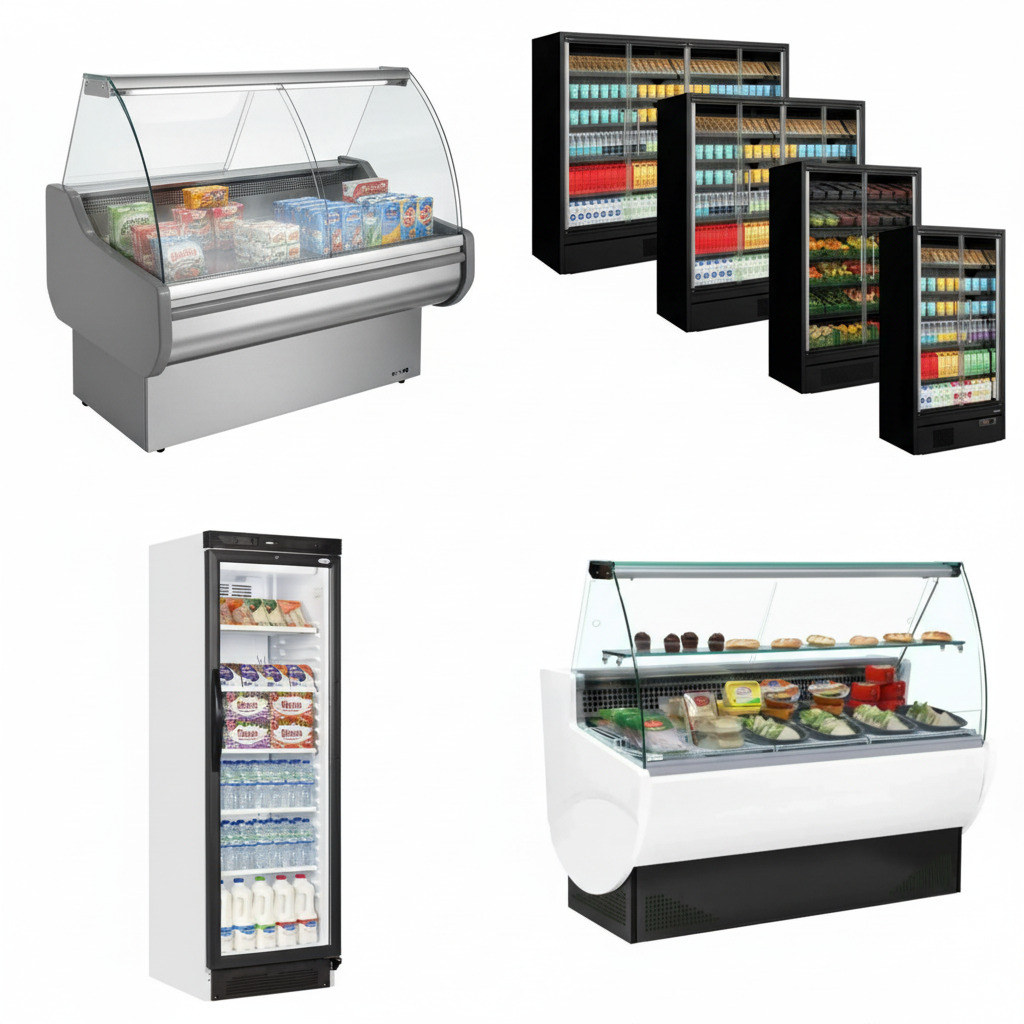
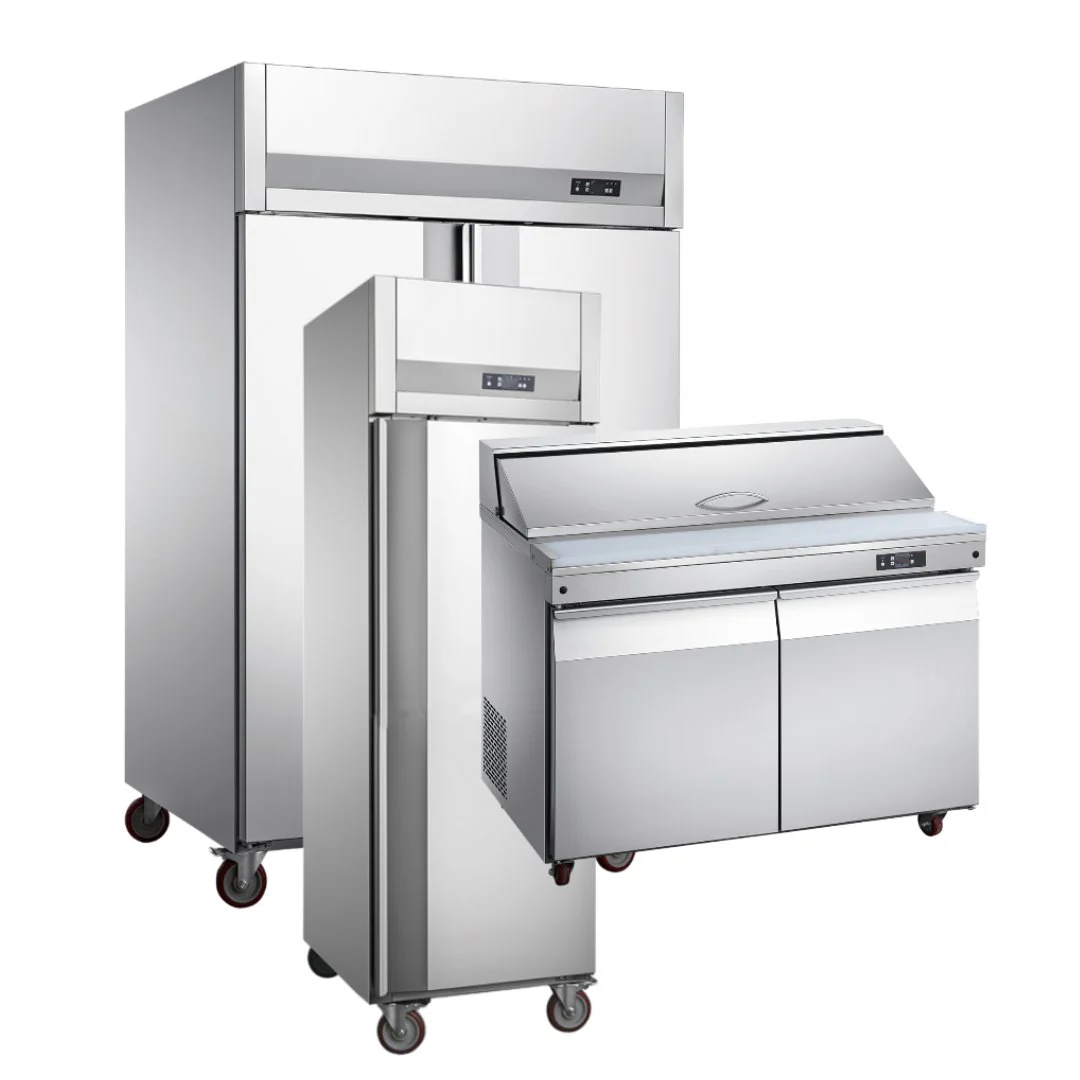



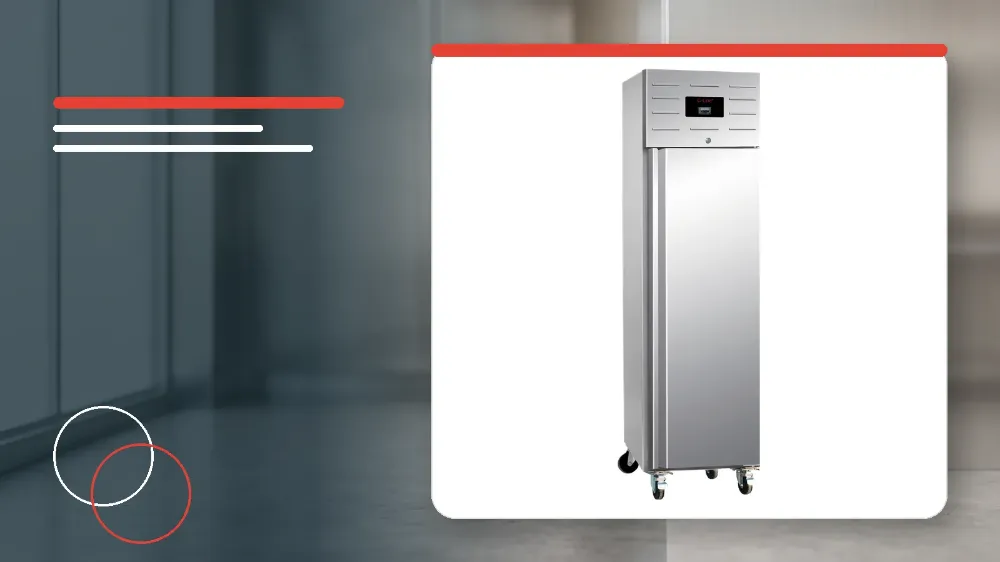
To clean the Tefcold GUC50 upright chiller cabinet, wipe the surfaces with a soft cloth and lukewarm water mixed with mild soap, and service the top-mounted condenser every month using a foot stool and a vacuum cleaner or soft brush.
Applies to
This guide applies directly to trained kitchen operators responsible for routine maintenance of the Tefcold GUC50 commercial upright chiller.
Before you start
- Before operating or starting routine procedures on the cabinet, verify that all electrical connections are completely dry and intact.
- The manufacturer recommends that the cabinet should be thoroughly cleaned prior to first use in the kitchen.
- Ensure that the area directly above the cabinet is clear of stored items so that airflow is never obstructed.
- Keep all sources of open fire completely away from the appliance because the unit operates using flammable R290 refrigerant.
Safety warnings
- Because R290 refrigerant is flammable, strictly avoid any contact between the cabinet and open fire.
- Do not use mechanical devices when defrosting the appliance, as this can puncture the system and cause cooling system leaks.
- Do not use aggressive cleaning materials such as scouring pads, abrasives, or chlorine during any part of the cleaning routine.
- Never use water at or near any electrical components of the refrigeration cabinet.
- Do not place items on top of the cabinet as placing objects there hinders proper airflow to the unit.
Cabinet Cleaning and Surface Sanitisation
Maintaining a clean internal and external cabinet surface protects food hygiene and preserves stainless steel finishes in demanding commercial gastro settings.
The manufacturer recommends cleaning the entire cabinet prior to placing it into service for its first use.
Aggressive cleaning agents must be strictly avoided during daily and weekly wash-down routines.
Using scouring pads, abrasive cleaners, or chlorine products damages equipment surfaces and must never be permitted.
Kitchen personnel must exercise complete care to ensure that water is never applied at or near electrical components.
- Prepare a mild cleaning solution consisting of lukewarm water mixed with mild soap.
- Dampen a clean, non-abrasive soft cloth in the lukewarm soapy water.
- Wipe down the interior and exterior surfaces of the cabinet thoroughly using the soft cloth.
- Ensure that electrical connections remain completely dry and unexposed to moisture throughout the process.
Monthly Condenser Maintenance and Access
Regular condenser cleaning is essential to maintain heat exchange efficiency and prevent unnecessary strain on the refrigeration system.
The condenser assembly on the upright cabinet requires dedicated cleaning every month.
Because the condenser is located at the upper section of the upright unit, operator access must be managed safely from above.
Placing boxes or kitchen stock on top of the cabinet must be avoided at all times because it obstructs vital airflow.
- Schedule the condenser maintenance routine at a mandatory frequency of every month.
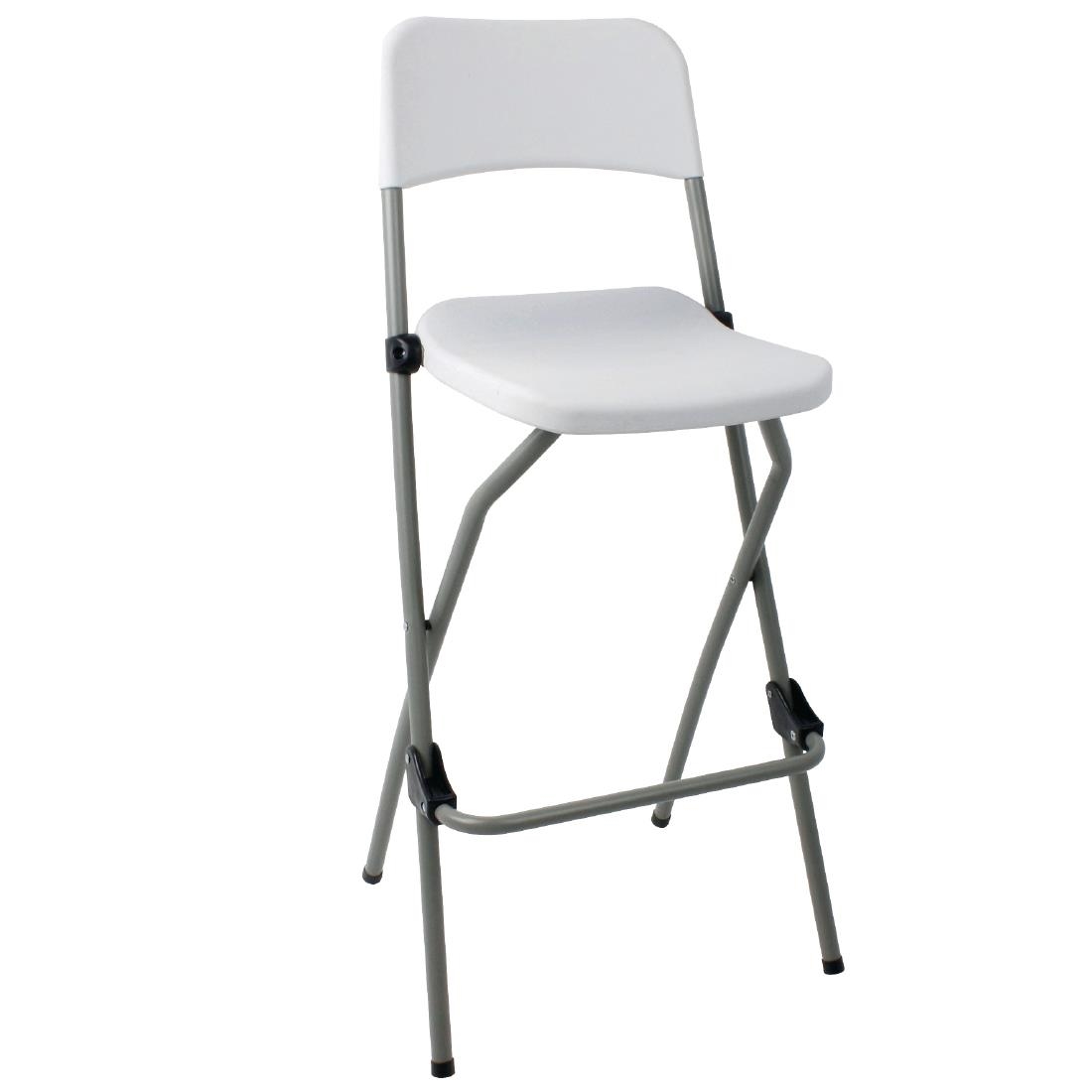
- Position a stable foot stool adjacent to the cabinet to safely access the condenser assembly from above.
- Clear any loose objects away from the top of the cabinet to ensure unrestricted access and unobstructed airflow.
- Clean accumulated dust and debris from the condenser using a vacuum cleaner or a soft brush.
Defrosting Safety and Flammable Refrigerant Precautions
The cooling system in this appliance contains R290 refrigerant, an eco-friendly hydrocarbon gas that is flammable.
Due to the flammability of R290, kitchen operators must strictly prevent any contact between the unit and open fire.
Operators must never use knives, scrapers, or other mechanical devices when defrosting the cabinet.
Employing mechanical tools during defrosting introduces a severe hazard because puncturing evaporator pipes can cause cooling system leaks.
- Keep naked flames, gas torches, and hot kitchen equipment away from the chiller at all times.
- Allow frost to melt naturally or follow standard system defrost cycles without applying mechanical force.
- Refrain from scraping ice with metal implements to prevent accidental punctures to the refrigeration circuit.
Stop and get help if
- Stop operation immediately if electrical connections are found to be wet or damaged before or during use.
- Cease cleaning and do not use the cabinet if a refrigerant leak or mechanical damage to the cooling system is suspected.
When to call an engineer
- Repairs should only be carried out by a skilled technician who is familiar with the product.
- Escalate to a qualified service technician immediately whenever internal electrical or sealed refrigeration repairs are required.