
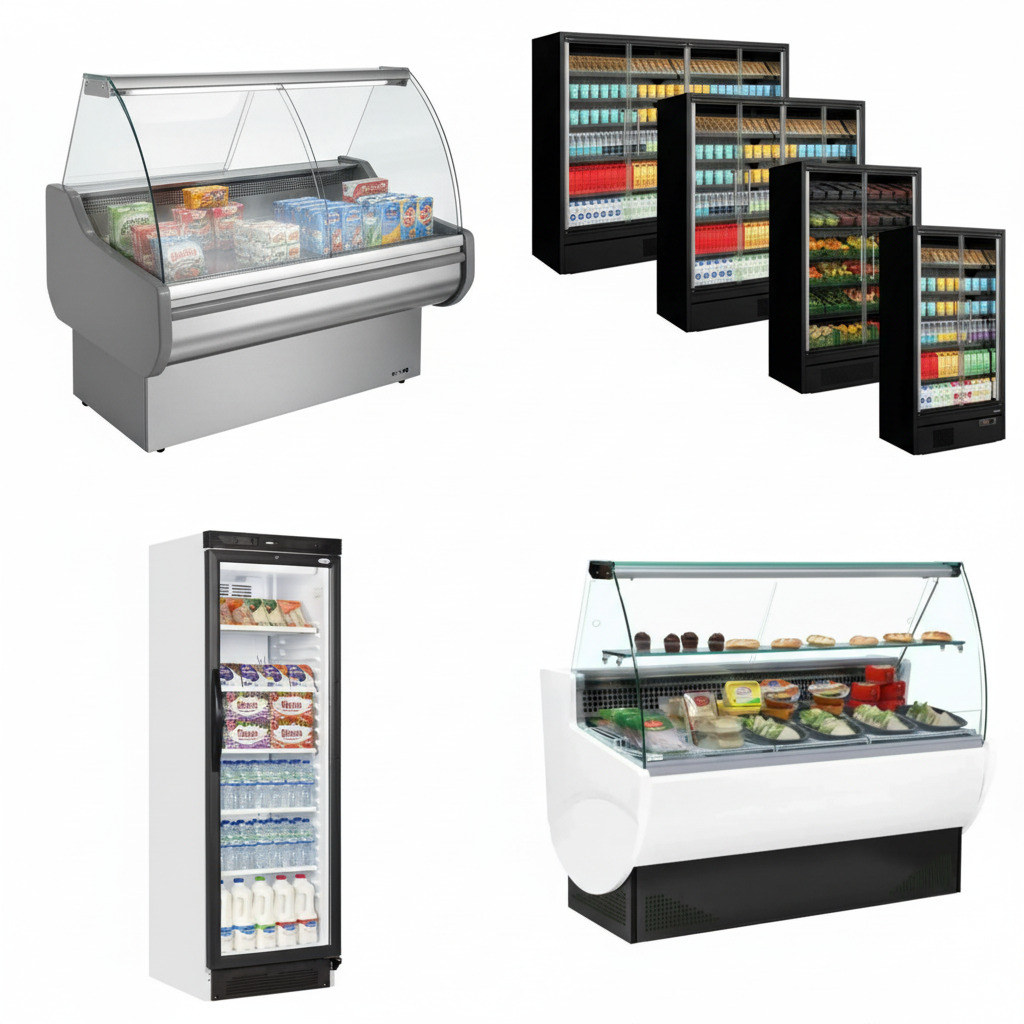

If your Polar CW197 display fridge is not cooling correctly, the manufacturer manual directs operators to check door seals, clear airflow around the cabinet, remove hot food or fan blockages, clean the condenser filter, and initiate a manual defrost cycle.
Applies to
This guide applies specifically to the Polar CW197 upright display refrigerator.
Before you start
- Always disconnect the electrical power supply before carrying out routine maintenance on the unit.
- Observe all basic commercial kitchen safety precautions before inspecting or cleaning the cabinet.
Safety warnings
- Always disconnect the power supply before carrying out routine maintenance on the appliance.
- A qualified technician must carry out repairs if required.
Checking Ambient Conditions and Cabinet Location
High room temperatures and restricted airflow directly impair commercial refrigeration performance.
If the ambient temperature is too high, increase room ventilation or move the appliance to a cooler position.
If the appliance is located near a heat source or airflow to the condenser is interrupted, move the refrigerator to a more suitable location.
- Assess the room temperature surrounding the Polar CW197 cabinet.
- Increase ventilation in the kitchen or relocate the unit to a cooler position if the ambient air is excessively warm.
- Inspect the surrounding area to ensure the refrigerator is not positioned directly adjacent to cooking heat sources.
- Move the refrigerator to a more suitable location if airflow to the condenser housing is obstructed.
Inspecting Door Closure and Gasket Integrity
Damaged seals or a door left ajar allow warm air to continuously enter the refrigerated cabinet.
If the temperature is too high or low, check that the doors are shut properly and door seals are not damaged.
Clean the door seal with warm soapy water and always wipe dry after cleaning.
- Check that the refrigerator door closes fully and seats flush against the cabinet frame.
- Inspect the full perimeter of the door seals for splits, tears, or physical damage.
- Clean the door seal using warm soapy water.
- Always wipe the door seal thoroughly dry after cleaning.
Stock Loading and Internal Airflow Checks
Incorrect loading practices can overload the refrigeration system and block essential internal air movement.
If unsuitable foodstuffs are being stored in the appliance, remove any excessive hot foodstuffs or blockages to the fan.
If the appliance is overloaded, reduce the amount of food stored in the appliance.
- Check the interior of the cabinet for warm or hot food items that have been loaded incorrectly.
- Remove any excessive hot foodstuffs immediately from the refrigerated space.
- Check the internal fan area to ensure stored stock is not obstructing internal air circulation.
- Clear any packaging or product blockages away from the fan.
- Reduce the total volume of food stored inside the appliance if the cabinet is overloaded.
Condenser Maintenance and Filter Cleaning
A condenser blocked with dust cannot dissipate heat, causing cabinet temperatures to rise.
The condenser is part of the refrigeration system and requires monthly cleaning.
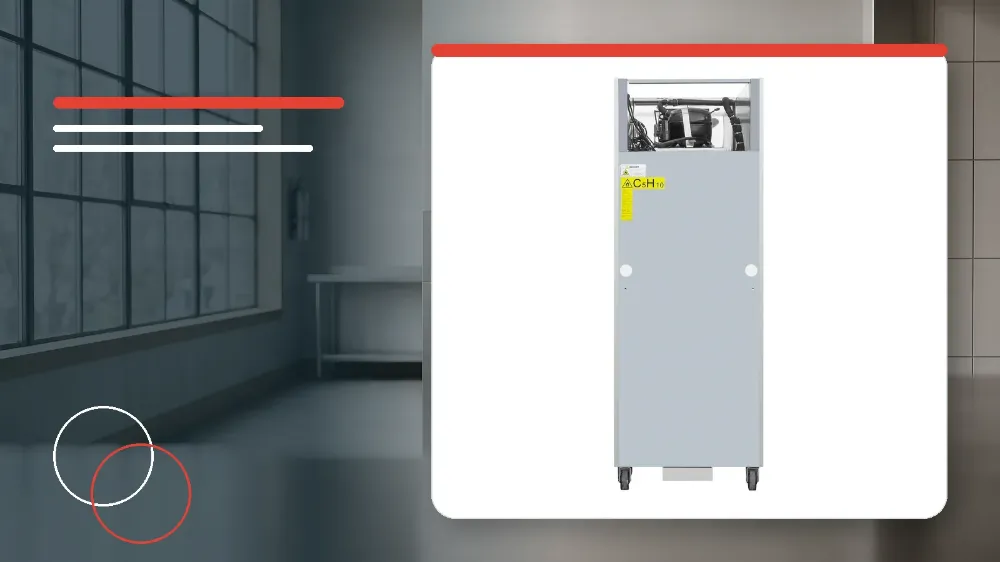
The condenser is located above the refrigeration cabinet.
These models feature a removable filter which can be cleaned with a vacuum cleaner.
- Always disconnect the power supply before carrying out routine maintenance.
- Locate the condenser assembly positioned above the main refrigeration cabinet.
- Remove the condenser filter from the top housing.
- Clean the removable filter thoroughly with a vacuum cleaner to remove accumulated dust.
- Clean the condenser whenever dust accumulates to prevent high operating temperatures.
- Repeat this condenser cleaning procedure every month as part of routine care.
Evaporator Defrosting Procedures
Excessive ice accumulation on the evaporator coil blocks cooling air and leads to improper cabinet temperatures.
If the temperature is too high or low due to too much ice on the evaporator, defrost the appliance.
The appliance must be defrosted at least every 3 months, or more often if required.
- Press and hold the defrost button 'aux' on the control panel for 2 seconds to begin a manual defrost.
- Verify that the defrost indicator light illuminates on the controller display.
- Allow the defrost cycle to finish on its own, as it will end automatically.
- Ensure the appliance undergoes defrosting at least once every 3 months, or more frequently if ice builds up.
Stop and get help if
- Always disconnect the power supply before carrying out routine maintenance on the condenser or cabinet.
- Do not attempt internal refrigeration or electrical repairs, as a qualified technician must carry out repairs if required.
When to call an engineer
- A qualified technician must carry out repairs if required when operator troubleshooting steps fail to restore correct temperature.