



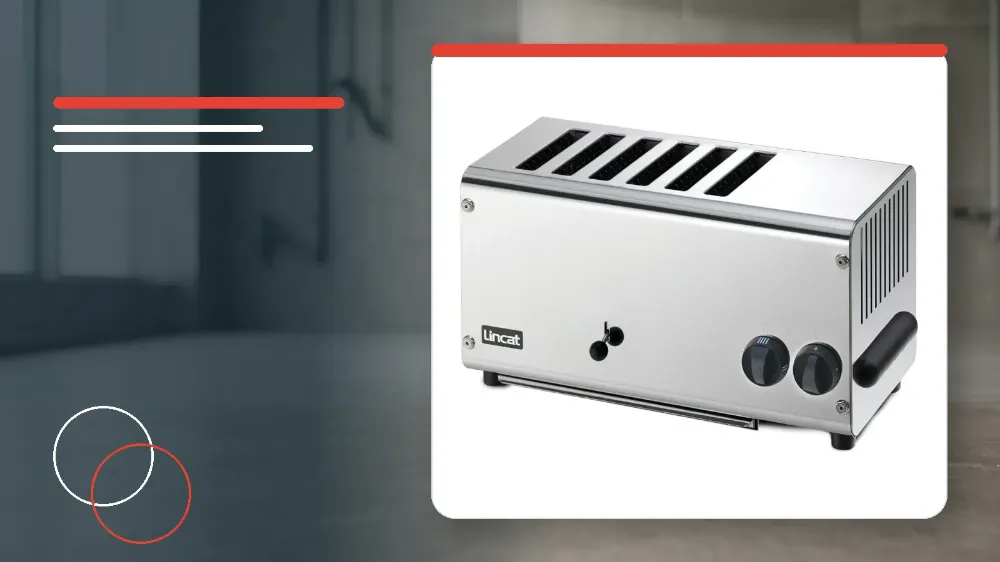
Trained operators must disconnect the Lincat LT6X from the power source and allow hot surfaces to cool before washing panels with warm water and mild detergent, wiping them dry with a soft cloth, and regularly emptying the crumb tray.
Applies to
This guide applies specifically to commercial kitchen staff operating and maintaining the Lincat LT6X six-slot commercial toaster.
Before you start
- Always ensure the toaster is completely disconnected from the electrical supply before commencing any routine maintenance or panel cleaning.
- Confirm that all parts of the unit have cooled down to avoid accidental contact with hot surfaces.
- Prepare warm water, a mild non-abrasive detergent, and a clean soft cloth for surface cleaning and drying.
Safety warnings
- Parts of the appliance become hot during operation, so operators must avoid accidental contact with heated exterior surfaces.
- Never immerse the appliance in water or any other cleaning liquid.
- Do not clean the unit using a water jet or high-pressure cleaning equipment.
- Do not use steam cleaners on any section of the appliance.
- Do not apply abrasive materials or harsh scouring pads to the exterior panels.
Safe Electrical Disconnection and Thermal Precautions
Safe maintenance of the Lincat LT6X begins by isolating the unit from its electrical power supply.
The manufacturer requires that the appliance must be disconnected before any servicing, maintenance, or cleaning is undertaken.
Because components and panels become hot during toasting cycles, staff must avoid accidental contact with hot metalwork.
Allowing the appliance to cool down fully ensures that kitchen personnel can clean outer panels without risk of burn injuries.
- Disconnect the appliance from the mains power source prior to starting any maintenance or cleaning routine.
- Verify that all exterior panels and elements have cooled sufficiently to avoid accidental contact with hot surfaces.
Approved Exterior Cleaning and Drying Procedure
Maintaining the exterior casework requires standard hospitality hygiene practices using gentle cleaning solutions.
Operators must clean all panels using warm water combined with a mild detergent solution.
Abrasive materials and scouring pads must not be used, as they can damage the exterior surfaces.
Water jets and steam cleaning equipment are strictly prohibited across all cleaning tasks.
The toaster must never be immersed in water or liquid solutions at any stage.
After washing down the panels, dry all exterior surfaces thoroughly with a clean soft cloth.
- Apply a mild detergent mixed with warm water to all exterior panels using a non-abrasive cloth.
- Ensure no abrasive materials are used against the panels during cleaning.
- Wipe down and dry all cleaned panels thoroughly with a clean soft cloth.
Crumb Tray Care and Routine Operator Checks
Routine crumb management is essential for proper countertop hygiene and fire prevention in busy kitchens.
Operators are instructed to regularly check and empty the crumb tray located on the appliance.
Ensuring the tray is inspected and cleared on a regular schedule prevents excessive build-up of dried bread debris.
Always ensure the unit remains disconnected while conducting checks around the base and crumb tray assembly.
- Check the crumb tray regularly as part of daily operational maintenance.
- Empty the accumulated debris from the crumb tray into a suitable waste bin.
- Reinsert the crumb tray securely into position before returning the disconnected appliance to service.
Service Boundaries and Qualified Engineering Escalation
Trained kitchen staff are permitted to clean panels and empty the crumb tray, but must not attempt internal mechanical or electrical repairs.
All servicing, maintenance, and component replacement on this appliance must be carried out by recommended service engineers.
If the electrical supply cord is damaged, it must be replaced by the manufacturer, its service agent, or a similarly qualified person.
Operators must cease using the unit immediately and disconnect it if any internal fault or power cable damage is discovered.
- Inspect the external supply cord for visible physical wear or outer casing damage before operation.
- Disconnect the appliance immediately if power cord damage is identified.
- Escalate all internal repairs, component replacements, and servicing tasks to recommended service engineers.
Stop and get help if
- Stop operation immediately and disconnect the appliance if the electrical supply cord is found to be damaged.
- Cease cleaning immediately if any liquid ingress occurs, as immersion and liquid jet exposure are strictly prohibited.
- Do not proceed with maintenance if internal component replacement or internal servicing is required.
When to call an engineer
- Contact the manufacturer, an authorised service agent, or a similarly qualified person to replace a damaged supply cord.
- Contact recommended service engineers whenever the appliance requires component replacement.
- Escalate all technical servicing and internal maintenance tasks directly to recommended service engineers.