







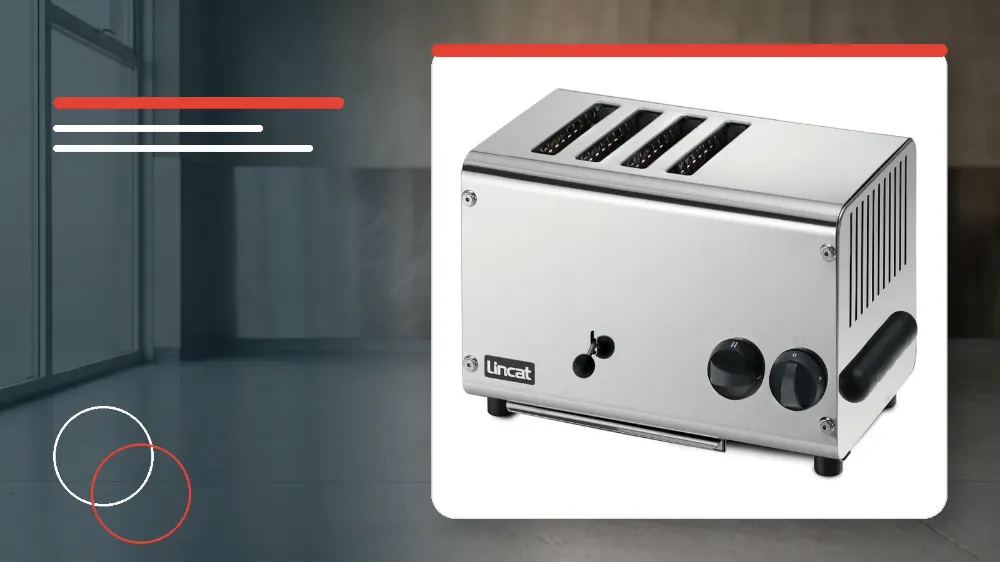
Operate the Lincat LT4X by ensuring only trained personnel use the unit, running the initial element burn-off before first use, loading bread with the lift lever down before raising it to lower the slices, avoiding mid-cycle lifting, cleaning exterior panels with mild detergent and a soft cloth without water jets or steam cleaners, emptying the crumb tray regularly, and referring all servicing to recommended engineers.
Applies to
This operational and maintenance guide applies specifically to the Lincat LT4X electric counter-top four-slot commercial toaster.
Before you start
- Confirm that only qualified or trained catering personnel are assigned to operate or clean this commercial appliance.
- Ensure the appliance is connected to an appropriate electrical supply before commissioning or starting daily service.
- Verify that the crumb tray is properly positioned in the base of the unit prior to turning on the elements.
Safety warnings
- Do not use a water jet or steam cleaner on any part of this toaster.
- Never immerse the appliance in water or any other cleaning liquids.
- Do not use abrasive materials or harsh scourers on the toaster panels.
- Avoid lifting bread during the active toasting cycle because dislodged product can stick to the element guards.
Initial Commissioning Procedure Before First Use
Commercial heating elements contain surface residues from manufacturing and shipping that must be removed prior to toasting food products.
The manufacturer prescribes a dedicated empty burn-off sequence to clear these surface contaminants safely.
- Set the timer control dial to the Off position.
- Connect the appliance to a suitable electrical supply.
- Set the slot selector switch to the maximum number of slots.
- Turn the timer control knob to 4 minutes and allow the full cycle to run without any product in the slots.
- Repeat the 4-minute heating cycle a second time while keeping the slots empty to complete element commissioning.
Daily Toasting Operation and Slot Management
Once commissioned, the toaster is ready for regular breakfast and service operations.
The slot selection mechanism allows operators to energise only the required capacity, where slot numbering begins with slot 1 on the far left-hand side of the unit.
Proper mechanical lever handling protects bread slices from tearing against internal element assemblies.
- Select the required number of slots on the selector switch, noting that slot 1 is located on the left-hand side.
- Ensure the toast lift lever is resting in the down position before placing bread slices into the slots.
- Load the bread slices into the active slots.
- Raise the toast lift lever upward to lower the bread into the heating chamber.
- Select the required toasting time using the timer dial to start element heating.
- Allow the timed cycle to complete without lifting the bread prematurely to avoid food adhering to the element guards.
- Verify that the elements switch off automatically when the timer reaches the end of the set time.
- Lower the toast lift lever downward to elevate and remove the finished toast from the slots.
Routine Panel Cleaning and Crumb Tray Maintenance
Regular cleaning prevents grease buildup and ensures long-term hygienic performance in commercial kitchen environments.
Accumulated breadcrumbs present both a hygiene concern and an internal hazard if left unchecked under heavy service conditions.
- Regularly check the pull-out crumb tray located at the base of the toaster.
- Empty all accumulated debris from the crumb tray into a waste container.
- Clean all external stainless steel panels using a cloth dampened with warm water and mild detergent.
- Do not apply abrasive pads, powders, or scouring agents to the panel work.
- Wipe down and dry all panel surfaces thoroughly with a soft cloth.
Stop and get help if
- Cease operation immediately if the toaster requires any internal electrical servicing, mechanical maintenance, or component replacement.
- Stop using the machine if liquid ingress occurs or if unauthorized cleaning methods like pressure washing have been applied.
When to call an engineer
- Call a recommended service engineer whenever internal maintenance, servicing, or component replacement is required on the appliance.