





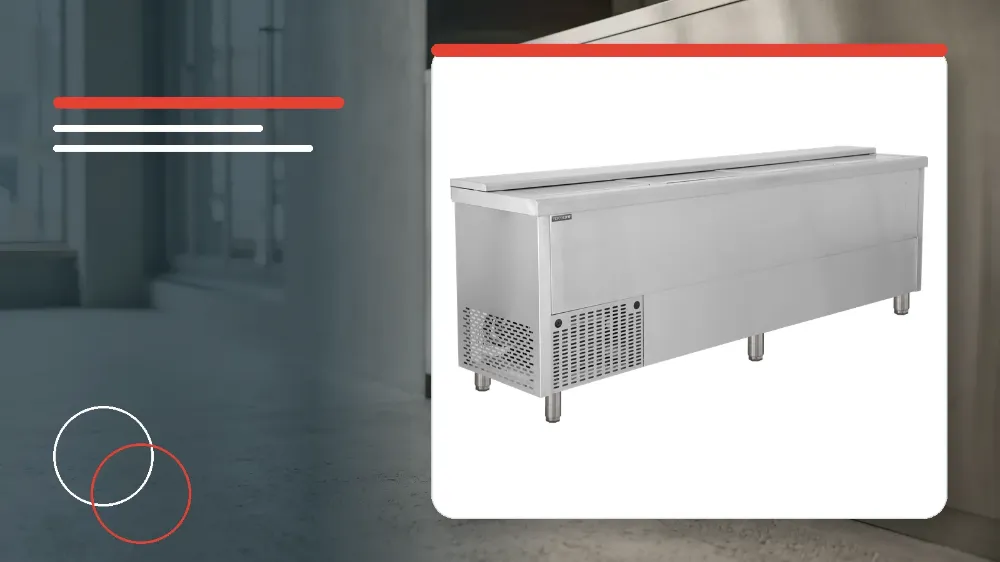
To install, operate, and maintain the Tefcold BHC250X1 bottle chest cooler correctly, place the unit on a level surface with at least 10 cm of clearance, connect it to a fused and earthed 230V socket, adjust cooling via the internal thermostat knob, and clean the condenser weekly using a vacuum cleaner or soft brush.
Applies to
This guide applies directly to trained commercial operators managing the Tefcold BHC250X1 stainless steel bottle chest cooler.
Before you start
- Verify that all external and internal packaging materials have been completely removed from the cooler prior to setting up the unit.
- Confirm that all electrical connections on the appliance are fully dry and physically intact before attempting to connect the power supply.
- Perform a thorough initial cleaning of the storage cabinet prior to running the appliance for the first time.
- Ensure that the planned installation location provides a stable, flat surface protected from direct sunlight and ambient heat sources.
Safety warnings
- Never use mechanical tools or sharp devices to accelerate defrosting because doing so can puncture the cooling system and cause flammable R600a refrigerant to leak.
- Do not operate unapproved electrical appliances inside the refrigerated storage compartment of the cabinet.
- Do not allow water or liquid cleaning solutions to come into contact with electrical components during maintenance.
- Exercise caution around the compressor compartment during maintenance as it contains sharp, moving, and hot components.
- All internal cabinet repairs and servicing must be executed strictly by a skilled technician familiar with the appliance.
Unpacking and Siting the Cabinet
Proper positioning is critical to maintaining thermal efficiency and ensuring reliable refrigeration in busy commercial bar and catering environments.
The cabinet must be situated on a flat, level surface that isolates the refrigeration system from direct sunlight and nearby thermal sources.
Adequate perimeter airflow prevents the condensing unit from overheating during demanding ambient conditions.
- Unpack the cooler and completely strip away all protective wrapping and packing materials from the unit.
- Set the cabinet down onto a solid, level floor away from cooking equipment, radiators, and direct sunlight.
- Leave a minimum free clearance of at least 10 cm around all sides of the cabinet to guarantee proper ventilation.
Electrical Connection and Initial Start-Up
Commercial electrical safety requires strict verification of power supplies and connection hardware before powering the cooler.
Power cords and plugs must be inspected for physical defects, cuts, or moisture prior to insertion into the mains supply.
- Inspect the mains power cable and plug thoroughly to ensure neither component shows physical damage.
- Confirm that all electrical connections are completely dry and intact before initiating operation.
- Connect the power plug exclusively into a fused, properly earthed electrical socket rated for 230V, 16A, and 50Hz.
- Clean all interior surfaces of the cabinet thoroughly before loading products into the storage chamber.
Operating the Internal Thermostat
The cooling performance of the cabinet is regulated directly through a mechanical thermostat dial located on the internal control panel.
Operators must access the compressor compartment to adjust the temperature settings or turn off power to the refrigeration circuit.
- Open the machine compartment door to access the thermostat control panel located inside.
- Rotate the thermostat dial to position I when standard cold cooling is required.
- Turn the thermostat dial toward position IV when the coldest operating temperature is desired.
- Turn the dial to position 0 whenever you need to turn off the refrigeration cabinet completely.
Routine Cabinet and Condenser Cleaning
Regular cleaning prevents surface contamination and preserves the heat-exchange capacity of the refrigeration system.
Harsh chemical agents and scouring pads must never be applied to cabinet surfaces to avoid permanent material degradation.
Dust accumulation on the condenser grate will severely reduce cooling efficiency if not removed on a weekly schedule.
- Wipe down cabinet surfaces using a soft cloth dampened with lukewarm water and mild soap.
- Ensure that no scouring pads, abrasive substances, or chlorine-based cleaners are used on any part of the unit.
- Keep all water and liquid solutions strictly away from electrical parts during the cleaning procedure.
- Open the machine door weekly to reveal the condenser grate located inside the compartment.
- Clean the condenser grate thoroughly once every week using a vacuum cleaner or a soft brush.
Stop and get help if
- Stop operation and disconnect power immediately if the power cable or mains plug shows signs of physical damage.
- Do not energise or operate the cooler if any electrical connections are wet, damp, or structurally compromised.
- Cease operation immediately if a refrigeration system leak or abnormal malfunction occurs.
When to call an engineer
- Contact your authorised dealer or qualified service partner immediately in the event of any equipment malfunction.
- Schedule an engineer visit whenever internal cabinet components or sealed refrigeration circuits require technical repair.