




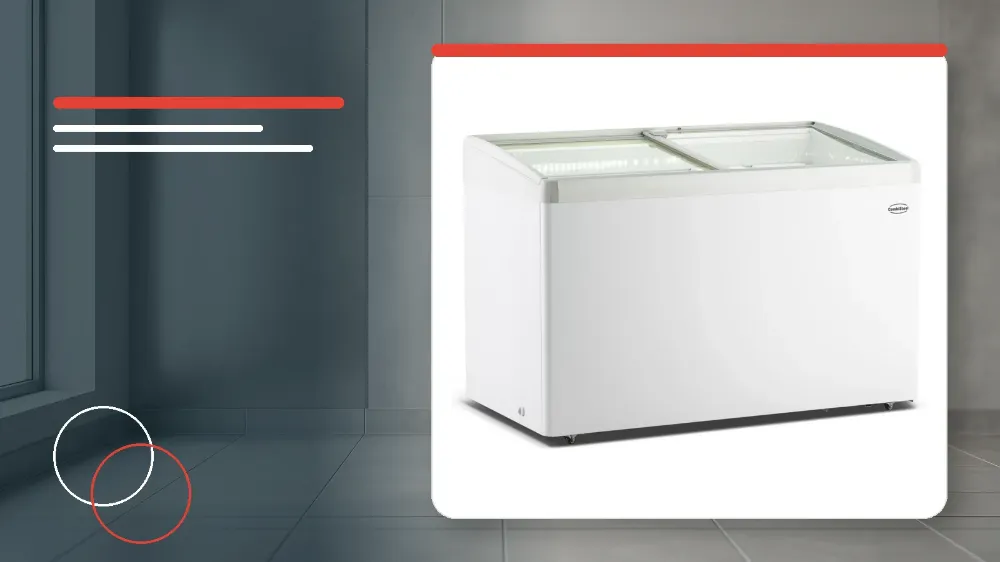
To defrost the Combisteel 7086.0035 chest freezer, switch off and unplug the appliance, remove all stored inventory, allow the frost layer to soften naturally, scrape the softened ice using a special defrosting shovel, open the interior floor drain and exterior shell drain cover to clear meltwater, thoroughly wipe away all remaining water, reseal the drain fittings, and reconnect power only after observing the required minimum five-minute compressor delay.
Applies to
This operational defrosting procedure applies specifically to the Combisteel 7086.0035 commercial glass-lid chest freezer model.
Before you start
- Inspect the inner cabinet walls and initiate this defrosting procedure whenever the accumulated frost reaches a thickness between 5 mm and 7 mm.
- Ensure suitable alternative commercial frozen storage is prepared to protect all cold inventory while the cabinet is unpowered and defrosting.
- Locate a dedicated defrosting shovel designed for manual ice removal before beginning maintenance.
- Always isolate the appliance by switching it off and removing the electrical plug from the mains supply socket before opening the drain or starting defrost work.
Safety warnings
- Never attempt to remove frost using metal-edged tools, knives, or scrapers because these implements can cause severe puncture damage to the evaporator.
- Never introduce electrical heating appliances, blowers, or heat guns inside the freezer cabinet to accelerate thawing because electric heaters can damage the evaporator.
- Always ensure the unit remains unpowered for at least 5 minutes before restarting after any shutdown or power interruption to prevent shortening the compressor lifespan or causing severe compressor failure.
Recognising the Defrosting Threshold
Frost buildup occurs naturally on the internal cabinet walls during regular commercial operation as ambient moisture enters the freezer during service.
Defrosting must be scheduled and carried out promptly whenever the internal frost layer reaches a thickness of 5 mm to 7 mm to maintain cooling efficiency.
Power Isolation and Inventory Removal
Defrosting must only be performed after total electrical disconnection has taken place.
- Switch off the freezer at the control interface and withdraw the electrical plug fully from the wall outlet.
- Transfer all stored commercial inventory out of the freezer cabinet into alternative sub-zero storage to preserve product safety.
Manual Defrosting and Meltwater Drainage
Allowing the internal frost to soften before mechanical clearance ensures that ice separates freely without placing mechanical strain on the internal lining.
- Open the top glass sliding lids fully to expose the frozen interior to room temperature air.
- Open the interior drainage hole located in the bottom floor of the cabinet.
- Remove the external drain cover situated on the outer cabinet shell to open the discharge channel.
- Allow meltwater to discharge freely through the integrated drainage pipe into an appropriate container or floor drain.
- Scrape away softened ice carefully using the dedicated defrosting shovel once the frost layer has softened sufficiently.
Cleaning, Drying, and Safe Restart Procedure
Moisture left inside the cabinet will rapidly refreeze into solid glaze upon restart if surfaces are not dried thoroughly.
- Wipe away all remaining frost water and standing condensation from the internal cabinet floor and walls using a clean, soft cloth.
- Firmly close and reseal the outer drain cover and internal bottom drain plug.
- Verify that at least 5 minutes have elapsed since the initial disconnection before restoring electrical power to protect the compressor from short-cycling damage.
- Plug the appliance back into the mains power supply and switch the operating power back on.
- Allow the empty cabinet to run until it fully pulls down to its set operating temperature before reloading frozen inventory.
Stop and get help if
- Stop the defrosting procedure immediately and do not attempt DIY repairs if a mechanical or structural failure cannot be resolved according to the instruction manual.
When to call an engineer
- Contact your authorised equipment dealer or qualified commercial refrigeration service technician whenever an issue cannot be resolved following manual instructions.