




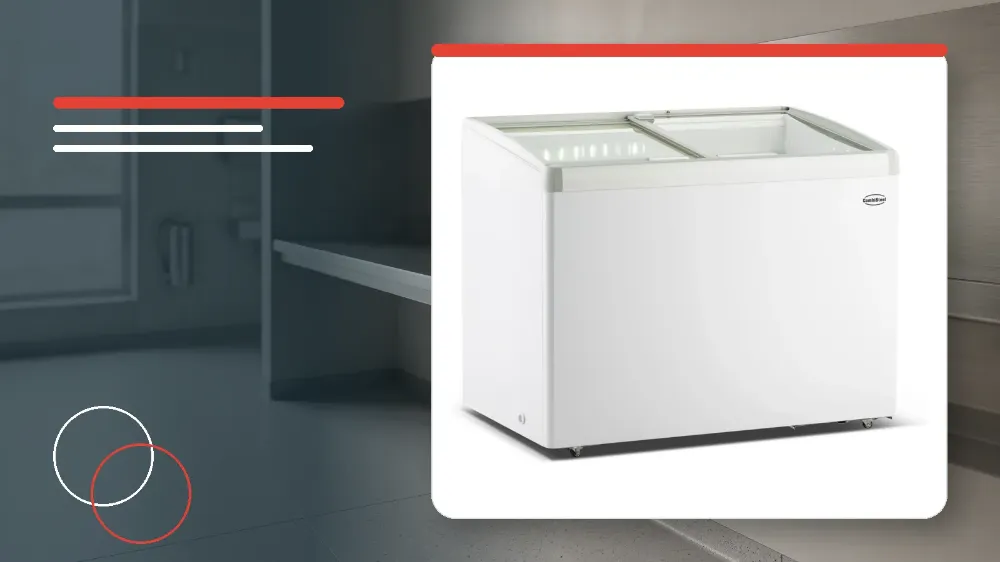
To service the appliance safely, switch off and unplug the freezer before removing stock, clearing softened frost with a special defrosting shovel, draining meltwater, washing cabinet surfaces with warm water and neutral detergent, cleaning seals with diluted bleach, and observing all post-maintenance electrical safety checks.
Applies to
This operational guide applies specifically to the Combisteel 7086.0030 glass-lid chest freezer.
Before you start
- Defrosting must be scheduled and carried out whenever the frost layer across the inner cabinet reaches 5 to 7 mm in thickness.
- Always isolate the unit by pulling the electrical plug completely out from the mains socket before starting any cleaning or maintenance work.
- All stored food goods must be removed from the cabinet prior to beginning the defrosting routine.
Safety warnings
- Do not attempt to remove ice or frost using metal-edged tools or electrical heating tools, as doing so can cause severe damage to the evaporator.
- Do not clean the inner cabinet or outer shell with hot water, corrosive cleaning agents, or organic agents.
- Following any power interruption or manual switch-off, you must wait a minimum of 5 minutes before restarting the unit to avoid shortening compressor life or damaging the compressor.
When to Defrost and Initial Preparation
Ice accumulation on the internal surfaces acts as thermal insulation and impairs overall cooling efficiency in commercial operations.
Defrosting must be undertaken as soon as the frost buildup reaches a depth of 5 to 7 mm.
To prepare the appliance safely, switch off the power supply, disconnect the mains plug, and remove all inventory from the storage area.
- Measure the frost build-up on the inner cabinet surface to determine if it has reached the 5 to 7 mm threshold.
- Switch off the freezer and unplug the power cable from the wall socket.
- Transfer all stored inventory out of the unit into alternative temperature-controlled storage.
Defrosting and Meltwater Drainage
The glass door should remain open while the ambient air allows the frost to soften naturally.
Once softened, the frost must be cleared away using a dedicated defrosting shovel rather than standard kitchen implements.
Meltwater discharges through an internal drain hole and an exterior outlet that connect to the drain pipe.
- Open the freezer door to permit air circulation inside the compartment.
- Open the interior drain hole situated in the bottom base of the cabinet.
- Open the outer drain cover located on the exterior shell to let drainage water flow out via the drain pipe.
- Scrape away the loosened ice deposits using only a designated defrosting shovel once the frost becomes soft.
- Ensure that sharp metal tools and electrical heaters are never introduced into the compartment during ice clearance.
Cleaning the Cabinet, Outer Shell, and Door Seal
Maintaining sanitary internal surfaces and clean exterior housing protects equipment components from premature degradation.
Washing the inner cabinet and external casing requires soft cloths paired with warm water and a neutral cleaning chemical.
Sanitising the flexible door gasket demands an explicit chemical dilution followed immediately by a fresh-water rinse.
- Mix a mild solution of neutral cleaning agent with warm water in a clean bucket.
- Wipe down all internal cabinet walls and outer shell panels using soft cloths moistened with the neutral cleaning solution.
- Dilute bleach with 10 parts water to prepare the sanitising solution for the door seal.
- Wash the entire door seal thoroughly using the diluted bleach mixture.
- Rinse the door seal with clean water to wipe away all chemical residues completely.
Post-Maintenance Inspection, Restarting, and Restocking
Every drop of residual meltwater must be dried from the cabinet surfaces before reinstating power.
A comprehensive electrical check must be completed across the power cord and plug assembly before returning the unit to normal service.
Whenever electrical power has been interrupted, a minimum delay of 5 minutes must elapse prior to restarting to protect the compressor against mechanical failure.
- Wipe away all remaining frost water from inside the cabinet until completely dry.
- Close the outer drain cover securely.
- Inspect the entire electrical cable to ensure there are no visible nicks or crannies along the cord.
- Verify that a secure and firm electrical connection is formed between the mains plug and the wall socket.
- Plug in the cable, switch on the appliance, and verify that the electrical plug does not become abnormally hot.
- Allow the empty freezer to operate until internal temperatures drop to the preset operating level before restocking stored goods.
Long-Term Shutdown and Storage Procedure
Taking commercial refrigeration out of commission requires careful drying to avoid moisture entrapment inside the cabinet.
Before putting the appliance into storage or stopping operation for an extended duration, switch off the power and remove the plug.
Perform a thorough full cleaning of all surfaces and leave the cabinet open to dry out over several days.
- Switch off the appliance switch and disconnect the plug from the mains receptacle.
- Clean all internal and external cabinet areas fully with approved neutral cleaning solutions.
- Leave the lid open and allow the appliance to air-dry completely for some days before long-term storage.
Stop and get help if
- Stop operation immediately if the power cord shows any visible cranny or nick during physical inspection.
- Halt use of the freezer if the mains plug becomes abnormally hot during operation.
- Cease all operator intervention if an operational problem cannot be rectified strictly according to the instruction manual.
When to call an engineer
- Contact your authorised equipment dealer for assistance rather than attempting any self-repairs whenever a fault cannot be resolved using the manual.
- Escalate the issue to a professional technician if the power cable is damaged with crannies or nicks, or if the mains plug runs abnormally hot.