







Commercial Vacuum Packing Machine Maintenance in Ireland
Commercial vacuum packing machine maintenance matters because it protects food safety, reduces downtime, and helps your Irish food business get consistent seals and longer equipment life.
You keep performance reliable by matching your maintenance routine to the type of machine you run, using the right bag materials, and spotting wear before it turns into breakdowns. You also work within the realities of busy Irish kitchens and production rooms, where cleaning must support HACCP controls and withstand frequent changeovers between raw and ready-to-eat foods. A practical schedule makes this manageable, with daily, weekly, and monthly tasks that cover cleaning, seal bar care, gasket checks, oil and filter attention where relevant, and basic calibration and inspection.
You balance speed against risk by choosing methods and features that simplify hygiene and servicing, and by knowing when a job is safe for trained staff versus when it belongs with an authorised technician. With the right approach, you cut waste, extend service intervals, and keep packaging quality steady, starting with a clear view of the commercial vacuum packer styles used across Irish businesses.
Types of Commercial Vacuum Packing Machines
Choose between a chamber vacuum packer and an external suction sealer based on your daily volume, the type of food you’re sealing, and how much consistency you need in busy service. In Ireland, it is also worth keeping in mind that reduced-oxygen packs can change the microbiological risk profile of food, which is why shelf-life setting and validation (where relevant) and tight chilled control matter under FSAI guidance. Chamber units suit high-throughput kitchens and producers, while external sealers suit lighter, more flexible prep. Bag type, liquids, and batch size tend to be the real deciding factors, and they influence everything from running pace to pack quality.
Chamber vacuum packers (best for volume, liquids, and consistency)
This is the workhorse for butchers, delis, and food producers because liquids, marinades, and wet foods seal reliably inside the chamber. FSAI highlights that vacuum and modified atmosphere packaging can introduce specific hazards, including Clostridium botulinum, so repeatable seals and robust temperature control are a big part of staying safe, particularly where longer shelf-life is being set or claimed within your food safety management system.
For detail, see FSAI Guidance Note 18: Validation of Product Shelf-life (Revision 5), which covers good practice around shelf-life validation for foods and why controls have to be evidence-based. That focus on reliability is why chamber machines are usually the preferred option when you are packing day in, day out and cannot afford seal failures.
External suction sealers (best for lighter restaurant prep)
This style suits restaurants doing smaller runs of dry items, portioning, and freezer packs, with a smaller footprint and fast bag changes at the pass. External suction sealers also tend to be a practical choice when you want a straightforward, lower-cost entry point for vacuum packing, so long as your products are suited to it and you are using the correct bag type for the machine. Maintenance is still the quiet make-or-break factor, because keeping the seal bar and suction path clean is what preserves vacuum strength and seal quality over time, especially in a floury or greasy kitchen environment.
Frequently Asked Questions About Commercial Vacuum Packing Machines in Ireland
What is the difference between a chamber vacuum packer and an external suction sealer?
A chamber vacuum packer places the entire pouch inside a sealed chamber and removes the air from the chamber itself, which makes it far more consistent for liquids, marinades, and high-volume packing. An external suction sealer pulls air out from the open end of the bag while the bag stays outside the machine, which is handy for lighter prep but can struggle with wetter products. In day-to-day terms, chamber machines are usually the better fit for butchers, delis, and producers, while external sealers suit restaurants doing portioning and freezer packs.
Are vacuum-packed foods higher risk from a food safety point of view?
Vacuum packing and other reduced-oxygen packaging can increase the risk from certain pathogens because the low-oxygen environment can allow organisms such as Clostridium botulinum to grow if time and temperature controls are not right. In Ireland, shelf-life and storage conditions should be supported by appropriate evidence and controls as part of your HACCP-based food safety management, and FSAI sets out good practice in Guidance Note 18: Validation of Product Shelf-life (Revision 5). Practical controls usually include consistent sealing, rapid chilling where relevant, correct storage temperatures, and clear date coding and handling instructions.
Can you vacuum pack liquids with an external suction sealer?
You can, but it is often awkward and inconsistent compared with a chamber machine. External suction units can draw liquid toward the seal area, which increases the chance of a failed seal or contamination on the seal line. If liquids, marinades, brines, or wet proteins are a big part of your menu or production, a chamber vacuum packer is typically the safer and more reliable choice for commercial use.
What bags do you need for each type of commercial vacuum sealer?
In general, chamber vacuum packers use smooth vacuum pouches, while many external suction sealers require embossed or textured bags to allow air to be pulled out effectively. The exact bag requirement depends on the model, so it is worth checking the manufacturer spec before you bulk buy bags for service. Getting the bag spec right matters because it affects seal integrity, pack speed, and waste levels, especially when you are packing at scale.
Do you need to validate shelf life if you start vacuum packing foods in your business?
If you are changing packaging in a way that could affect shelf-life or alter the product’s safety profile, you should consider whether shelf-life validation is needed as part of your HACCP approach. FSAI provides detailed good-practice guidance in Guidance Note 18 (Revision 5). Many businesses use a combination of scientific justification, product-specific testing where appropriate, and strict time-temperature controls, and it is sensible to involve a competent food safety professional if you are unsure.
What is the best type of vacuum packing machine for a busy Irish restaurant kitchen?
For a busy restaurant, it depends on what you pack most days. If you are mostly doing dry portioning, freezer prep, and occasional specials, a good external suction sealer can be a practical fit due to its footprint and speed of bag handling. If you are doing lots of wet products, sauces, marinades, or high daily throughput, a chamber vacuum packer usually pays you back in consistency and fewer seal failures, which is where service pressure tends to show.
Shop Commercial Vacuum Packing Machines for Irish Kitchens
If you are ready to tighten up prep, reduce waste, and get more consistent portion control, browse Caterboss’s range of trade-grade vacuum packers, chamber vacuum machines, and external suction sealers built for commercial kitchens. You can view the range here: Vacuum Packing Machines. If you are fitting out a new kitchen or upgrading for higher volume, ask the Caterboss team about flexible finance options that may be available, always subject to approval and partner terms, so you can match the machine to your output without putting unnecessary pressure on cash flow.
Choose a commercial vacuum packing machine that fits your kitchen footprint, keeps pace with your busiest prep window, and matches the way you actually portion, label, chill, and store food in an Irish operation. Measure bench depth and lid-up clearance so staff can load bags cleanly without blocking the pass. Match chamber size, seal bar length, and cycle speed to your menu, whether that is small deli portions or bulk proteins in gastronorm trays. Confirm whether you are on 230V single-phase or 400V three-phase before you buy, as the wrong power setup can turn a good machine into a costly headache. Keep food safety front and centre too, because vacuum packaging and sous vide bring extra controls around chilling, storage temperatures, and shelf-life setting/validation under HACCP, with FSAI highlighting risks associated with vacuum packaging such as Clostridium botulinum in its guidance on sous vide and food safety. Make a sensible choice you can clean and maintain daily, and you will get tighter portion control, less waste, and more consistent service straight away.
Choosing the Right Vacuum Packing Machine for Your Needs
How do you choose the right size and capacity of a vacuum packing machine for an Irish commercial kitchen?
Start by measuring where it will live and how you will load it, then match chamber size and cycle speed to your busiest prep window. Confirm your electrical supply can handle the machine’s load before you commit. Sanity-check the choice against your cleaning routine, because the right machine is the one you will actually maintain properly, and that consistency is what protects both service speed and food safety.
1. Measure your space and workflow
A chamber machine needs clear bench depth plus lid-up height, so you are not wrestling bags mid-service. If you are tight on space, plan where bags, rolls, and labelled packs will sit beside it, as good set-down space tends to matter just as much as the machine footprint when the kitchen gets busy.
2. Size capacity to your real production
Your menu drives the chamber size: bigger gastronorm portions and bulk proteins need a wider seal bar, while small delis often win with faster cycles over sheer chamber volume. I would also budget time for proper cleaning, because vacuum packing is often used alongside cook-chill or sous vide workflows and you need the hygiene routine to be realistic every day. It is also worth keeping the HACCP angle in mind, as vacuum packaging can change the risk profile of foods by creating an anaerobic environment, and the FSAI highlights hazards associated with vacuum packaging in its factsheet on Sous Vide and Food Safety, which is relevant if you are sealing cooked foods for chilled storage.
I would avoid the mindset of buying the biggest chamber you can afford “just in case”, because what tends to cause problems in practice is slow turnaround and awkward loading, and that knock-on effect shows up quickly when you are trying to keep food moving in and out of the cold room efficiently.
3. Check power supply before purchase
Power matters because many higher-output units expect three-phase, and ESB Networks defines Low Voltage supplies as 230V single phase or 400V three phase, so have a qualified electrician verify what supply is available at your premises (for example, from your existing electrical documentation and on-site assessment). It is a small step that can save you from delays, call-outs, or having to swap a machine after it arrives, and it also helps you think clearly about where else you might be drawing load at the same time in a busy kitchen.
Frequently Asked Questions About Choosing a Commercial Vacuum Packing Machine in Ireland
Do I need a chamber vacuum packer or a suction (external) vacuum sealer for a commercial kitchen?
For most Irish commercial kitchens doing regular prep, portioning, and batch work, a chamber vacuum packer is usually the better fit because it is designed for higher volume, consistent sealing, and it works with smooth chamber pouches. Suction sealers can suit lighter duty tasks and typically use embossed bags/rolls, but they can struggle with liquids and can be slower for repeated cycles. The practical decision comes down to how often you are sealing per day, whether you are sealing sauced or marinated product, and how important speed and consistency are during prep.
What seal bar length do I need for gastronorm portions and bulk proteins?
You want a seal bar that comfortably spans the widest bag you will regularly use, without forcing you to fold or bunch the opening. If you are vacuum packing larger cuts, multiple portions in one pack, or wider bags for gastronorm-style prep, a longer seal bar reduces rework and speeds up packing. If your menu is mostly smaller portions, a slightly shorter seal bar with faster cycle times can be a better real-world win, because it keeps the machine turning over during busy prep and reduces the temptation to overfill bags.
Can I run a commercial vacuum packing machine on a standard Irish single-phase supply?
Many smaller commercial units will run on 230V single-phase, but higher-output machines may require 400V three-phase, particularly where motor size and cycle performance step up. ESB Networks classifies Low Voltage as 230V single phase or 400V three phase in its connection characteristics document, so the key step is confirming what you actually have before purchase and installation. A qualified electrician can also advise if a dedicated circuit is sensible, which often helps avoid nuisance tripping when other heavy kit is running.
Are there food safety rules I need to follow when vacuum packing food in Ireland?
Yes. Vacuum packing can change shelf-life and can also increase risk for certain foods because vacuum packaging creates a low-oxygen environment. You should manage it through your HACCP plan, including controls for cooling, chilled storage temperature, handling, and shelf-life setting/validation. The Food Safety Authority of Ireland flags hazards linked with vacuum packaging in its Sous Vide and Food Safety publication, including the risk associated with Clostridium botulinum, which is especially relevant when vacuum packing cooked foods for chilled storage.
What consumables will I need alongside the machine?
At minimum, plan for the correct bags for your machine type, plus labels for traceability. Chamber machines typically use smooth vacuum pouches, while suction sealers usually need embossed bags or rolls. In day-to-day operations, it is also smart to keep a steady stock of food labels and wrapping supplies so your packs are dated, identifiable, and rotation is easy during service, as that is where vacuum packing really earns its keep.
Start Spec’ing the Right Vacuum Packing Setup for Your Kitchen
If you want a vacuum packing machine that fits your bench space, matches your prep volume, and suits Irish power supply realities, browse Caterboss’s range of Vacuum Packing Machines & Sealers and stock up at the same time on the right Vacuum Pack Bags for your machine type. If you are juggling cash flow on a new opening or an upgrade, ask the Caterboss team about flexible equipment finance options, subject to approval and partner terms, so you can get trade-grade kit in place without putting service under pressure.
Routine Maintenance Tasks
Keep your commercial vacuum packing machine reliable by cleaning all food-contact parts, checking seals, and confirming the pump is pulling a strong vacuum. Build a simple daily to weekly to monthly routine, then log what you did and what you found. Finish each cycle by reassembling fully dry parts and running a quick test bag so you catch weak seals before they ruin stock and create avoidable food safety risk.
1. Clean food-contact areas on a schedule
To stay audit-ready, the Sea-Fisheries Protection Authority notes that cleaning and maintenance records of equipment should be maintained as part of hygiene control. The Food Safety Authority of Ireland also highlights the value of keeping cleaning schedules and records as part of running a food business safely, including documenting when equipment is cleaned as per your schedule: FSAI safe food handling guidance.
- Daily: wipe chamber, lid, and seal bar; wash removable parts; air-dry fully.
- Weekly: deep-clean crevices; sanitise where appropriate; clean exterior vents.
- Monthly: inspect accessible vacuum paths and seals; replace worn gaskets where applicable and in line with manufacturer instructions.
A steady cleaning routine keeps odours and residue from building up around the seal area, which is where most “it was grand yesterday” problems start showing themselves.
2. Protect the seal and pump performance
Good maintenance prevents “mystery leaks” that waste bags and can undermine product quality and shelf-life assumptions. Check lid gasket compression, clean sealing strip residue, and listen for pump strain, then note issues so servicing is planned before peak service.
If you are running an oil-lubricated rotary vane pump (common on many chamber machines), keep an eye on pump performance over time and follow the manufacturer’s pump service intervals for oil and filters, as neglected pump maintenance tends to show up as slower cycles, weaker vacuum, and more seal failures under pressure. If any work requires access to specialist components, use a suitably qualified technician and follow the manufacturer’s instructions.
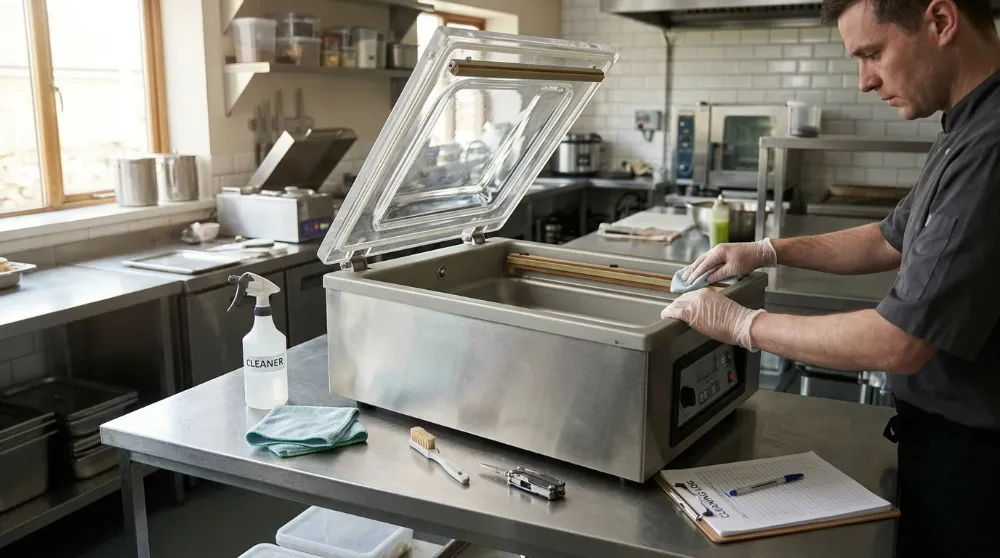
Clean a commercial vacuum packing machine in a way that protects food safety and stands up to Irish inspection expectations. Power it down, let it cool, and remove any parts that come off so you can reach every food-contact surface. Clean with a food-safe neutral detergent, rinse thoroughly, sanitise where appropriate, and allow everything to fully air-dry before reassembly. Finish with a close check of the seal bar, lid gasket, and any corners where protein, grease, or moisture can sit, because that is where weak seals and contamination risks usually start to build.
1. Isolate, dismantle, and pre-wipe
Start by unplugging the machine and letting hot parts cool. Remove the chamber inserts, bag bin, and any drip trays, then pre-wipe visible debris so it does not smear during washing and you can see what you are actually cleaning.
2. Clean stainless housing and chamber surfaces
Wash the chamber and stainless surfaces using a neutral detergent and a soft cloth, wiping with the grain on stainless. Avoid wire wool and avoid chlorine-based cleaners that can mark stainless over time.
3. Sanitise seal bars, gaskets, and contact points
Sanitise after cleaning where your HACCP and hygiene controls require it, as disinfection may be needed after cleaning for hygiene control in food premises under FSAI good hygiene practice guidance, including FSAI Guidance Note No. 16 (Revision 2). Let the seal bar cool fully, clean carefully around any PTFE tape, and do not close the lid or reassemble parts until everything is dry and odour-free, because lingering moisture is what tends to trigger hygiene risks and premature gasket wear.
Frequently Asked Questions About Cleaning Commercial Vacuum Packing Machines in Ireland
How often should you clean a commercial vacuum packing machine?
Clean food-contact areas at the end of each production run and at least daily in regular service, with spot-cleaning between different products where cross-contamination is a risk. Frequency should follow your HACCP plan and the manufacturer’s instructions, and it often needs to be tighter in Irish kitchens handling high-protein foods like raw meat, fish, dairy, or cooked ready-to-eat items.
Do you need to sanitise a vacuum packing machine after cleaning?
Sanitising is commonly used where your HACCP controls call for it, especially after handling high-risk foods or when the machine is used for ready-to-eat production. FSAI guidance on good hygiene practice notes that disinfection may be needed after cleaning for hygiene control in food premises, so it is important to document what you do, what chemical you use, and the contact time, and keep that aligned with your cleaning schedule and risk assessment.
What cleaning chemicals are safe for stainless steel vacuum chambers?
A food-safe neutral detergent is usually the safest everyday option for stainless steel, followed by a clean rinse and full drying. Avoid abrasive pads and avoid chlorine-based products on stainless, as they can cause staining or corrosion over time, which becomes harder to keep hygienic and can lead to unnecessary repairs in busy service.
Can you use a pressure washer or hose to clean a chamber vacuum sealer?
In most commercial kitchens, hosing or pressure washing is not recommended unless the manufacturer specifically states the unit is designed for that type of washdown. Water can be forced into electrics, switches, seals, and pump components, leading to breakdowns or unsafe operation, so a controlled wipe-down approach with the correct detergent and sanitiser is the safer route.
What parts need the most attention to prevent weak seals and contamination?
The seal bar area, PTFE tape, lid gasket, and corners of the chamber are the usual trouble spots because they trap protein, grease, and moisture. If you are seeing inconsistent seals, off smells, or residue lines on bags, those areas are the ones to inspect closely, clean meticulously, and replace components when they are worn.
What records should you keep for food safety compliance in Ireland?
Keep a cleaning schedule and signed records showing the date, time, person responsible, chemical used, dilution, and contact time where relevant, along with any corrective actions taken. This supports your HACCP documentation and helps demonstrate ongoing hygiene control in line with Irish food safety expectations during inspections.
Keep Your Vacuum Packing Setup Inspection-Ready
If you are replacing a worn machine, adding vacuum packing capacity, or kitting out a new prep area, Caterboss can help you choose trade-grade vacuum packing equipment and the day-to-day cleaning and hygiene essentials that keep it compliant and reliable in service. Get in touch with the Caterboss team for practical advice on the right machine for your volume, plus support with supply items and flexible finance options where available, subject to approval and partner terms.
Features and Specifications that Minimize Maintenance
Downtime usually comes from seals, lids, and chambers that are awkward to clean or slow to replace, so maintenance-friendly design is really about access and quick swap-out parts. Irish food businesses also need surfaces that clean quickly to stay compliant when you’re sealing raw proteins or ready-to-eat items. The catch is that even the best design will not save you if staff skip daily wipe-downs or you run wet product without a proper drip and liquid management plan, so it pays to look closely at how the machine is built.
Why stainless bodies and rounded chambers matter
A stainless body with a smooth, rounded chamber reduces grime traps and speeds sanitation, which matters in busy prep when you are trying to keep standards consistent. The FSAI notes that specialised and complex equipment can be difficult to clean and can easily become a source of contamination, and it highlights the value of cleaning schedules and records in its safe food handling guidance. That same logic applies in day-to-day kitchen ops, where awkward corners and rough welds tend to become the places that cost you time and introduce risk.
Which serviceable parts cut call-outs
Removable seal bars, drop-in gaskets, and easy-to-clean lids matter because you can replace wear parts in minutes, and that is the difference between finishing prep or cancelling orders when you are under pressure. It is also worth checking that consumables are easy to source in Ireland, with clear part codes and lead times, because a minor failure should not turn into a multi-day outage.
Service and Support Options in Ireland
The experience varies depending on who supplied the machine and whether they have an Irish service partner. In practice, Irish distributors with local technicians tend to get you back up and running faster than overseas-only sellers. “Warranty” can also mean very different things in the real world, such as parts-only, labour included, or return-to-base, so get the detail in writing before you buy so there are no surprises when you actually need help.
Warranty and repair routes to look for
The CCPC Consumer Rights Act 2022 guide for traders can be helpful background reading on consumer-facing remedies and trader obligations. For commercial equipment purchases, check your written contract and the manufacturer/supplier warranty terms so you are clear on what is covered, what is excluded, and who pays call-out and labour.
Spare parts and after-sales support
Ask what is stocked in Ireland (seal bars, gaskets, pumps) because long lead times can stop production; even in other equipment sectors you can see the value of spare parts stocked locally. Once you are comfortable that parts and support are realistically available, the last step is making sure you have a clear plan for downtime and routine maintenance.
Applying Maintenance Strategies in Irish Food Businesses
Experts generally agree that vacuum packing machine maintenance works best when you treat it as part of daily operations, not a “when it breaks” job. In Irish food businesses, that means tying cleaning, checks, and seal performance directly into your HACCP system, staff training, and buying decisions. What counts as “enough” maintenance shifts with product risk, pack volumes, and whether you’re handling wet foods, powders, or raw proteins, so the routine needs to match the reality of your kitchen.
Make maintenance a QA control, not a side task
You’re protecting shelf life and food safety. The FSAI notes that vacuum packers can be difficult to clean and can easily become a source of contamination, so documenting cleaning frequency and routine inspections can strengthen your audit trail and reduce the chance of recurring issues being missed.
Use maintenance data to manage costs
You get tighter cost control when you log bag waste, rework from failed seals, and downtime, then feed that back into shift routines and replacement planning before service gets hit. Once you can see patterns in seal failures or slow cycle times, it becomes much easier to justify the right spares, servicing intervals, or even a machine upgrade based on the actual workload.
Frequently Asked Questions
The right setup depends on your machine type (chamber or external suction), the bag or pouch spec, and how you manage chilled storage in day-to-day service. The Food Safety Authority of Ireland is the reference point I’d trust most because it focuses on real hazards, not brochure claims. In practice, the best results usually come from combining solid food safety controls, the correct packaging, and reliable local service back-up.
What kinds of food products can be vacuum packed?
Many foods can be vacuum packed, but vacuum packing does not sterilise food or, by itself, establish a safe shelf-life. FSAI’s guidance on validation of product shelf-life highlights the need to manage reduced-oxygen risks, so it’s important to have HACCP controls, correct chill temperatures, and verified shelf-life validation in place for your specific product.
Can machines be used for sous vide cooking?
Yes, as long as you’re using heat-stable, food-grade pouches and you control time and temperature from sealing right through chilling, storage, and reheating. In a commercial kitchen, that usually means having clear sous vide procedures, calibrated equipment, and traceable records so you can show consistent control if you’re ever asked. Remember, some foods may not be suitable for sous vide cooking (FSAI gives examples such as whole birds and minced meats). FSAI provides an overview of hazards and recommended controls in Sous Vide and Food Safety.
Are spare parts easily available in Ireland?
Usually, yes for common wear parts like lid seals, seal bars, oil, and filters, but it depends on whether the brand has an Irish service agent and keeps stocked spares locally. Before you buy, it’s worth checking lead times for parts, who handles warranty call-outs in Ireland, and what support looks like when the machine is down mid-service.
Frequently Asked Questions About Commercial Vacuum Packing Machine Maintenance in Ireland
What kinds of food products can safely be vacuum packed in a commercial environment?
Many foods can be vacuum packed in a commercial Irish kitchen, including raw and cooked meats, fish, hard cheeses, cooked grains, and prepared components, but vacuum packing does not sterilise food and it does not, on its own, establish a safe shelf-life.
Be more cautious with chilled, ready to eat foods where vacuum packing creates a low oxygen environment that can support pathogens. The FSAI highlights that anaerobic conditions created by vacuum packaging can allow growth of bacteria such as Clostridium botulinum if controls are not in place, which is why strict chilling, validated shelf life, and correct storage are essential in practice in Ireland (FSAI sous vide and food safety guidance).
Can commercial vacuum packing machines be used for sous vide cooking in professional kitchens?
Yes. In professional kitchens, the vacuum packer is used to seal food in a heat stable pouch before cooking in a temperature controlled water bath. The critical point is that vacuum packaging changes the risk profile because the absence of oxygen can support growth of anaerobes unless you tightly control processing, rapid chilling, storage temperatures, and reheating.
The FSAI specifically defines sous vide as cooking food that is vacuum packaged in a plastic pouch and heated in a temperature controlled water bath, and it flags the microbiological hazards that come with vacuum packing and low temperature cooking (FSAI sous vide and food safety guidance). It also notes that some foods may not be suitable for sous vide cooking (including whole birds and minced meats).
What warranty and service options are available for vacuum packing machines purchased in Ireland?
Warranty and service support depends on the Irish supplier and the brand, but in a commercial setting you will typically see a manufacturer warranty alongside an option for preventive maintenance, call outs, and parts supply through the distributor.
Before you buy, ask for the warranty terms in writing, what is excluded (consumables such as seal bars, gaskets, and PTFE tape are commonly treated differently), typical lead times for engineer visits in Ireland, and whether the supplier can provide a service history log suitable for audits.
Are spare parts and seal bars easily available from Irish suppliers?
Availability is usually good for widely used chamber vacuum packers and external suction units sold through Irish catering equipment channels, but it varies by model and how old the machine is.
To reduce downtime, keep at least one spare set of consumables that wear quickly in busy kitchens, confirm the exact part numbers for your unit, and record seal bar length and configuration so replacements can be ordered without guesswork. When you standardise your fleet to fewer models, it also becomes easier to stock the right spares and train staff on safe changeovers.
What training is recommended for staff in Ireland on the safe maintenance and operation of vacuum packing machines?
Train staff on both food safety controls and equipment safety.
- Food safety and HACCP: correct loading, bag handling, labelling, chilled storage, and shelf life controls, especially for reduced oxygen packaging.
- Safe use of work equipment: switching off and isolating before cleaning or maintenance, safe removal and refitting of components, and checking guards and interlocks after reassembly.
- Planned maintenance routines: daily cleaning checks, weekly inspection points, and clear reporting for vacuum faults, seal quality issues, or damaged cables.
When everyone follows the same steps and records issues consistently, the machine lasts longer and audits feel far less stressful, which is exactly the kind of calm you want on a busy service.
Get More Practical Maintenance Advice for Irish Kitchens
Keep your kitchen running smoothly with our expert tips. Subscribe to our newsletter for the latest in catering equipment maintenance and simple routines your team can actually stick to.