





Choosing the right commercial vacuum packing machine in Ireland matters because it protects food quality, improves shelf life, and keeps your operation moving during busy service.
You match the machine to what you pack and how you work, whether that is chilled meats and fish, prepared meals for sous vide, or portion control for cafés and delis. You weigh practical trade-offs like chamber versus external machines, speed and seal consistency, available space on the prep line, and the ongoing cost and availability of pouches. You also plan for real-world constraints such as a standard single-phase 230V supply, noise and heat in a compact kitchen, and access to Irish-based servicing, parts, and warranty support. Food safety sits alongside performance, so your choice needs to fit your HACCP system, cleaning routine, and the Food Safety Authority of Ireland expectations around hygiene and reduced oxygen packaging.
With your products, volumes, and compliance needs clear, you can use the guide to narrow options confidently and move toward a shortlist that fits your kitchen and budget.
Overview of the Buying Guide
Choose a commercial vacuum packing machine that fits your kitchen’s volume, bags, bench space, and HACCP routine, so you get reliable seals, safer storage, and quicker prep without adding a new bottleneck. Match the right machine type to how you actually portion, chill, and label food in an Irish professional kitchen, whether that is a compact chamber unit for steady day-to-day prep or a higher-throughput setup for bulk production. Pay close attention to bag type and seal quality, because a strong vacuum is only useful if the seal holds in cold storage and during handling. Keep the real constraints in mind as well: cleaning access, staff consistency, and serviceability matter as much as headline specs, and oversizing can be as awkward as undersizing.
Why this matters for Irish food businesses
Good vacuum packing decisions protect food safety and margin, and they also reduce waste by keeping portions consistent. In day-to-day operations, the Food Safety Authority of Ireland notes chilled foods should be kept at 5°C or lower, which is why many businesses target 3–4°C in practice to give themselves a bit of a buffer in busy service. See the FSAI’s advice on temperature control for caterers and wider guidance such as its good hygiene practice resources for catering and retail. When you vacuum pack, you still rely on good chilling, correct storage, and clear labelling, and that is where the right machine choice starts paying you back.
What this guide helps you decide
You’ll use this guide to match machine capacity to your busiest prep window, choose bag sizes and seal widths that do not fail mid-service, and avoid buying a machine that becomes a bottleneck on a Friday afternoon. It also flags the real-world trade-offs: cleaning time, maintenance access, and whether your staff can run it reliably without babysitting it. Once those basics are nailed down, the smarter decisions tend to come down to machine type and the bags and consumables you plan to run every day.
Frequently Asked Questions About Commercial Vacuum Packing Machines
What is the difference between a chamber vacuum packer and an external suction sealer?
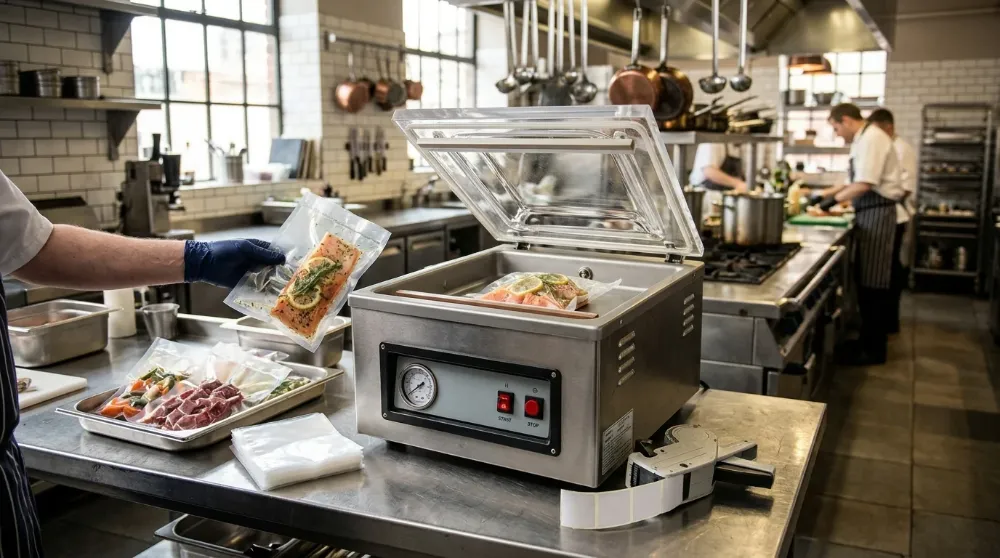
A chamber vacuum packer places the whole bag inside a chamber and removes air from the chamber itself, which lets it seal very consistently and handle liquids and marinades far better. An external suction sealer (sometimes called a bar sealer with suction) pulls air out from the open end of the bag while the bag stays outside the unit, which can be fine for dry products and lighter use but is easier to trip up with moisture at the seal area. In Irish kitchens doing batch prep, sauces, cooked meats, or wet marinades, chamber machines tend to be the more forgiving option.
What bags do I need, and do bag types differ by machine?
Yes. Chamber machines typically use smooth vacuum pouches, while external suction machines usually need embossed (textured) bags so air can be channelled out properly. Using the wrong bag type is a common cause of weak vacuums, failed seals, and wasted time. If you are sourcing machines and consumables together, it is worth looking at a supplier range that covers both machines and compatible bags, such as Caterboss’s Vacuum Packing Machines and Vacuum Pack Bags categories, so you can keep compatibility simple.
How do I size a commercial vacuum packing machine for my business?
Base it on your busiest prep period, not your quietest day. Look at how many packs you need per hour, the typical portion size, and whether you are packing multiple items back-to-back (which increases cycle demand). Also factor in the physical size of the chamber and seal bar relative to the bag widths you actually want to run. A machine that technically “does the job” but forces you into awkward bag sizes or constant reloading often ends up slowing the kitchen down.
Does vacuum packing replace refrigeration or HACCP controls?
No. Vacuum packing supports shelf-life and consistency, but it does not remove the need for proper temperature control, hygiene, and traceability. You still need safe cooling, correct chilled storage, and clear date labelling, and your HACCP plan should reflect how vacuum packing fits into your flow. FSAI guidance on chilled storage and food safety management is the right reference point when you are updating procedures, training staff, or reviewing risks such as cross-contamination.
Can I vacuum pack liquids and soups?
You can, but it is heavily dependent on the machine type. Chamber machines are generally the practical choice for liquids because the pressure change happens around the whole bag in the chamber, which helps prevent liquid being sucked into the sealing area. External suction machines can struggle with liquids because moisture can get drawn toward the seal, leading to weak seals or contaminated seal bars. Even with chamber units, you will get better results if liquids are well chilled and packed with enough headspace to keep the seal area clean.
What maintenance and cleaning should I plan for?
Plan for routine cleaning of the seal bar area, checking the condition of sealing strips, and keeping the chamber clean and dry. If the machine uses an oil pump, you may also have periodic oil checks or changes, depending on usage and the manufacturer’s instructions. In practice, easy access for wiping down, removable inserts, and clear controls reduce errors and speed up end-of-day cleaning, which tends to matter more than a small difference in headline vacuum specs.
Do I need special training for staff to use a commercial vacuum packer?
You do not need formal certification for the machine itself, but you do need consistent staff training so vacuum packing does not become a weak link in your HACCP routine. That usually means clear rules on portion size, bag selection, keeping the seal area dry, labelling standards, and where vacuum packed foods sit in your chill chain. The best setups are the ones where a new team member can follow a simple process and still get repeatable results during busy service.
Choose a Vacuum Packing Machine That Keeps Up With Your Kitchen
If you are ready to spec a trade-grade vacuum packing setup, start by browsing Caterboss’s range of Vacuum Packing Machines and matching it with the right Vacuum Pack Bags for your workflow. If cash flow is a factor, ask about flexible finance options that may be available subject to approval and partner terms, so you can get the capacity you need without putting the kitchen under pressure.
Key Considerations Before Buying
Buying the right commercial vacuum packing machine matters because it directly affects shelf-life control, service speed, and how confidently you can stand over your HACCP paperwork during an inspection in Ireland. FSAI guidance consistently ties packaging methods back to temperature control and documented procedures, so the machine spec is never “just equipment”. The key is matching the machine to your food risk (cooked vs raw, chilled vs frozen) and your daily workload, not just your budget, because the wrong setup tends to show up at the worst possible time in service.
Match the machine to your real workload
Start with what you’re sealing day-to-day, because portion sizes, bag format, cycle time, and seal bar width drive throughput and downtime. Vacuum packing does not make food “safe by default”, and FSAI is clear that vacuum packed foods still rely on strict chilling and robust temperature monitoring in its guidance on temperature control for caterers. That’s why it’s worth thinking about the whole workflow, from how quickly you can chill product to how consistently you can seal it.
Compliance, cleaning, and paper trail
Prioritise easy-clean build and service access, because hygiene is as much about what you can clean properly as what you can seal. FSAI highlights vacuum packing equipment as specialised kit that must sit within a documented food safety management system in its guide for small meat manufacturing plants. When the machine is simple to strip down, wipe over, and keep consistent, it also becomes much easier to maintain the records and routine checks that protect your shelf life claims in the real world.
Types of Commercial Vacuum Packing Machines
The right choice depends on what you’re packing, how fast you need to work, and how strict your food-safety controls are. In practice, Irish operators tend to decide using the same risk-and-workflow thinking you’ll recognise from HACCP, especially where vacuum packing falls under reduced-oxygen packaging and shelf-life control. The key point is that the “best” machine can change completely depending on wet foods, portion sizes, and whether you need consistent seals for long, busy days, which is why the machine type matters as much as the bags you plan to run.
Chamber machines vs external (suction) sealers
Chamber units vacuum and seal inside a chamber, so they cope far better with liquids, marinades, and repeated high-volume runs without constantly fighting product being pulled into the seal area. External (suction) sealers pull air from the bag mouth, which suits drier items and lighter-duty throughput, but they are easier to catch out with moisture and inconsistent bag loading during peak service.
Where reduced-oxygen packaging is used to extend shelf life, make sure your HACCP covers time and temperature control, shelf-life validation, and staff handling, in line with relevant Food Safety Authority of Ireland resources such as Guidance Note No. 18 on shelf-life validation from the FSAI-2.pdf?ext=.pdf). Those controls become especially important once you start deciding how you will package, label, chill, and store product day to day.
Bag systems: smooth, embossed, and double-seal options
External machines typically need embossed channel bags to let air travel out of the bag properly, while chamber machines use cheaper smooth bags, which can make a noticeable difference to ongoing costs in a high-volume Irish kitchen or food production setup. Double-seal bars are worth paying attention to when you’re sealing sauces, marinades, or anything that could creep into the seal line, because a second seal gives you extra protection against small leaks during handling and storage.
Once you’ve matched the machine to your product type, the real performance often comes down to getting the bag choice, seal quality, and repeatability right under pressure.
Step-by-Step Buying Process
How do you select and purchase a commercial vacuum packing machine in Ireland? Start by defining what you’re packing, how many packs per day, and your shelf-life and labelling needs. Then shortlist machine types, compare real specs against your space and workflow, and confirm consumables and servicing. Before you pay, double-check food-safety controls and power requirements so the machine fits your HACCP plan, not just your budget, and so it stands up to busy production without surprises.
1. Define your pack job and compliance needs
This step matters because vacuum packing changes risk controls. The FSAI notes that MAP and vacuum packing can create conditions where Clostridium botulinum is a key hazard in chilled foods, as set out in FSAI Guidance Note 20 on heat-chill processing, so your temperatures and shelf-life targets drive the spec.
It’s also the point where you confirm practical compliance details such as product labelling content, traceability, and how you will verify storage temperatures in day-to-day operation, because these decisions affect everything from bag choice to sealing consistency.
2. Shortlist machine type and size
This step matters because the wrong format slows prep and creates bottlenecks in a busy kitchen or food production room. Use a chamber sealer when you need consistent results, liquids, or higher volume runs, and consider an external suction sealer where space and throughput are lighter and you are mainly packing solid items.
Use vacuum packing machines to compare chamber vs external sealers by seal bar length, pump strength, cycle time, and footprint, then match it to your busiest production window so you are not queuing product during peak prep.
3. Evaluate ownership costs, then purchase and commission
This step matters because downtime costs more than the machine. Confirm bag type availability, spare seal bars, warranty terms, lead time in Ireland, and who handles commissioning, then place the order with delivery access and staff training planned.
It helps to sanity-check the basics that can trip you up on install day, including your available electrical supply, bench space, and where the unit will vent heat, because a smooth setup is what turns a new machine into reliable daily output.
Frequently Asked Questions About Commercial Vacuum Packing Machines in Ireland
Do I need a chamber vacuum packer or an external suction sealer?
For most Irish hospitality and food production setups doing regular volumes, a chamber machine tends to be the safer bet for consistency, speed, and handling liquids or marinades without making a mess of the pump. External suction sealers can suit lighter use and smaller footprints, but they rely more on correct bag placement and operator technique. If you are packing soups, sauces, stews, or anything wet, chamber machines usually cause far fewer headaches day to day.
What specs matter most when comparing commercial vacuum packers?
Pay attention to seal bar length, pump capacity, and cycle time, because these drive throughput in real service. Also check the chamber size if you are packing larger trays or multiple packs per cycle. In practical terms, the best machine is the one that fits your busiest prep window without forcing staff to run constant small batches.
What bags do commercial vacuum packers use in Ireland?
Chamber machines typically use smooth vacuum pouches, which are widely available and cost-effective for volume. External suction sealers generally need embossed or textured bags/rolls to pull air effectively, and these can be more expensive per pack. Before buying, confirm the exact pouch type, common sizes you will stock, and lead times in Ireland so you do not end up with a machine you cannot feed reliably.
How does vacuum packing affect food safety and HACCP?
Vacuum packing reduces oxygen, which can change which hazards become more important. The FSAI highlights that MAP and vacuum packing can create conditions where Clostridium botulinum is a key hazard in chilled foods, referenced in FSAI Guidance Note 20. In practice, your HACCP plan should clearly control time and temperature, define shelf-life, and set out labelling and traceability so vacuum packing supports quality without adding unmanaged risk.
What power supply do I need for a commercial vacuum packing machine?
Many smaller commercial units run on standard single-phase power, while larger or higher-output models may require a heavier electrical load. Always check the product electrical specifications and confirm your site supply with a qualified electrician if you are unsure. Getting this right avoids nuisance tripping, poor performance, or delays when the machine arrives.
What should I check before I place the order?
Confirm practical ownership details: pouch availability, spare parts such as seal bars and lid gaskets, warranty coverage, service support in Ireland, and delivery access to your kitchen or production area. Also plan who will train staff, because sealing consistency and safe handling improve quickly when everyone is using the same routine.
Choose a Commercial Vacuum Packer That Fits Your Kitchen, Not Just Your Budget
If you are sizing a vacuum packing machine for a restaurant, deli, café, catering unit, or food production setup in Ireland, start with the job you need it to do and match the machine type, chamber size, and seal bar length to your busiest prep window. Browse Caterboss’s range of vacuum packing machines and, if you want a second opinion on spec, pouch type, and day-to-day running costs, contact the Caterboss team for practical trade advice and support. Finance options may be available for eligible businesses, subject to approval and partner terms.
Questions to Ask Vendors Before Buying
Buying a commercial vacuum packing machine is easiest when you ask suppliers the same set of questions and compare like-for-like. Start by confirming it suits your packaging, volumes, and space, then dig into servicing, parts, and warranty support within Ireland. It’s also worth checking usability and seal quality with your actual products, not just a quick showroom run, because that is where the real issues show up in busy service.
1. Confirm fit for your operation
Ask what bag sizes, chamber dimensions, and pump performance suit your typical service pace and daily pack-out in Ireland, especially if you are sealing wet foods, portioning for prep, or packing for delivery.
2. Use this supplier question checklist
Which bag types and sizes does it support, and are they easy to source from Irish suppliers?
What’s the lead time for parts and service call-outs across the Republic of Ireland and Northern Ireland, if you operate on both sides of the border?
What warranty length, exclusions, and repair turnaround times apply, and who actually completes the work in Ireland?
Can it handle liquids, marinades, and soft foods without seal failures, and what settings are recommended for those products?
What are the cleaning steps, consumables, and routine maintenance intervals, and which items should you keep on hand to avoid downtime?
3. Validate support in writing before paying
Ask for the warranty and service terms in writing, including what counts as wear and tear versus a warranty issue, and keep a simple maintenance routine so performance stays consistent. The logic is similar to regular filter care like in an ash vacuum cleaning routine, where small, regular checks help you avoid bigger failures under pressure.
How Consultants Help You Choose Catering Equipment
Experts generally agree that picking the right vacuum packing machine is really a decision about kitchen flow, food safety, and labour time. In my experience, the best results come when someone pressure-tests your menu volume, storage space, and prep routine before you ever compare pump specs. What complicates it is that the “right” machine for a busy Dublin deli is not the same as what suits a small food producer in Mayo doing batch days.
How does guidance translate into real efficiency?
Good guidance matters because vacuum packing affects portion control, shelf-life validation, and how quickly you can turn prep into service-ready stock. FSAI’s own shelf-life guidance flags higher-risk areas for vacuum packed and modified-atmosphere packed chilled foods in Guidance Note No. 18 (Revision 5)-2.pdf?ext=.pdf) rather than treating it as “just packaging”, and that is where the right equipment choice starts to pay for itself in calmer prep and more consistent compliance.
Frequently Asked Questions
Do I need special food-safety controls for vacuum packing in Ireland?
Yes. Vacuum packing is a reduced-oxygen packaging method, so you need clear controls for shelf-life, chilling, hygiene, and record keeping, not just a good machine. The Food Safety Authority of Ireland (FSAI) flags vacuum packing as a method used to extend shelf-life, which means you must be able to justify your stated use-by date and show that your process stays under control in day-to-day service. The key nuance is that longer shelf-life can increase risk if temperature control, hygiene standards, or monitoring records slip, so your HACCP controls need to be tight and realistic for your kitchen.
What does “validate shelf-life” mean in practice?
It means you can show, in writing, why your vacuum-packed product stays safe for the full time you sell it for, under the storage conditions you specify. FSAI’s Guidance Note No. 18 (Revision 5, 2022) on validation of product shelf-life-2.pdf?ext=.pdf) names vacuum packing as one of the approaches used to extend shelf-life, so you are expected to have evidence to support your decision, such as documented process controls, product characteristics, storage temperatures, and a sensible use-by period based on risk. In practical kitchen terms, the paperwork and discipline around time and temperature often matters as much as the vacuum packer itself, which is why choosing the right machine and consumables becomes part of your overall control plan.
Choose the right vacuum packing setup for your kitchen in Ireland
If vacuum packing is part of your prep, portioning, or shelf-life strategy, it pays to match the machine type and bag format to how you actually work during a busy service. Browse trade-grade options on Caterboss and choose a setup that suits your volume, your menu, and the way you store chilled or frozen food. Start here: Vacuum Packing Machines and stock up on compatible supplies in Vacuum Pack Bags. If you want a steer on chamber vs external machines or bag types, contact Caterboss for practical, trade-first advice before you buy.
Commercial Vacuum Packing Machine FAQs
What is a commercial vacuum packing machine and what does it do?
A commercial vacuum packing machine removes air from a pouch or bag and heat-seals it, creating an airtight pack. In a professional Irish kitchen this is typically used to slow oxidation, reduce freezer burn, portion ingredients consistently, improve storage efficiency in fridges and cold rooms, and prep for sous vide where appropriate.
What types of commercial vacuum packing machines are available?
Most businesses choose between these formats:
External suction (clamp) sealers: Compact units that pull air out through the open end of an embossed bag and seal it. Best for drier foods, lower volumes, and locations with limited counter space.
Chamber vacuum packers: The whole bag sits inside a chamber so the machine can vacuum and seal more reliably, including liquids, marinades, and saucy items. Better suited to higher throughput and more consistent results.
Manual, semi-automatic, and automatic controls: Many models let you set vacuum strength, seal time, and sometimes gas flushing, which matters when you want repeatable packs across different products and operators.
The right type is usually dictated by product moisture, pack size, daily volume, and how much consistency you need at service.
Which businesses in Ireland typically use commercial vacuum packers?
You will see commercial vacuum packers across Irish foodservice and food production, including:
Restaurants, hotels, pubs, and cafés doing batch prep, portion control, and sous vide.
Butchers and delis portioning fresh meats, cooked meats, and sliced products for retail display and back-of-house storage.
Caterers and event kitchens improving prep lead times and reducing waste.
Fishmongers and seafood processors packing fresh and smoked fish where tight temperature control is part of shelf-life management.
Bakeries and central production kitchens portioning fillings, sauces, and prepared components.
If you are packing food for sale rather than internal kitchen use, labelling, traceability, and shelf-life validation tend to drive the spec as much as speed.
What size of vacuum pouches or bags should I choose for my products?
Choose bag size around the product and the machine limitations, not just the portion size.
Match the seal bar length: Your bag opening must fit comfortably across the seal bar, with a little clearance at each side for a clean seal.
Allow headspace for sealing: Leave enough empty bag above the product to keep the seal area clean and dry, and to avoid trapping liquid or crumbs in the seam.
Choose the right bag type for the machine: External suction machines generally require embossed/channel bags, while chamber machines typically use smooth pouches.
Think about storage and handling: Flatter packs freeze and stack better, while gusseted bags can suit bulky items.
When in doubt, pack a typical portion, add a bit of extra length for a reliable seal, and standardise a small range of sizes so staff are not guessing during service.
What features should I look for in a vacuum packing machine for a food business?
Prioritise features that protect food quality, staff time, and compliance:
Type and strength of vacuum that suits your product mix, especially if you pack liquids or wet marinades.
Seal quality and seal width, plus adjustable seal time for different pouch materials.
Cycle speed and duty rating that match peak prep periods.
Stainless steel build and easy-clean design, including removable seal bars or drip trays where applicable.
Clear controls and programmable settings so results stay consistent across shifts.
Service and spare parts availability in Ireland, including seal strips, lid gaskets, and pump servicing for chamber units.
Optional gas flush (MAP) if you pack delicate items where you want to reduce crush and improve presentation.
If sous vide is part of your workflow, look for controls that help you achieve repeatable seals and a process that supports safe chilling, storage, and reheating.
How do I clean and maintain a commercial vacuum packing machine?
Good maintenance is mostly about protecting the seal and preventing contamination.
Power down and cool before cleaning.
Wipe food-contact and splash areas after each session with a food-safe cleaner, paying attention to the seal bar area, lid, and gasket.
Keep the seal zone dry and crumb-free: residue on the sealing strip is a common cause of failed seals.
Check wear parts regularly: lid gaskets, sealing strips, and Teflon covers are consumables and should be replaced when you see splits, flattening, or inconsistent seals.
For chamber machines, follow the pump service schedule: oil level and oil condition matter on oil pump models, and filters need periodic checks depending on what you pack.
Always follow the manufacturer’s instructions for your specific model, and record cleaning and checks if you operate under a documented food safety management system.
What safety and hygiene rules apply when vacuum packing food?
In Ireland, vacuum packing sits within your HACCP-based food safety management, so your process needs to control time and temperature, prevent cross-contamination, and ensure traceability.
Vacuum packing can increase the risk from pathogens that tolerate low oxygen conditions, and the FSAI specifically highlights Clostridium botulinum in its 2014 guidance on vacuum packaging and sous vide Sous Vide and Food Safety.
Where you are extending shelf life, the FSAI’s shelf-life validation guidance was updated on 4 November 2022 and points to the need for evidence-based shelf-life decisions for vacuum packed foods Guidance Note No. 18, Revision 5-2.pdf?ext=.pdf).
Set clear internal rules for what can be vacuum packed, how it is labelled and dated, how quickly it is chilled, and how it is stored, and you will get the shelf-life and service benefits without losing control of safety. If you want more practical buying and setup tips that fit Irish kitchens, a short monthly update can be an easy way to stay sharp.
Get expert equipment tips in your inbox
Subscribe to our newsletter for practical guidance on choosing, sizing, and running commercial kitchen equipment in Ireland, including what to look for in vacuum packers, pouches, and safe workflows.
When you are ready to compare options for your kitchen, browse our range of vacuum packing machines and match the spec to your daily volume and menu.