
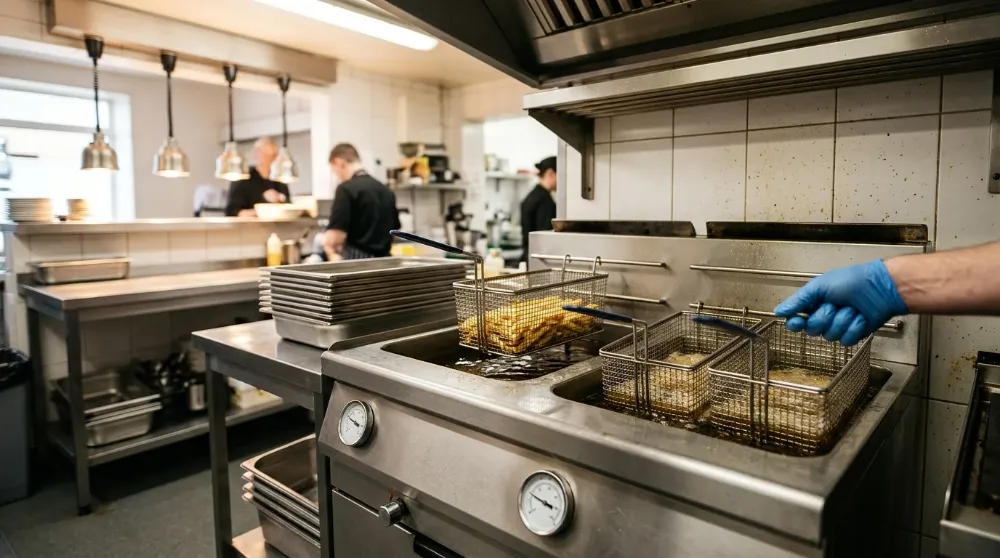
Tank capacity is a starting point, not a throughput promise
Commercial fryer tank capacity is usually shown in litres, and it’s tempting to treat that number as a simple proxy for how many portions you can push out per hour. In reality, litres describe how much oil the tank can hold, not how quickly the fryer can recover temperature after you load product.
Throughput during a rush is shaped by a mix of factors:
- Recovery time: how fast the oil returns to set temperature after a cold load goes in.
- Batch size and basket loading: how much product you can fry per drop without crowding and temperature collapse.
- Product type: fresh chips, frozen breaded items, battered fish, wings, etc. all pull heat differently.
- Manufacturer design and testing: two fryers with similar litres can behave very differently depending on heat input, tank geometry, controls, and how performance is tested.
So the most useful question isn’t “how many litres?”, but “will this fryer recover quickly enough for my menu at peak service, at the batch sizes my team will actually load?”
Why recovery time matters more than headline litres
Recovery time is the practical gap between a basket drop and the fryer returning to stable cooking temperature. If recovery is slow, the symptoms are familiar: pale colour, greasy finish, longer cook times, and staff compensating by leaving baskets down too long or overfilling to catch up. None of that is solved by litres alone.
A larger oil volume can be more stable when food goes in because there’s more thermal mass in the tank. But stability and recovery are not identical. A bigger vat can still struggle if the fryer’s heat input and control system can’t replace the lost heat quickly, or if your batch loads are too heavy for the design.
That’s why comparing fryers purely on capacity can mislead. The same stated tank size can produce very different outcomes depending on:
- How the fryer is engineered to transfer heat into oil (not just the presence of heat, but how effectively it’s delivered).
- How the thermostat and temperature controls behave under load.
- How the “usable frying area” suits your portions and basket layout.
Litres don’t equal usable oil: work to fill lines and safe routines
In day-to-day service, you operate to the manufacturer’s marked oil level (working fill), not an abstract “maximum litres” number. That distinction matters for both performance and safety: too little oil can destabilise temperature and create equipment risks; too much oil increases the likelihood of boil-over and splashing when wet or frozen product is loaded.
For staff safety and safe working practices around hot oil, kitchens should follow clear procedures and the manufacturer’s instructions. The HSA’s guidance for the hospitality sector highlights the burn risk from hot equipment and stresses the importance of following safe systems of work and using equipment correctly (HSA Safe Hospitality Part 2 (PDF)).
Capacity also changes your oil-handling workload: a larger tank means more oil to manage during filtering, draining, and disposal. Used cooking oil is a business waste stream and should be handled responsibly through appropriate waste arrangements (EPA: Waste (business responsibilities)).
Batch size is where capacity and recovery meet real service
Batch size is the bridge between “litres on a spec sheet” and “plates leaving the pass.” Even with a generous tank, overloading baskets can crash temperature and extend cook times—undoing the benefit of the larger oil mass. On the other hand, a modest tank with disciplined loading and strong recovery can outperform a bigger unit that’s regularly overloaded.
To sanity-check your needs, think in service terms rather than litre targets:
- What’s your busiest 10–15 minutes? How many baskets must you drop back-to-back?
- What products dominate that period? Some items introduce more moisture/ice and pull more heat.
- How consistent do you need colour and finish? If consistency is critical, recovery stability under repeated drops matters more than the absolute oil volume.
This is also where manufacturer differences and test methods matter. “Recovery” can be measured in different ways, and two models may not be directly comparable unless you understand the test conditions (load size, starting temperature, product type, and target return point). When you’re choosing between similar capacities, ask for performance information that reflects the way you actually fry—your batch sizes, your products, and your service rhythm.
Single vs twin tanks: recovery strategy, not just “more litres”
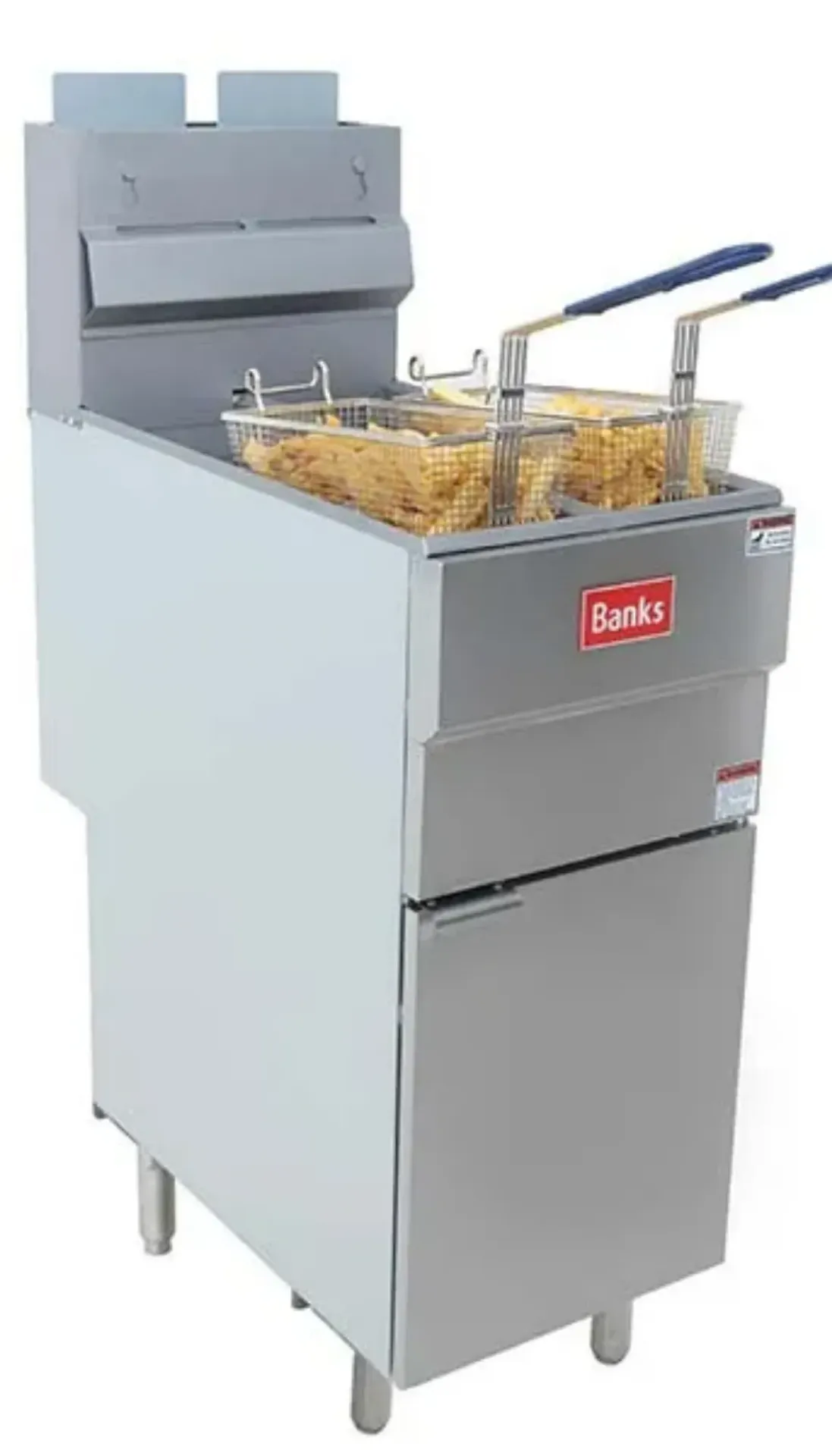
Tank configuration changes how you maintain output and consistency during a rush. A single tank is simple: one oil volume, one control system, one cleaning routine. But it can become a bottleneck if everything depends on one recovery cycle, and it can be harder to keep flavours separated.
Twin tanks (or multi-pan setups) can improve operational control because you can:
- Run different products without cross-flavouring oil.
- Stagger drops to keep each tank’s recovery within a manageable range.
- Keep one tank for lighter demand periods rather than heating a large oil volume all day.
Where allergen management is relevant, separation is a process decision first (dedicated oil, baskets, tools, and handling). FSAI’s allergen-aware approach focuses on controlling risk through your procedures, training, and prevention of cross-contamination in day-to-day operations (FSAI Guidance Note 20 (PDF)).
Linking fryer choice back to food safety controls
Fryer sizing is mainly a performance decision, but it intersects with food safety because an underspecified fryer can push teams into risky workarounds: inconsistent cooking, extended holding, or erratic workflows under pressure.
FSAI guidance emphasises the need to control food temperatures as part of safe food handling. In particular, it notes hot food should be kept at 63°C or above where hot holding is used (FSAI: Temperature control). A fryer that recovers predictably helps you run a consistent process—so you’re less likely to “chase the rush” with oversized loads and uneven results.
In practice, the best match is the fryer that supports your team’s repeatable routine: realistic basket loads, steady recovery between drops, and a layout that allows safe loading and landing during peak periods.
CTA: Browse commercial fryers and choose models by how they’ll handle your batch sizes and peak periods—not litres alone.
FAQs
Does a bigger fryer tank always recover faster?
No. A larger oil volume can reduce the initial temperature drop when food is added, but recovery speed depends on the fryer’s design, heat input, controls, and how it’s loaded in real service. Two fryers with similar litres can perform very differently.
How should I compare fryers if litres aren’t enough?
Compare how each model is intended to be used: basket size and usable frying area, how recovery is reported (and under what test conditions), and whether the configuration (single vs twin tank) matches your menu and peak workflow. Then plan daily operation around the manufacturer’s working fill levels and safe procedures.