
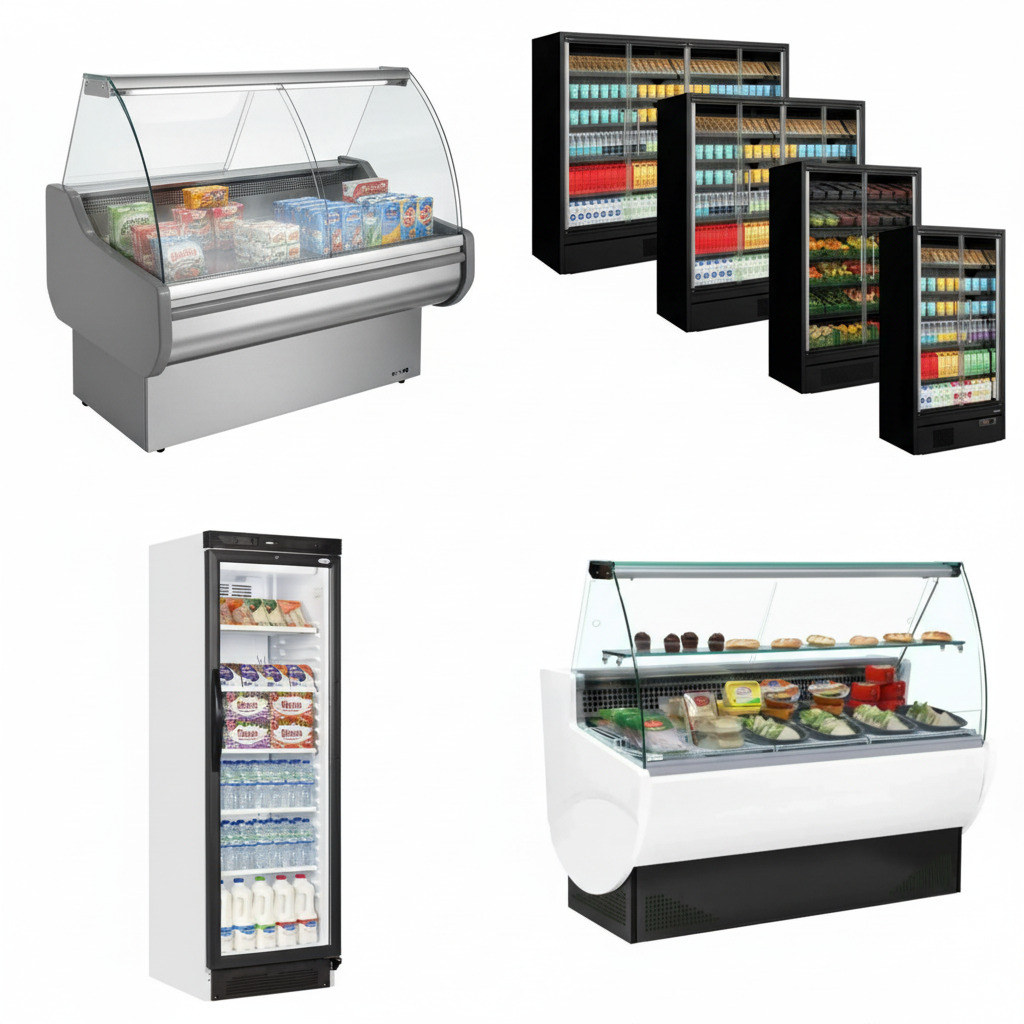
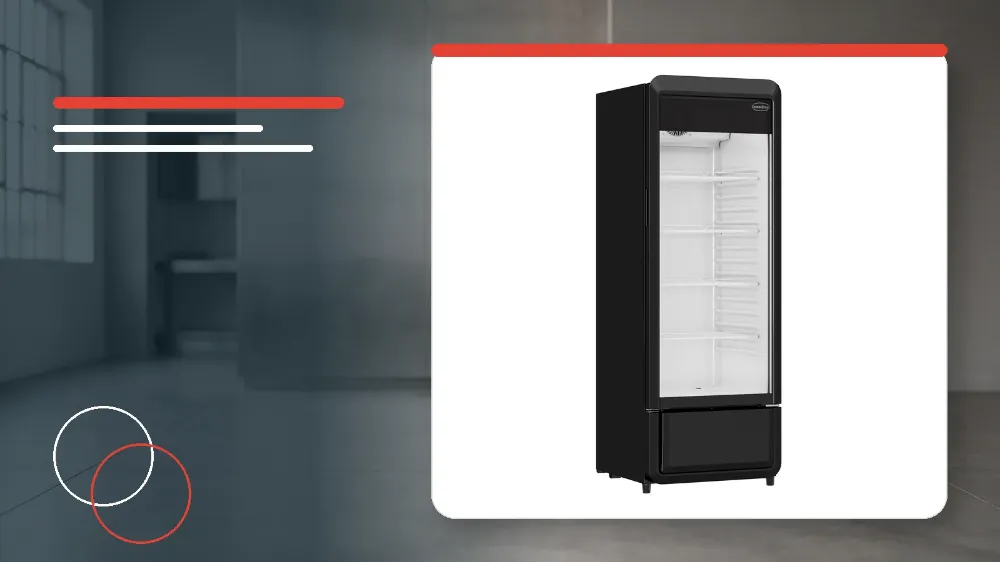
To troubleshoot the Combisteel 7455.3120 refrigerator, verify mains electrical connections and ensure the thermostat is not set to the minimum position.
Applies to
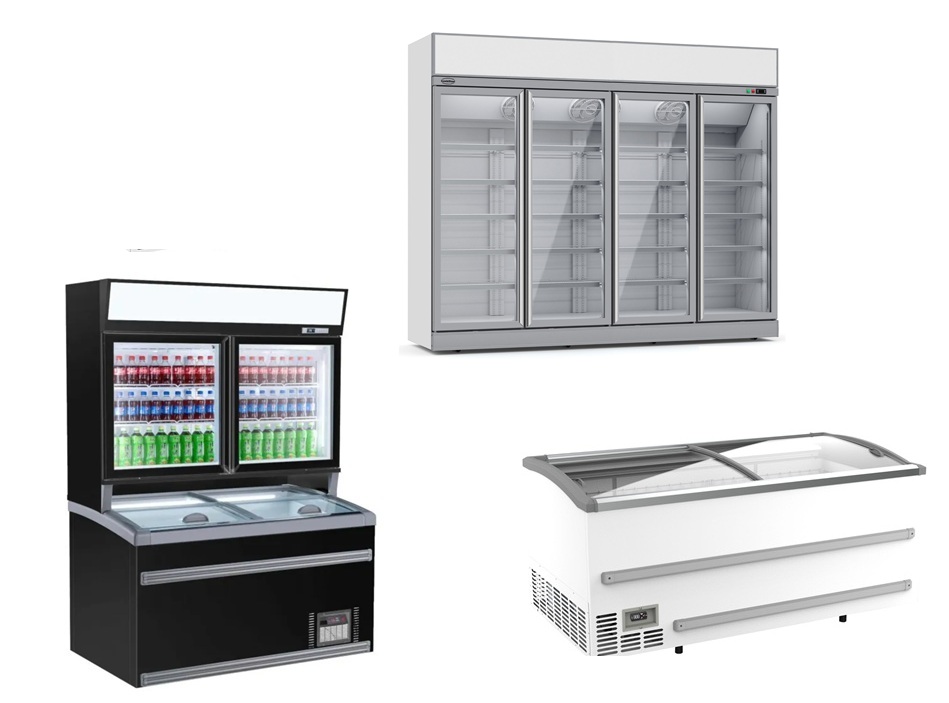
This guide applies specifically to the Combisteel 7455.3120 commercial glass-door refrigerator.
Before you start
- To prevent any electrical shock hazards or injury by the rotating circulation fan, always disconnect the power cord plug from the wall outlet before cleaning.
- Do not splash water directly onto the cooler and do not wash it with water, as short-circuiting and electrical shock could result.
- Check the power cord for cracks and damage after cleaning routines.
Safety warnings
- Do not damage the refrigerant circuit.
- If the supply cord is damaged, it must be replaced by the manufacturer, its service agent, or similarly qualified persons in order to avoid a hazard.
- For any types of maintenance and upkeep on units with refrigerant R290, the power supply must be stopped first and professional personnel is required.
Resolving Failure to Operate and Power Supply Issues
When a commercial display chiller ceases operation, the immediate cause often lies in power supply irregularities or improper thermostat adjustment.
Operators should methodically review the external connections before assuming internal electrical component failure.
- If the unit is not operating due to poor electrical power, check the power connection and electrical outlet.
- If the unit is not operating due to faulty electrical contact, verify electrical connections.
- If the unit is not operating and the thermostat is set to the minimum position, adjust the thermostat setting to a higher number.
Correcting Temperature and Airflow Shortfalls
A refrigerator failing to achieve the desired internal temperature can compromise stock preservation and display presentation.
External environmental factors, door positioning, and airflow obstructions across ventilation components directly influence refrigeration performance.
- If the unit is not reaching the desired temperature because it is exposed to direct sunlight, relocate the unit to a shaded area.
- If the unit is not reaching the desired temperature because the thermostat is not properly adjusted, adjust the thermostat setting to a higher number.
- If the unit is not reaching the desired temperature because the door or doors are not properly closed, check the levelling of the unit and the door seal.
- If the unit is not reaching the desired temperature due to poorly distributed products or excess product load, redistribute the product load according to start instructions.
- If the unit is not reaching the desired temperature due to blocked grills, clean the grills of any debris collected.
- If the unit is not reaching the desired temperature due to a clogged condenser, clean the condenser.
Handling Electronic Controller Fault Codes E0 and E1
Units fitted with an electronic temperature controller may alert catering personnel to operating anomalies through digital display readouts.
Standard initial troubleshooting for these electronic codes requires isolating the mains electricity before escalating to technical service.
- For models with an electronic temperature controller displaying E0 or E1, unplug the unit from the outlet.
- If the error continues after power cycling, contact an authorized service technician.
Eliminating Excessive Noise and Vibrations
Abnormal rattling or humming in a retail or catering environment often stems from uneven footing or items resting against the exterior chassis.
Checking exterior clearances and ensuring solid ground contact readily eliminates common acoustic disturbances.
- If excessive noise occurs because the unit is not properly levelled, level the unit, making sure all feet are in firm contact with the floor.
- If excessive noise occurs because objects such as boxes, mops, or brushes are in contact with the appliance, keep the objects away from the appliance.
Diagnosing Water Pooling and Condensate Run-off
The accumulation of moisture around the base of the refrigerator presents a workplace slip hazard and indicates drainage misalignment.
Verifying the physical path of the condensate discharge line prevents water from collecting onto commercial kitchen flooring.
- If there is water on the floor because the drain hose is outside of the drain pan, locate the hose in the drain pan.
Stop and get help if
- Should the slightest irregularity be observed when checking the power cord for cracks and damage, contact the dealer from whom you have purchased the unit.
- If error code E0 or E1 continues on the electronic controller after the unit is unplugged from the outlet, stop operator intervention and contact an authorized service technician.
- For any types of maintenance and upkeep on units with refrigerant R290, stop the power supply immediately, as professional personnel is required.
When to call an engineer
- Contact the dealer from whom the unit was purchased if cracks, damage, or any irregularity are observed on the power cord.
- Contact an authorized service technician if error code E0 or E1 continues after unplugging the unit from the outlet.
- Engage the manufacturer, its service agent, or similarly qualified persons if the supply cord is damaged and requires replacement.
- Call professional personnel whenever maintenance and upkeep are required on equipment utilising refrigerant R290.