


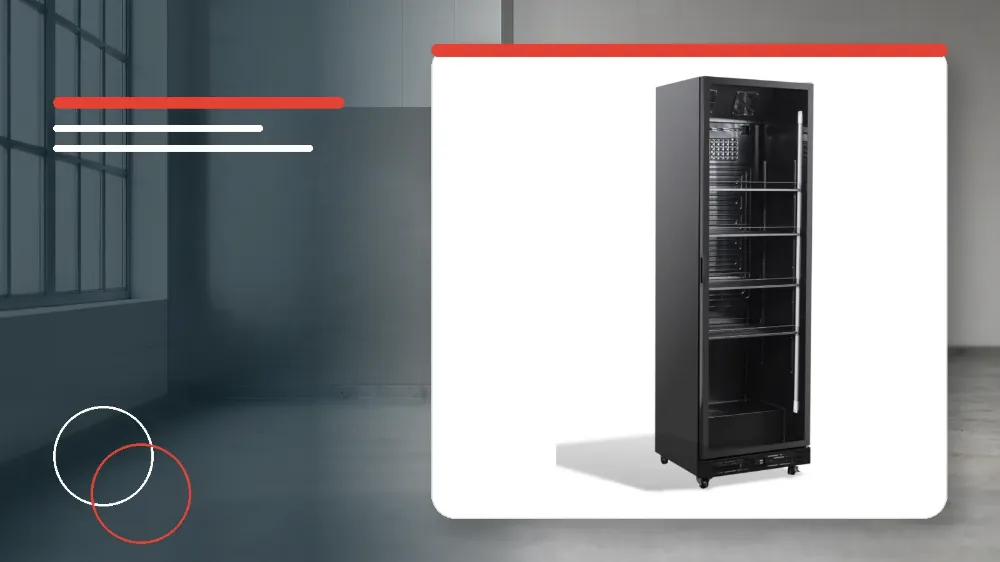
To properly clean and maintain the Combisteel 7455.1916 glass-door refrigerator, disconnect the power cord plug from the wall outlet, wipe the exterior and cooler compartment with a soft dry cloth, use detergent followed by a water-dipped cloth for heavy soiling, avoid prohibited chemicals or running water, and inspect the electrical cord for irregularities before reconnecting.
Applies to
This guide applies strictly to the Combisteel 7455.1916 commercial glass-door refrigerator.
Before you start
- The operator must disconnect the power cord plug from the wall outlet before starting any cleaning.
- Disconnecting the power cord plug prevents electrical shock hazards during cabinet cleaning.
- Unplugging the appliance prevents physical injury from the rotating internal circulation fan.
- The operator must prepare soft wiping cloths and mild detergent rather than harsh chemical agents.
- Washing the cabinet with water or splashing liquids directly onto the cooler is strictly prohibited during all phases of maintenance.
- Polishing powder, soap powder, gasoline, oil, and hot water must never be used on the painted and plastic surfaces of the cooler.
Safety warnings
- Never splash water directly onto the cooler cabinet.
- Do not wash the unit with water because short-circuiting and electrical shock can result.
- Never use polishing powder, soap powder, gasoline, oil, or hot water on the unit because these substances will damage the painted and plastic components.
- Always disconnect the power cord plug from the wall outlet before cleaning to avoid severe injury from the rotating circulation fan.
- Contact the dealer or customer service immediately if any cracking, wear, or irregularity is observed on the power cord or plug.
Electrical Disconnection and Fan Hazard Prevention
The power cord plug must always be removed from the electrical wall outlet prior to cleaning the refrigerator.
Unplugging the power cord is required to eliminate electrical shock hazards during routine maintenance.
Isolating the mains supply prevents accidental contact with the rotating circulation fan during internal cleaning.
To prevent any electrical shock hazards or severe injury from the rotating circulation fan, always disconnect the power cord plug from the wall outlet before cleaning.
- Disconnect the power cord plug directly from the mains electrical wall outlet.
- Verify that mains power is removed before touching any internal or external cooler surfaces.
- Ensure the internal circulation fan is stationary before reaching inside the compartment.
Exterior and Cooler Compartment Cleaning
Operators must clean the exterior surfaces and cooler compartment by wiping them with a soft, dry cloth.
If the exterior or cooler compartment is heavily soiled, wipe the surfaces with a cloth moistened with detergent.
Following detergent application, wipe all treated surfaces with a cloth that has been dipped in water.
A soft, dry cloth must be used for routine wiping to ensure the painted and plastic surfaces are not damaged during cleaning.
- Wipe the exterior panels and internal compartment thoroughly with a clean, soft, dry cloth.
- Apply a detergent-moistened soft cloth to remove stubborn dirt if surfaces are very soiled.
- Wipe all detergent residue away using a soft cloth dipped in clean water.
- Ensure that only soft cloths are used across both the interior compartment and exterior body panels.
Chemical Restrictions and Moisture Precautions
Water must never be splashed directly onto the cooler during cleaning procedures.
Washing the cooler with water is strictly prohibited because short-circuiting and electrical shock could result.
Using polishing powder, soap powder, gasoline, oil, or hot water will damage the painted and plastic components.
Direct water contact and washing with water create severe hazards of short-circuiting and electrical shock.
- Do not splash water or wash the appliance using free-flowing water.
- Avoid using polishing powder or soap powder on any painted or plastic parts.
- Keep gasoline, oil, and hot water away from all unit surfaces during maintenance.
- Never apply hot water to any section of the cabinet during washing or wiping routines.
Post-Cleaning Inspection and Reconnection
The operator must carry out checks after cleaning to inspect the electrical power cord and plug.
If the slightest irregularity is observed on the cord or plug, the appliance must not be placed back into service.
The dealer or customer service must be contacted immediately if any irregularity is detected.
The power cord and plug must be examined for irregularities after every cleaning cycle before the cooler is powered again.
- Inspect the entire length of the power cord and plug for any signs of irregularity.
- Contact your dealer or customer service immediately if any cord or plug defect is noticed.
- Never attempt to repair or plug in a damaged power cord showing the slightest sign of irregularity.
- Insert the power cord plug securely back into the wall outlet only after verifying that the cord and plug are completely free of irregularities.
Stop and get help if
- Stop cleaning immediately if the power cord plug has not been disconnected from the wall outlet.
- Stop the cleaning procedure if water has splashed directly onto the unit or penetrated electrical areas.
- Stop operating the refrigerator if the slightest irregularity is observed on the power cord or plug.
When to call an engineer
- Contact the dealer from whom you purchased the unit should the slightest irregularity be observed in the power cord or plug.
- Contact customer service if any irregularity is detected in the electrical power cord or plug assembly.
- Escalate to qualified personnel if water washing has caused suspected short-circuiting or electrical shock hazards.
- Cease using the cooler and contact customer service if any physical defect or irregularity appears on the power plug.