

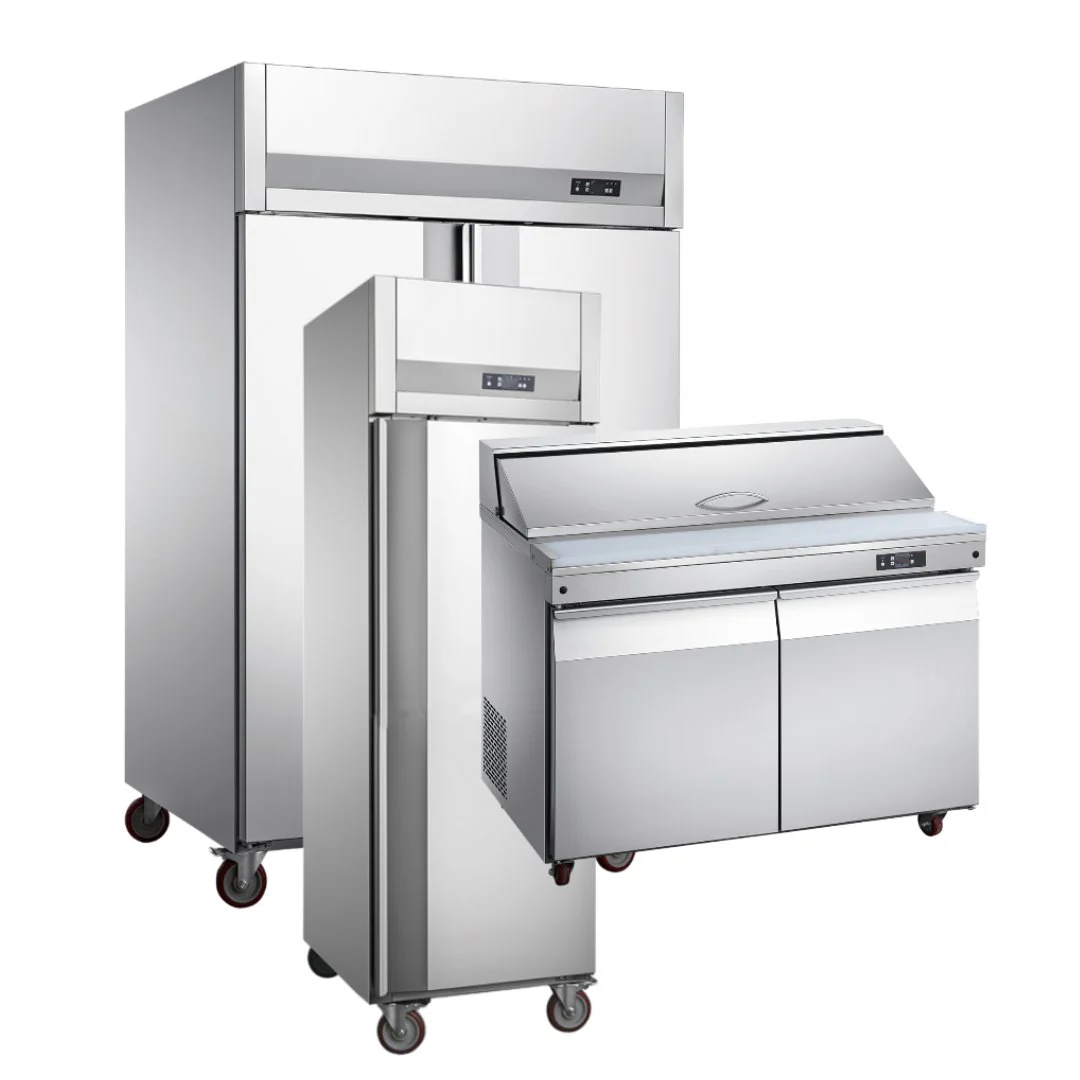



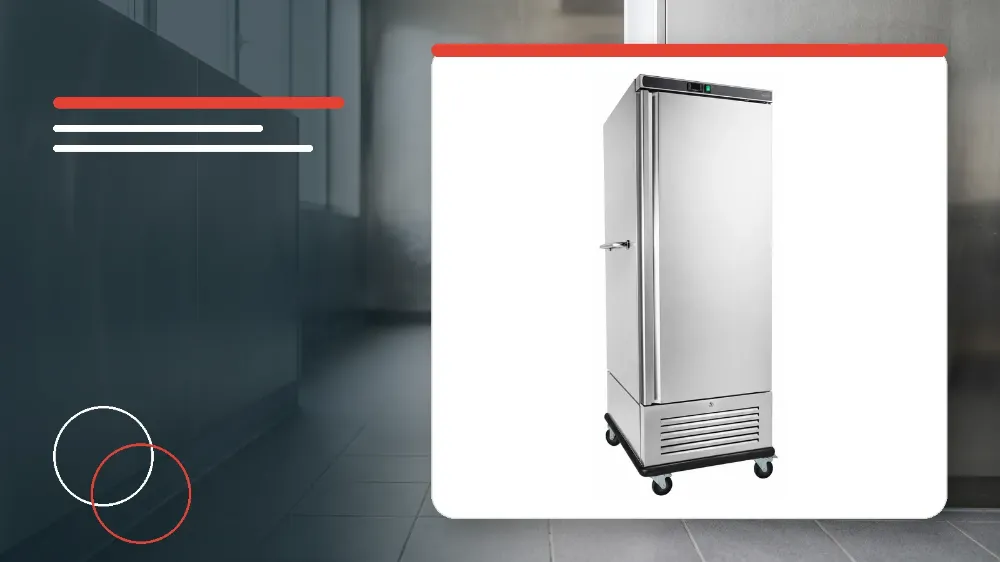
To clean and maintain the Combisteel 7450.0915 cold banquet trolley, isolate electrical power before work, wash the cabinet interior as often as possible without allowing liquid into the drain hole, clean door seals exclusively with water, preserve stainless steel using approved non-abrasive products, defrost at least quarterly, and vacuum the lower condenser filter once a month.
Applies to
This guide applies directly to the Combisteel 7450.0915 cold banquet trolley.
Before you start
- The appliance must be switched off and disconnected from the electrical power supply before carrying out cleaning.
- You must always disconnect the electrical power supply before carrying out routine maintenance.
- Clean the interior of the appliance as often as possible to maintain proper cabinet hygiene.
- The condenser is part of the refrigeration system and requires monthly cleaning to preserve machine operation.
Safety warnings
- Do not use abrasive cleaning agents because they can leave harmful residues on the appliance surfaces.
- Never use abrasive scourers or scrubbing pads on the stainless steel surfaces.
- Never use chlorinated or acidic detergents when cleaning the stainless steel.
- Water used in cleaning must not be allowed to run through the drain hole into the evaporation pan.
- Take care when cleaning the rear of the appliance because sharp edges can cut.
- Failure to clean the condenser will reduce the performance and life of your unit and may invalidate your warranty.
Interior Cabinet Cleaning and Drain Hole Precautions
The appliance must be switched off and disconnected from the power supply before cleaning begins.
Operators must clean the interior of the appliance as often as possible.
You must not use abrasive cleaning agents because these can leave harmful residues.
Do not allow water used in cleaning to run through the drain hole into the evaporation pan.
Operators must always wipe the appliance dry after cleaning is completed.
- Switch off the unit and disconnect it completely from the electrical power supply.
- Wash the interior surfaces of the cabinet as frequently as possible using non-abrasive methods.
- Prevent any wash water from running down through the drain hole into the evaporation pan.
- Wipe all interior surfaces completely dry before returning the cabinet to service.
Door Seal Care and Sanitisation Boundaries
Routine maintenance requires dedicated attention to the perimeter door seal of the cabinet.
The door seal must be cleaned with water only.
Abrasive cleaning agents must never be applied because they can leave harmful residues behind.
Operators must always wipe the seal dry after cleaning.
- Inspect the cabinet door seal prior to applying any moisture.
- Clean the door seal thoroughly using water only.
- Wipe the door seal dry immediately after washing.
Stainless Steel Surface Protection and Care Rules
Stainless steel care requires frequent cleaning to maintain metal condition.
Operators must never use abrasive scourers or scrubbing pads on stainless steel.
Never apply chlorinated or acidic detergents to the stainless steel panels.
Do not allow anything such as food, dirt, or cleaning chemicals to remain on the surface longer than necessary.
Operators must clean off food, dirt, and chemicals right away.
Never allow the stainless steel surface to remain wet.
Use soft cloths or plastic scourers when attending to stainless surfaces.
Always rub with the grain of the metal rather than across it.
Use detergents and polish specifically designed for cleaning stainless steel.
Ensure that all cleaning products are washed off fully and that the steel is left dry.
- Clean the stainless steel often to protect the exterior and interior metal surfaces.
- Apply only detergents and polish designed for cleaning stainless steel.
- Rub with the grain of the metal rather than scrubbing across it.
- Use only soft cloths or plastic scourers during cleaning.
- Wash off all cleaning products fully after scrubbing.
- Wipe the steel dry thoroughly so the surface is never allowed to remain wet.
Defrosting Schedules and Manual Control Operation
The appliance must be defrosted at least once every 3 months.
Operators must defrost the unit more often if operating conditions require it.
A manual defrost cycle can be triggered directly using the control panel.
Press and hold the defrost button aux for 2 seconds to begin a manual defrost.
The defrost light illuminates once the manual defrost cycle begins.
Always wipe dry the cabinet surfaces after defrosting and cleaning are finished.
- Schedule routine defrosting for the appliance at least once every 3 months or more often if required.
- Press and hold the aux defrost button for 2 seconds to initiate the manual defrost procedure.
- Verify that the defrost light illuminates on the control panel to confirm activation.
- Ensure that melting moisture is not allowed to run through the drain hole into the evaporation pan.
- Always wipe the cabinet interior completely dry once defrosting is finished.
Monthly Condenser Filter Maintenance and Rear Safety
The condenser forms a vital part of the refrigeration system.
The condenser requires monthly cleaning to preserve efficient cooling.
In these upright cabinets, the condenser is located below the refrigeration cabinet.
These models feature a removable filter that can be cleaned with a vacuum cleaner.
Always disconnect the power supply before carrying out routine maintenance.
Failure to clean the condenser will reduce the performance and life of your unit and may invalidate your warranty.
Take care when cleaning the rear of the appliance because sharp edges can cut.
An authorised agent or qualified technician must carry out repairs if required on the unit.
- Disconnect the appliance from the electrical power supply before starting monthly routine maintenance.
- Access the condenser located below the main refrigeration cabinet.
- Remove the detachable filter positioned at the condenser assembly.
- Clean the removable filter thoroughly using a vacuum cleaner.
- Exercise strict caution around the rear of the appliance to avoid cuts from sharp edges.
- Refit the clean filter into position under the refrigeration cabinet.
Stop and get help if
- Stop cleaning immediately and isolate the appliance if the power supply has not been disconnected from the unit.
- Stop operator maintenance immediately if repairs are required on the appliance.
When to call an engineer
- A service agent or qualified technician must carry out repairs if required on the appliance.