




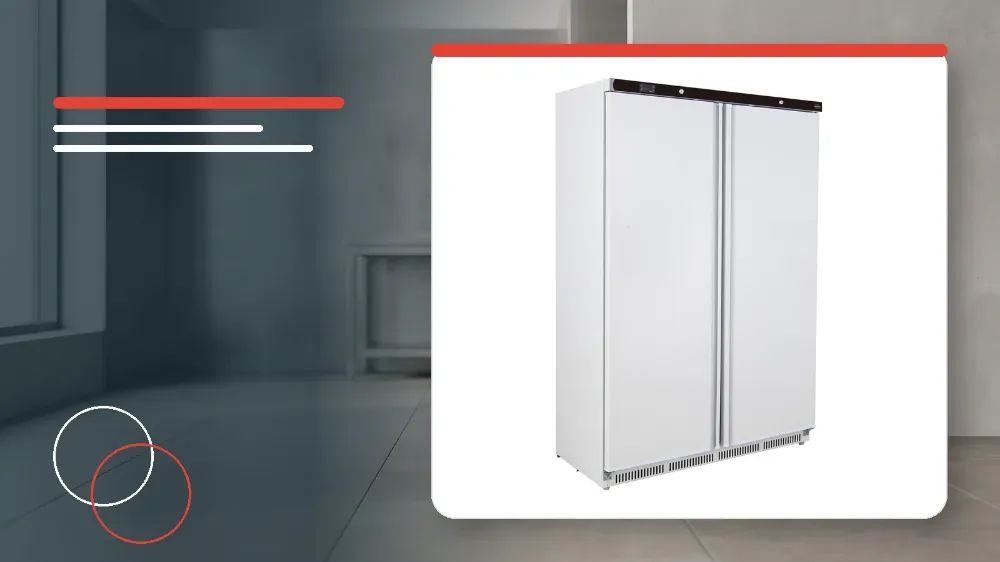
To resolve issues with the Combisteel 7450.0577 freezer, verify external electrical connections and fuse integrity, ensure proper cabinet airflow and clean condenser coils, defrost excessive evaporator ice without mechanical tools, level the unit and clear drainage outlets to resolve leaks, tighten loose external fixings, and escalate internal wiring, sealed refrigeration, or damaged water container faults to an authorised service technician.
Applies to
This guide applies exclusively to the Combisteel 7450.0577 commercial two-door upright freezer.
Before you start
- Commercial kitchen operators must always switch off and disconnect the power supply to the appliance before commencing any cleaning or physical inspection routines.
- All installation procedures and technical repairs must be carried out strictly by an approved service agent or a qualified technician.
- Operators must never remove any fixed components or service panels from this commercial freezer during routine troubleshooting.
Safety warnings
- Do not remove any protective components or service panels from the freezer under any circumstances.
- Always switch off and completely disconnect the electrical power supply to the unit before carrying out any cleaning procedures.
- If the electrical power cord is damaged, it must be replaced solely by an authorized agent or a recommended qualified technician to prevent hazardous electrical events.
- Do not use mechanical devices or any other artificial means to accelerate the defrosting process other than those specifically recommended by the manufacturer.
- Take extreme care never to damage any part of the sealed refrigerant circuit during operation, cleaning, or routine handling.
Power Supply and Startup Diagnostics
When the Combisteel 7450.0577 commercial freezer fails to switch on or run, the operator must inspect basic electrical connections before assuming an internal component failure.
The manufacturer restricts all internal wiring diagnostics and power lead replacements to certified refrigeration service engineers to ensure operator safety.
Any replacement of an unlit display lamp also requires a service call rather than operator intervention.
- Verify that the commercial freezer is plugged securely into the mains electrical socket and that the power switch is turned on.
- Inspect the main power supply outlet and the local electrical circuit to confirm that mains power is actively reaching the appliance.
- Check the fuse located inside the electrical plug and replace it immediately if it has blown.
- Immediately halt operator checks and contact an authorised service agent or qualified technician if the electrical plug or lead is damaged.
- Request professional engineer intervention if an internal electrical wiring fault is suspected or if the unit remains entirely inoperative after external power checks.
- Call a service agent or qualified technician to replace the display lamp if the display light fails to illuminate during normal operation.
Temperature and Cooling Performance Checks
If the freezer unit powers on but fails to maintain the correct holding temperature, kitchen operators should assess loading practices, airflow conditions, and routine maintenance factors.
Excessive ice accumulation on the evaporator coil directly compromises cooling efficiency and requires a full manual defrost.
Environmental conditions such as high ambient kitchen temperatures or nearby cooking appliances can prevent the condenser from effectively rejecting heat.
- Defrost the appliance thoroughly whenever excessive ice build-up is observed on the evaporator.
- Execute the defrosting process strictly without mechanical tools or unapproved accelerating devices to avoid puncturing the refrigeration circuit.
- Clean the condenser assembly if it has become clogged or blocked with accumulated dust.
- Examine both freezer doors to verify that they close completely and confirm that the magnetic door seals are intact and undamaged.
- Relocate the freezer to a suitable position if it is currently situated adjacent to a kitchen heat source or if ventilation around the condenser is obstructed.
- Increase kitchen ventilation or move the appliance to a cooler location if the ambient room temperature exceeds acceptable operating limits.
- Remove any excessively hot foodstuffs immediately and eliminate any physical stock blockages surrounding the internal circulation fan.
- Reduce the total volume of food stored inside the cabinet if the appliance has been overloaded beyond its capacity.
Water Leakage and Condensate Drainage Troubleshooting
Water pooling inside or underneath the Combisteel 7450.0577 commercial freezer usually indicates a blocked condensate pathway or an unlevel cabinet.
Routine clearance of condensate drainage pathways helps maintain hygiene standards and prevents water from overflowing onto kitchen floors.
Internal structural damage to the condensate container requires professional part replacement by a certified technician.
- Adjust the adjustable screw feet to ensure the freezer cabinet is positioned completely level.
- Inspect and clear the discharge outlet if condensate water is failing to exit the cabinet.
- Clear the floor of the appliance if fallen debris or misplaced food items are obstructing the free movement of drainage water towards the drain.
- Empty the drip tray if it has become full and is overflowing onto the floor.
- Call an authorised service agent or qualified technician immediately if the water container is cracked or physically damaged.
Noise and Vibration Reduction Procedures
Excessive or unusual operating noise in commercial upright freezers often stems from transit packaging remnants, loose external hardware, or uneven floor contact.
Operators can resolve most acoustic issues quickly by following basic mechanical alignment and fastener verification procedures.
- Verify whether the transit safety band remains attached to the unit and remove it completely if it is still present.
- Check all accessible external nuts and screws across the appliance frame and tighten any loose fixings securely.
- Inspect the installation position and adjust the placement or leveling feet to ensure the freezer stands in a perfectly stable and level position.
Stop and get help if
- Stop troubleshooting and disconnect power immediately if the electrical power cord or mains plug is damaged, cracked, or frayed.
- Cease all manual operations if any internal electrical wiring fault is identified or suspected within the freezer.
- Halt operator intervention if the sealed refrigerant circuit is compromised or damaged.
- Stop checks and isolate the unit if the integrated water container is physically damaged or leaking internally.
When to call an engineer
- Contact an authorised service agent or qualified technician to replace a damaged electrical power cord or damaged plug.
- Call a qualified technician whenever an internal wiring fault prevents the appliance from functioning.
- Engage a service agent or qualified technician to carry out replacement of the internal display lamp when it does not illuminate.
- Request a qualified technician to repair or replace a damaged internal water container.
- Call an approved refrigeration service agent if any structural repair, component replacement, or panel removal is required on the unit.