


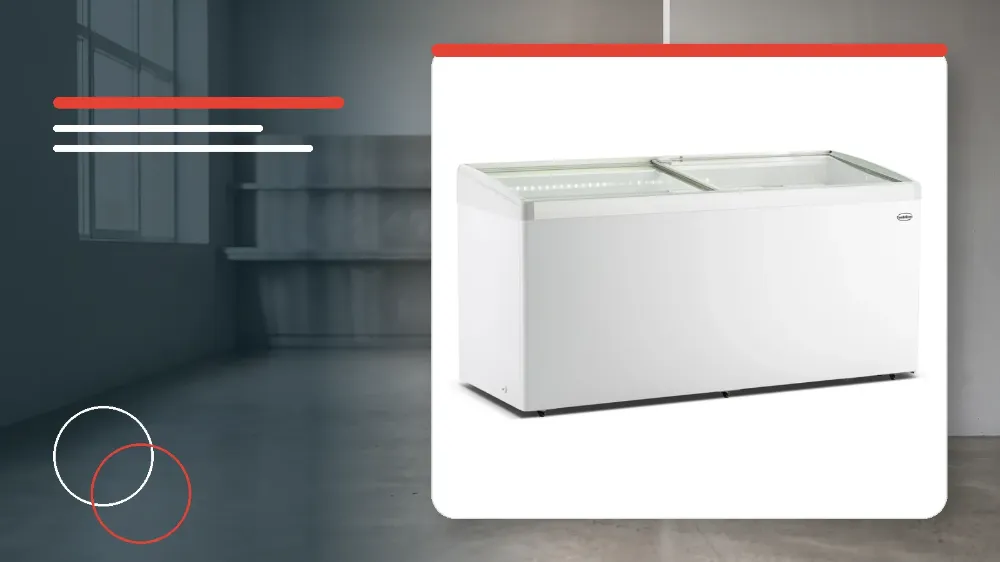
To defrost the Combisteel 7086.0045 chest freezer properly, switch off and unplug the appliance from the mains electrical supply, remove all stored inventory, allow the frost layer to soften naturally before scraping it away with a dedicated defrosting shovel, open both the internal bottom drain hole and the outer shell drain cover to discharge meltwater via the drain pipe, thoroughly wipe every trace of water from the cabinet, secure the drain cover, reconnect power, and wait until the interior returns to its set operating temperature before reloading stock.
Applies to
This defrosting procedure applies specifically to the Combisteel 7086.0045 glass-lid commercial chest freezer.
Before you start
- You must initiate defrosting whenever the frost build-up on the inner cabinet evaporator walls reaches an accumulation thickness between 5 mm and 7 mm.
- Frost accumulation on the inner evaporator surface impedes heat transfer and directly reduces the overall cooling performance of the freezer.
- The appliance must always be switched off and unplugged from the mains electrical socket prior to undertaking any defrosting work.
- All commercial food products and stored inventory must be completely cleared out of the freezer cabinet before you begin the defrost cycle.
Safety warnings
- Never use sharp metal-edged tools, knives, or metal scrapers to chip away frost, as doing so can puncture or severely damage the internal evaporator.
- Do not apply electrical heating devices, heat guns, hair dryers, or mechanical heaters to speed up the melting process, because these appliances can cause severe thermal damage to the evaporator structure.
- Do not attempt any self-repair or unauthorised disassembly on the appliance if an issue arises that cannot be resolved strictly following the instruction manual.
Frost Monitoring and Defrosting Criteria
Regular monitoring of the internal evaporator walls is necessary because excessive frost accumulation decreases the cooling performance of the freezer.
A complete manual defrost must be scheduled and carried out as soon as the frost layer reaches a thickness of 5 mm to 7 mm.
- Inspect the internal evaporator surface of the cabinet regularly to evaluate the depth of frost formation.
- Plan a defrost cycle immediately when the frost accumulation measures between 5 mm and 7 mm.
Power Disconnection and Cabinet Preparation
Safe defrosting requires isolating the unit completely from the electrical power supply before emptying the interior.
- Switch off the appliance at the power switch and unplug the electrical power cord from the mains wall socket.
- Remove all stored food products from the freezer cabinet and transfer them to an alternative cold-storage unit to protect the cold chain.
Defrosting and Ice Removal Technique
The chest freezer door must be opened to allow the frozen frost layer to soften naturally before physical removal is attempted.
Using metal-edged tools or electrical heating tools is strictly prohibited during ice clearing to prevent irreversible damage to the evaporator.
- Open the chest freezer door fully to allow ambient air to warm and soften the ice accumulation.
- Wait until the frost layer becomes soft before attempting to remove it from the cabinet walls.
- Remove the softened frost from the interior using only a dedicated defrosting shovel.
Drainage and Meltwater Management
Meltwater generated during the defrost process is discharged safely through the integrated drainage system.
- Open the internal drain hole located in the bottom of the freezer cabinet.
- Open the external drain cover situated on the outer shell of the cabinet.
- Allow all defrost meltwater to flow out of the interior through the dedicated drain pipe.
Drying, Recommissioning, and Restocking
All residual moisture must be eliminated before electrical power is restored and stock is reloaded into the appliance.
- Wipe away every trace of residual frost meltwater from the interior surfaces of the cabinet until the unit is completely dry.
- Close the external drain cover securely to re-seal the cabinet drainage passage.
- Plug the power cable back into the electrical mains outlet and switch on the appliance.
- Monitor the internal temperature and wait until the cabinet achieves its set operating temperature before reloading any goods.
Stop and get help if
- Stop defrosting immediately and do not restart the appliance if the evaporator surface suffers physical damage from tools or heating devices.
- Cease operations if any problem develops during the defrosting procedure that cannot be solved according to the provided instruction manual.
When to call an engineer
- Contact your authorised equipment dealer for assistance if any fault or operational issue cannot be rectified using the instructions in the manual.
- Escalate to qualified service personnel immediately instead of attempting any self-repair on the commercial appliance.